
Communicating with Prescribers: When Pharmacists Recommend Generics
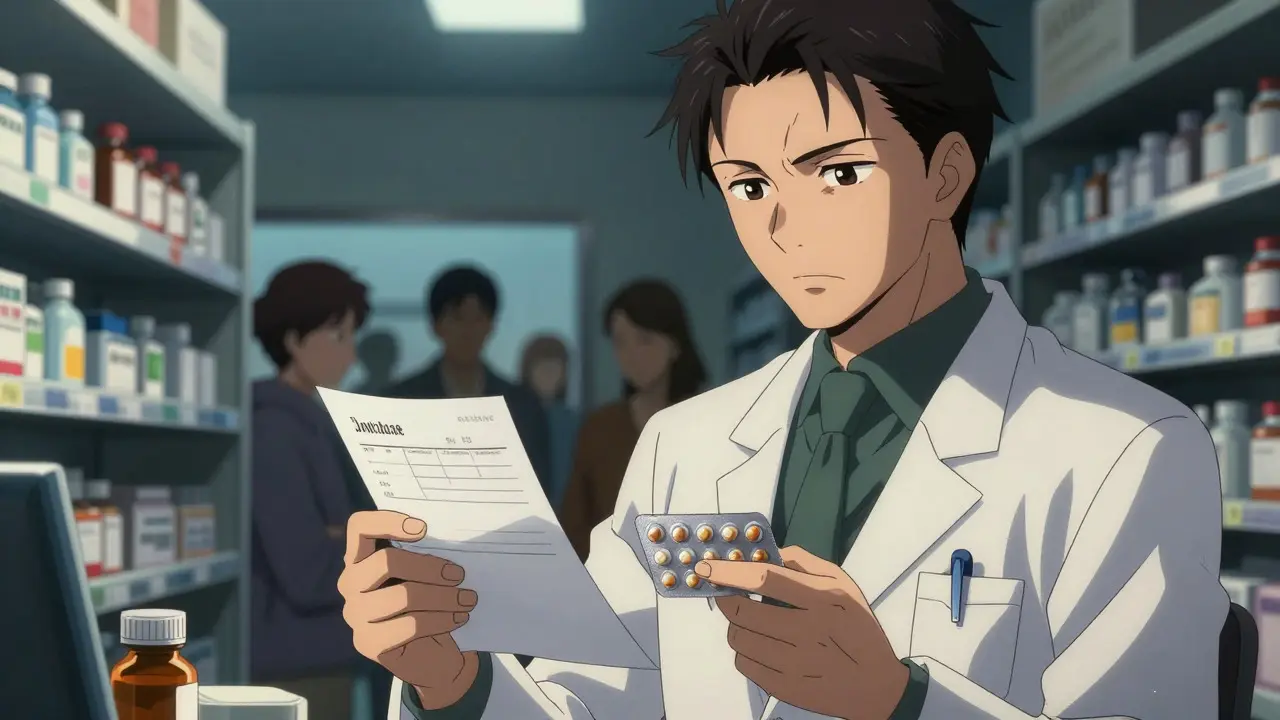
You’ve got a prescription in hand. The patient is waiting. You know the brand-name drug costs $150, but the generic version sits on your shelf for $12. It’s chemically identical, FDA-approved, and safe. So why does calling the doctor to ask about switching feel like walking into a minefield? If you’re a pharmacist, you’ve likely faced that hesitation. Or maybe you’re a prescriber who gets those calls and wonders, "Why are we talking about this?"
The truth is, generic substitution isn’t just about saving money-it’s a critical clinical decision that affects patient outcomes. But it only works if the conversation between the pharmacist and the prescriber is clear, evidence-based, and respectful. Let’s break down how to have that conversation effectively, when to speak up, and what data actually backs up your recommendations.
Why This Conversation Matters More Than Ever
Since the Hatch-Waxman Act of 1984 established the modern framework for generic drugs, the landscape has shifted dramatically. Today, according to the FDA’s 2023 Orange Book, 97% of prescriptions filled in the U.S. are for generics. That’s not a niche practice; it’s the standard of care. These substitutions save the healthcare system approximately $409 billion annually.
But here’s the catch: savings don’t equal success if patients don’t take their meds. A 2018 study by Shrank et al. analyzed claims from 12.7 million patients and found that prescribing generics led to a 12.4% absolute improvement in medication adherence. Why? Because lower out-of-pocket costs mean fewer abandoned prescriptions. For chronic conditions, this adherence boost correlated with a 15.2% reduction in hospital admissions. So, when you recommend a generic, you aren’t just helping the wallet-you’re potentially keeping the patient out of the ER.
When You Should Pick Up the Phone (or Send a Secure Message)
Not every switch requires a call. In fact, most routine substitutions happen automatically under state substitution laws. However, there are specific scenarios where proactive communication with the prescriber is non-negotiable. Ignoring these can lead to therapeutic failures or safety issues.
- Narrow Therapeutic Index (NTI) Drugs: Medications like warfarin, levothyroxine, and phenytoin have a tiny window between effective and toxic doses. While the FDA states that generics must meet strict bioequivalence standards, prescribers often prefer continuity for NTIs. If you’re considering a switch here, flag it explicitly.
- Excipient Allergies: About 8.7% of generic substitution issues stem from inactive ingredient differences. If a patient has a documented allergy to lactose, gluten, or specific dyes, verify the generic’s inactive ingredients before dispensing. Don’t assume they match the brand.
- Complex Dosage Forms: Inhalers, topical creams, and modified-release tablets often have different release mechanisms or device interfaces. A 2023 survey showed prescribers express high concern (42.3%) about inhaler efficacy during switches. Discuss the device technique with the prescriber to ensure they’re comfortable with the change.
- Dispense as Written (DAW): If a prescriber marks DAW, they have a reason-often clinical, sometimes personal preference. Before overriding or discussing, understand why. Is it cost? Safety? Patient stability?
Speaking the Language of Evidence: The Orange Book and Bioequivalence
Prescribers trust data, not anecdotes. When you recommend a generic, back it up with the gold standard: the FDA Orange Book (Approved Drug Products with Therapeutic Equivalence Evaluations). This document lists which generics are considered therapeutically equivalent to the reference listed drug.
Here’s the simple rule: Look for an "A" rating. An "A" rating means the FDA considers the product therapeutically equivalent to other pharmaceutically equivalent products. It indicates that the generic meets the same rigorous standards for quality, strength, purity, and stability. Avoid recommending products with "B" ratings unless you have a specific, documented reason and have discussed it thoroughly with the prescriber.
| Rating | Meaning | Action for Pharmacist |
|---|---|---|
| A Rating | Therapeutically equivalent. Meets all bioequivalence and pharmaceutical equivalence criteria. | Safe to substitute routinely. Use as primary recommendation. |
| B Rating | Not considered therapeutically equivalent due to potential lack of bioequivalence or other factors. | Use caution. Requires explicit prescriber approval and patient counseling. |
Additionally, remind prescribers of the actual bioequivalence data. The FDA requires that the 90% confidence intervals for the ratio of geometric means of AUC (Area Under the Curve) and Cmax (Maximum Concentration) fall within 80.00%-125.00% of the reference product. In reality, data shows that 98.7% of approved generics demonstrate bioequivalence within a much tighter range of 95.00%-105.00%. Sharing this specific stat often alleviates fears about "less potent" generics.

Structuring the Communication for Success
Time is scarce. A 2023 National Pharmacist Workload Survey revealed pharmacists have only 2.3 minutes per prescription verification. You can’t give a lecture. You need a structured, concise approach. The American Society of Health-System Pharmacists (ASHP) recommends a four-step framework that has been shown to increase acceptance rates significantly.
- Initiate Contact Promptly: Reach out within 24 hours of receiving the prescription. Delays cause confusion and patient frustration.
- Reference Specific Data: Quote the Orange Book "A" rating and the specific manufacturer. Avoid vague statements like "It’s the same thing." Instead, say, "The generic from Teva has an 'A' rating and matches the bioequivalence profile exactly."
- Provide Cost Context: Share the average wholesale price difference. If the generic saves the patient $100/month, say so. Financial toxicity is a real clinical barrier.
- Document the Outcome: Record the date, method of contact, prescriber name, and final decision in the patient record. This protects you legally and ensures continuity.
A 2021 study in the Journal of the American Pharmacists Association demonstrated that using this structured approach achieved an 82.4% prescriber acceptance rate, compared to just 57.3% with unstructured communication. The difference? Clarity and evidence.
Overcoming Common Barriers and Resistance
Even with perfect data, you’ll face pushback. Primary care physicians cite concerns about therapeutic equivalence (58.3%), altered patient response (47.6%), and lack of time (62.1%) as top barriers. How do you navigate this?
First, acknowledge the concern. "I understand your caution regarding the release mechanism," validates their expertise. Second, offer a trial period. Suggest monitoring the patient’s response after one refill. Third, leverage technology. Tools like Surescripts’ Generic Drug Substitution module reduce communication time from 8.2 minutes to 2.7 minutes by pre-populating evidence-based options. If your pharmacy uses AI-powered assistants, mention that the recommendation is algorithm-driven based on current FDA guidelines, removing any perception of arbitrary choice.
Remember, 37.6% of prescribers still express concerns about generic efficacy, particularly for complex products. Don’t dismiss this. Instead, provide the specific Product-Specific Guidance (PSG) from the FDA for that drug. There are 1,456 PSGs available, and referencing the exact guidance for Levothyroxine or Phenytoin adds immediate credibility.

Documentation: Your Legal and Clinical Shield
If it isn’t documented, it didn’t happen. CMS mandates specific documentation for Part D plans, and pharmacies using EHR-integrated systems show 98.7% compliance versus 76.4% for manual systems. Ensure your records include:
- Date and time of communication.
- Method used (phone, secure message, fax).
- Name and credentials of the prescriber contacted.
- Specific recommendation made and the rationale (e.g., "Cost savings + A-rated equivalence").
- Outcome (Approved, Denied, Alternative Chosen).
Pharmacies implementing these standardized documentation practices reported 27.5% fewer medication errors related to substitution and 18.3% higher patient satisfaction scores. Clear records prevent repeat calls and protect against liability if a patient reacts differently to the new formulation.
The Future of Pharmacist-Prescriber Dialogue
We are moving toward value-based care models where pharmacists play a larger role in optimizing therapy. By 2025, Medicare Part D redesigns will further emphasize medication therapy management, affecting over 21 million beneficiaries. Emerging tools, such as the CDC’s proposed Generic Medication Safety Network, aim to provide near-real-time safety data comparing generics to brands. This will arm pharmacists with even more robust evidence for future conversations.
For now, keep it simple: Be prepared, be polite, and be precise. Use the Orange Book, cite the bioequivalence stats, and respect the prescriber’s clinical judgment. When you frame generic substitution as a collaborative effort to improve adherence and reduce financial burden, you transform a transactional task into a therapeutic partnership.
Are generic drugs always exactly the same as brand-name drugs?
They contain the same active ingredient, strength, dosage form, and route of administration. However, inactive ingredients (excipients) may differ. The FDA requires them to be bioequivalent, meaning they deliver the same amount of active ingredient into the bloodstream at the same rate. Differences in appearance or fillers are allowed and usually clinically insignificant, except for patients with specific allergies.
What is the "Orange Book" and why should I use it?
The Orange Book is the FDA's official publication listing approved drug products with therapeutic equivalence evaluations. It helps pharmacists determine if a generic is considered therapeutically equivalent to the brand. Look for "A" ratings, which indicate therapeutic equivalence. Using it provides objective, regulatory-backed evidence when communicating with prescribers.
How do I handle a prescriber who refuses to switch to a generic?
Respect the decision and document it. Ask if there is a specific clinical reason (e.g., narrow therapeutic index, previous intolerance). Offer to monitor the patient’s response and revisit the discussion later. Sometimes, suggesting a single-month trial of the generic with close follow-up can overcome initial resistance.
Do state laws affect my ability to substitute generics?
Yes. While 49 states permit substitution unless marked "Do Not Substitute," some states require patient consent or operate under positive formularies that limit choices. Always check your local regulations. Even in permissive states, professional courtesy and clinical judgment dictate when to communicate with the prescriber.
What are Narrow Therapeutic Index (NTI) drugs?
NTI drugs have a small margin between the dose that produces a therapeutic effect and the dose that causes toxicity. Examples include warfarin, levothyroxine, and phenytoin. While generics are approved for these, prescribers often prefer maintaining the same manufacturer to avoid subtle variations in absorption. Extra communication is recommended for these medications.
Amy Zalkin
August 29, 2026 AT 13:23omg yes the minefield analogy is so real i literally sweat bullets every time i have to call a doc about switching levothyroxine 😩
the part about bioequivalence stats being tighter than people think is huge tho like why do docs still act like generics are basically candy pills?? its not rocket science but they treat it like we're playing russian roulette with the patients liver 🙄
John Park
August 30, 2026 AT 14:32The entire premise of this article suffers from a fundamental epistemological flaw: it assumes that "therapeutic equivalence" is a static, binary state rather than a dynamic variable influenced by patient physiology and environmental factors.
We are conditioned to believe that chemistry dictates outcome, yet clinical reality suggests that biology is far more chaotic than the FDA's neat little boxes allow. When you substitute a generic, you are not merely swapping molecules; you are altering the context of delivery, which introduces entropy into the therapeutic equation.
The reliance on the Orange Book is a crutch for those who lack the intellectual courage to question the reductionist model of modern pharmacology. It reduces the complex interplay of excipients, release kinetics, and individual metabolic variance to a single letter rating.
This is not science; it is bureaucratic comfort. We hide behind data points because acknowledging the ambiguity of human response is terrifying to both prescribers and dispensers.
True medicine requires an acceptance of uncertainty, not the false security of a government-approved checkbox.
Lemuel Gomez
August 30, 2026 AT 15:19I totally agree with the point about documentation... seriously, if it isn't written down, did it even happen?? 🤔
It’s just so important to keep records clear... especially when things go sideways later on... you know how messy it can get without good notes!!
Also, the structured approach mentioned really helps reduce stress... at least for me... it gives a script to follow so I don’t feel awkward calling...
Great post overall... very helpful... 👍
Emmanuel Umana
September 1, 2026 AT 00:20In Nigeria, we face similar struggles. Access is key. Generics save lives here. But communication gaps exist too. Respect is vital.
Kathleen McGrath
September 1, 2026 AT 17:20This is such a great reminder! I love how you broke down the steps. It makes the conversation feel less scary and more collaborative. The stat about adherence improving with lower costs is really powerful. It shows that saving money actually helps patients stay healthy. Thank you for sharing this!
Maneesh kv
September 2, 2026 AT 15:13Dude listen up! 🚀 You need to stop treating these calls like apologies! 💥
You are the expert on the shelf! You hold the data! 🔥 Stop asking permission and start presenting facts! 💯
If a doctor says no, ask WHY! Is it fear? Is it ignorance? Push back! 💪
Generics are not second-class citizens! They are life-savers! 🌟 Don't let them bully you out of doing your job!
Be aggressive with your evidence! Be confident in your voice! You are advocating for the patient! 🛡️
Go get 'em tiger! 🐅💥🔥
Lilian Binda
September 3, 2026 AT 01:00finally someone said it!!! doctors act like gods but half of them dont even check their own formularies lol. we are the ones catching errors. respect us or dont complain when patients cant afford meds. period.
Fabian Saldana
September 3, 2026 AT 20:13This is an exceptionally well-structured guide. The emphasis on professional courtesy combined with rigorous evidence-based practice is precisely what our profession needs to move forward. By framing the interaction as a partnership rather than a confrontation, we elevate the standard of care for everyone involved. Let us continue to champion this collaborative approach.
Colin Finch
September 4, 2026 AT 03:01Oh, my goodness, reading this brought back memories of my early days in pharmacy! 😭 It was absolutely harrowing trying to convince consultants that the generic wasn't going to kill their precious patients.
But you know what? The moment you cite the A-rating and the cost savings, their eyes light up. It's magical! ✨ Like turning lead into gold, but for healthcare budgets!
Let's keep fighting the good fight, mates! 💪
Betty Childers
September 4, 2026 AT 12:13yeah this is pretty spot on. i used to dread those calls until i started using the exact phrasing from step 2. works like a charm usually. keeps things chill.