
Iron and Levothyroxine: The Exact Timing to Stop Them from Blocking Each Other

Levothyroxine & Iron Timing Calculator
Set Your Schedule
Your Result
Take Iron at:
Enter your details above to see the recommended time.
Visualizing the Interaction Window
Imagine swallowing your life-saving thyroid medication in the morning, only to have it sit uselessly in your stomach because you took an iron pill too soon. It sounds like a minor mistake, but for millions of people with hypothyroidism, a condition where the thyroid gland doesn't produce enough hormone, this is a daily reality that leads to fatigue, weight gain, and frustration. You are not failing your treatment; your medications are simply fighting each other.
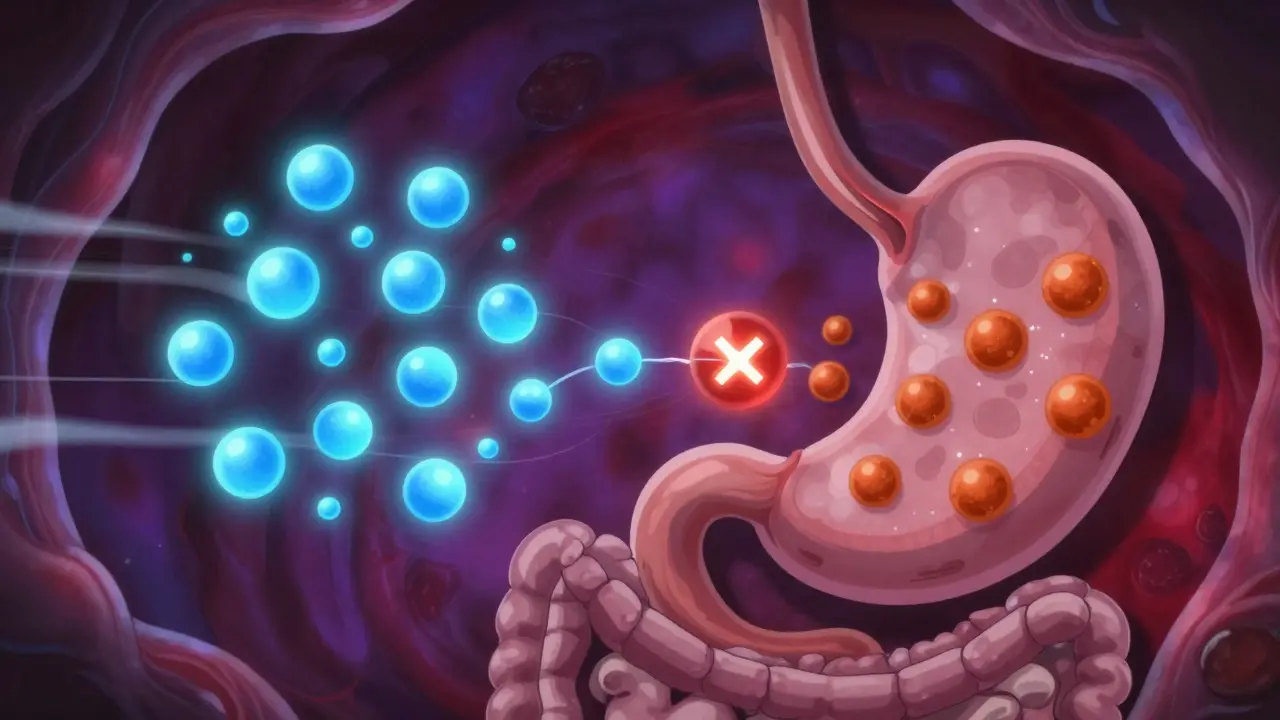
The core issue isn't just about taking two pills at different times. It is about chemistry. Levothyroxine is a synthetic form of thyroxine (T4) used to treat hypothyroidism by replacing missing hormones. Marketed since 1955, it remains the gold standard for treatment. However, when it meets iron supplements, specifically ferrous sulfate or gluconate, they bind together in your gut. They form an insoluble complex-essentially a clump that your body cannot absorb. Studies show this binding can reduce levothyroxine absorption by up to 39%. If you are taking them together, you might as well be flushing half your dose down the toilet.
Why Iron and Thyroid Meds Don't Mix
To understand why timing matters so much, you need to look at what happens inside your gastrointestinal tract. Levothyroxine needs a specific environment to work: it requires a fasting state and low gastric acidity (pH below 3.0) to be absorbed properly. Iron, on the other hand, also thrives in acidic conditions but behaves differently chemically. Iron exists as di- and trivalent cations (Fe2+ and Fe3+). These charged particles act like magnets for the levothyroxine molecule.
When these two meet in the proximal small intestine, they undergo unspecific adsorption. Think of it like trying to mix oil and water, but worse-they stick together and become heavy, unabsorbable sludge. A 2021 systematic review published in *Pharmaceuticals* confirmed that this binding occurs primarily where pH conditions favor complex formation. This isn't a rare side effect; it is a guaranteed chemical reaction if the gap between doses is too short. Even ferrous gluconate, which is often considered gentler on the stomach than ferrous sulfate, still interferes significantly with thyroid hormone uptake.
The Golden Rule: The 4-Hour Window
So, how long do you wait? The medical consensus is clear, though patient experiences vary. Major health authorities agree on a minimum separation time. The British National Formulary (BNF), a key reference for healthcare professionals in the UK (2024 edition) states that levothyroxine and iron must be separated by "at least four hours." Similarly, NICE guidelines, clinical guidance produced by the National Institute for Health and Care Excellence (NG145, updated September 2023) specify maintaining "at least four hours between levothyroxine and ferrous sulfate tablets."
- Levothyroxine: Take on an empty stomach, ideally 30-60 minutes before breakfast.
- Iron Supplement: Take at least 4 hours later, often with lunch or dinner.
Some sources, like Thyroid UK’s patient guidance (updated January 2024), suggest a shorter 2-hour interval might suffice for some. However, this is risky. Gastrointestinal transit times vary wildly from person to person. A 2024 review by GoodRx notes that while 2 hours may work for those with fast digestion, the 4-hour standard provides a necessary safety margin. For patients with conditions like celiac disease or inflammatory bowel disease, experts recommend extending this gap to 6 hours or more due to altered gut motility.
Real-World Impact: What Happens When You Miss the Window?
You might think, "I'll just take them close together to remember better." The data suggests this is a costly shortcut. A 2022 retrospective cohort study by Guzman-Prado et al., published in the *Journal of General Internal Medicine*, tracked patients based on their adherence to timing protocols. The results were stark:
| Timing Strategy | TSH Within Target Range | Risk of Symptoms |
|---|---|---|
| 4+ Hours Separation | 89% | Low |
| Concurrent / <2 Hours | 62% | High |
Dr. Jacqueline Jonklaas, a professor of medicine at Georgetown University, put it bluntly in a 2023 interview: "The 4-hour separation is non-negotiable for optimal treatment outcomes. I've seen TSH levels double in patients who take iron with their thyroid medication." High TSH levels mean your body is screaming for more thyroid hormone, leading to the classic symptoms of hypothyroidism: brain fog, exhaustion, and sensitivity to cold.
Solving the Nausea Dilemma
If the science is clear, why is adherence so low? Because iron sucks. Seriously. About 76% of users report gastrointestinal side effects, primarily nausea and constipation, according to Drugs.com user reports. Here is the catch-22: Levothyroxine must be taken on an empty stomach. Iron causes nausea if taken on an empty stomach, so patients take it with food. But if you take iron with breakfast, and levothyroxine before breakfast, you are cutting into that critical 4-hour window.
Here are practical strategies that real patients and doctors use to break this cycle:
- The Bedtime Shift: Instead of taking levothyroxine in the morning, take it at bedtime. Ensure it is at least 3-4 hours after your last meal. This frees up your entire morning for iron. Many patients find this easier because they sleep through the waiting period.
- Vitamin C Boost: Take your iron supplement with a glass of orange juice or a vitamin C tablet. Vitamin C enhances iron absorption, allowing you to potentially use a lower dose of iron, which may reduce stomach upset.
- Slow-Release Formulations: Ask your doctor about slow-release iron. While it still interacts with levothyroxine, it causes less immediate gastric distress, making it easier to tolerate without food.
- Set Alarms: Use phone alarms labeled clearly. One user on Reddit shared, "I set alarms for 7 AM (levothyroxine) and 11:30 AM (iron with vitamin C), and my TSH has been perfect for 2 years."

Monitoring and Adjusting
Changing your routine isn't a one-time fix; it requires monitoring. Dr. Kenneth Burman, Chief of Endocrinology at MedStar Washington Hospital Center, advises that even with proper timing, some patients may require dose adjustments when initiating iron therapy. Your body's demand for thyroid hormone can fluctuate as your iron levels normalize.
You should expect to have your TSH levels, Thyroid Stimulating Hormone, measured via blood test checked 6-8 weeks after starting iron supplementation or changing your timing protocol. Do not wait for your annual checkup. If you feel your energy dipping or your weight creeping up despite consistent dosing, contact your provider. Early detection of poor absorption prevents long-term complications.
The Future of Treatment
Technology is starting to help bridge this gap. In March 2024, Epic Systems, used by 25% of U.S. hospitals, implemented a clinical decision support alert that flags concurrent prescribing of levothyroxine and iron. This simple digital nudge reduced simultaneous prescribing errors from 84% to 22% in one NHS Trust audit. Furthermore, new formulations are in development. PharmacoLever’s Phase II trial of "ThyroSafe Iron," a chelated iron formulation, showed 87% less levothyroxine binding in preliminary results released in April 2024. While we wait for these innovations, mastering the clock remains your best defense.
Can I take levothyroxine and iron at the same time if I eat a big meal?
No. Food does not prevent the chemical binding between iron and levothyroxine. In fact, food can further delay gastric emptying, potentially keeping the two drugs in contact longer. The 4-hour separation rule applies regardless of whether you eat with your doses.
Does multivitamin iron affect levothyroxine the same way?
Yes. Most multivitamins contain ferrous fumarate or sulfate. Check the label. If it contains any form of elemental iron, treat it with the same caution as a dedicated iron supplement. Separate it by at least 4 hours.
What if I forget my levothyroxine in the morning?
If you remember within 1-2 hours, take it immediately with water. Avoid eating for another hour. If it is closer to your scheduled iron time, skip the dose and resume the next day. Consistency is key, but avoiding interaction is more important than a single missed dose.
Are there iron supplements that don't interact with thyroid meds?
Currently, all oral iron supplements carry some risk of interaction. Newer chelated forms like those in Phase II trials show promise, but as of mid-2026, standard ferrous sulfate and gluconate remain the most common. Always assume interaction unless told otherwise by your endocrinologist.
How long does it take for TSH levels to stabilize after fixing timing?
It typically takes 6 to 8 weeks for TSH levels to reflect changes in medication absorption. Do not adjust your dose yourself during this period. Wait for your blood test results before discussing dosage changes with your doctor.