
ACE Inhibitors and High-Potassium Foods: How to Prevent Hyperkalemia
Potassium Intake Calculator for ACE Inhibitors
Daily Potassium Limit
Based on your kidney function, you should not exceed:
Your current intake: 0 mg
Add Food Items
Your Intake
Risk Assessment
Your potassium intake is safe. Continue monitoring your intake and consult your doctor for regular checks.
Tips for Lower Potassium Intake
Try these swaps to stay within your limit:
- Replace bananas with apples or pears
- Use white rice instead of potatoes
- Choose green beans instead of spinach
- Rinse canned foods to remove potassium
- Avoid salt substitutes (they contain potassium chloride)
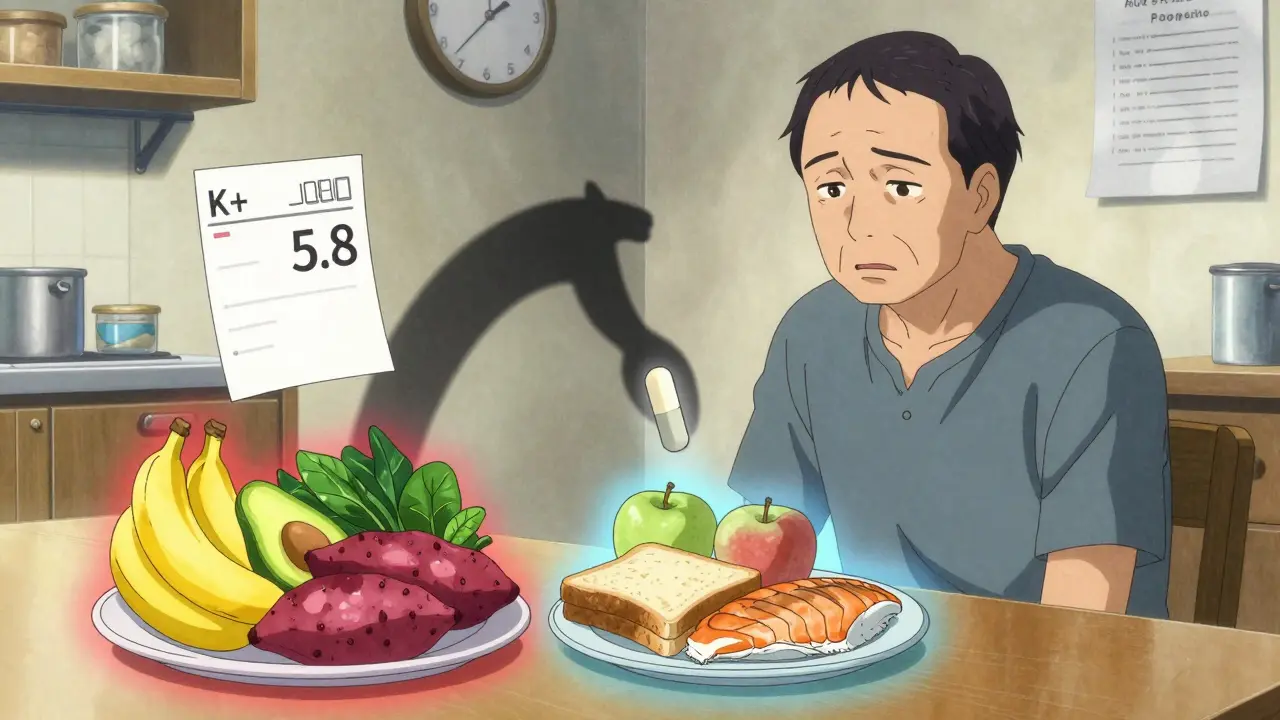
When you’re taking an ACE inhibitor for high blood pressure, heart failure, or kidney disease, you’re getting powerful protection for your heart and kidneys. But there’s a quiet risk hiding in plain sight: your dinner plate. Too much potassium from everyday foods can push your blood potassium levels into dangerous territory - a condition called hyperkalemia. And it’s not rare. About 1 in 5 people on ACE inhibitors develop it, especially if they have kidney problems, diabetes, or are over 75.
Why ACE Inhibitors Raise Your Potassium
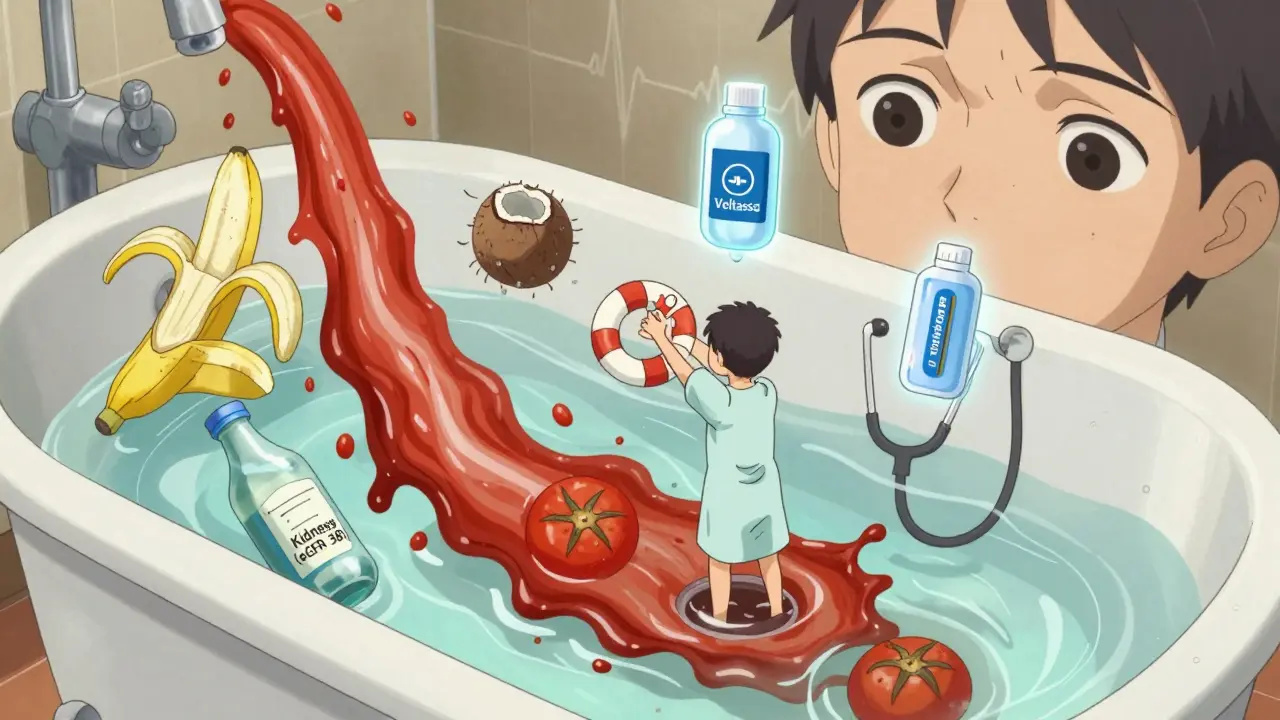
ACE inhibitors work by blocking a hormone system called RAAS. That’s good - it lowers blood pressure and reduces strain on your heart. But here’s the catch: this same system tells your kidneys to flush out extra potassium. When you block it, potassium builds up. Your kidneys don’t stop working, but they lose about 25-35% of their ability to remove potassium. That’s like turning down the drain in a bathtub while the faucet’s still running.
People with kidney disease are at the highest risk. If your eGFR (a measure of kidney function) is below 60, your chance of developing high potassium triples. And if you’re diabetic, your risk jumps 47% compared to someone without diabetes. That’s because diabetes damages the tiny blood vessels in your kidneys, making them even less able to handle potassium.
Who’s Most at Risk?
You’re in the high-risk group if you:
- Are over 75 years old
- Have diabetes, especially with protein in your urine (albuminuria)
- Have heart failure, particularly Class III or IV
- Have chronic kidney disease (CKD Stage 3 or worse)
- Take other meds that raise potassium - like spironolactone, trimethoprim, or potassium supplements
Even if you feel fine, these factors silently increase your danger. That’s why your doctor checks your blood potassium before you start an ACE inhibitor - and again within 7 to 14 days after starting or changing the dose. If your potassium is already above 5.0 mmol/L, your doctor will likely hold off or choose a different medication.
High-Potassium Foods to Watch Out For
It’s not just salt you need to cut back on. Many foods we think of as healthy are packed with potassium. If your kidneys are struggling, even small portions can push your levels too high.
Here are the top offenders:
- Bananas - 422 mg per medium fruit
- Oranges and orange juice - 237 mg per fruit
- Baked potato - 926 mg (yes, that’s one potato)
- Tomatoes and tomato sauce - 292 mg per medium tomato
- Cooked spinach - 839 mg per cup
- Avocado - 708 mg per cup
- Sweet potatoes - 542 mg per medium potato
- Coconut water - 1,150 mg per 16 oz bottle
- Beans and lentils - 600-700 mg per cup cooked
- Salmon - 534 mg per 3 oz serving
And don’t forget the hidden sources: salt substitutes (often made with potassium chloride), protein powders, and sports drinks labeled as "electrolyte-replenishing." One Reddit user reported a potassium spike after drinking 16 oz of coconut water daily while on lisinopril. That’s more potassium than most people get in a full day’s diet.
How Much Potassium Is Safe?
If your kidney function is normal, you don’t need to restrict potassium. But if your eGFR is below 45 mL/min/1.73m² - that’s Stage 3b or worse CKD - most experts recommend limiting potassium to under 2,000 mg per day. That’s less than half of what the average person eats.
Here’s what 2,000 mg looks like in a day:
- Breakfast: 1 slice of white toast (20 mg), 1 small apple (100 mg), black coffee (116 mg)
- Lunch: 3 oz chicken (220 mg), 1/2 cup white rice (30 mg), steamed carrots (180 mg)
- Dinner: 3 oz cod (300 mg), 1/2 cup cooked green beans (100 mg), 1/2 cup mashed potatoes made from instant mix (80 mg)
- Snack: 1 small pear (115 mg)
Total: ~1,800 mg
That’s not starvation. It’s smart choices. Swap potatoes for white rice. Choose apple over banana. Pick green beans over spinach. You’re not giving up nutrition - you’re choosing lower-potassium versions of the same foods.
What You Can Still Eat
Not all fruits and veggies are dangerous. Many are safe in normal portions:
- Apples, pears, berries
- Cabbage, cauliflower, cucumbers
- White rice, pasta, bread (not whole grain)
- Chicken, turkey, eggs
- White fish like cod or flounder
- Water, herbal tea, sparkling water
Draining canned foods helps too. Rinse beans, canned vegetables, and tuna under water - that can cut potassium by up to 50%. Boiling potatoes and vegetables in lots of water and discarding the water also removes some potassium. It’s a small trick, but it adds up.
Monitoring and Medication Adjustments
Your doctor won’t just hand you a list and hope for the best. They’ll track your potassium with regular blood tests:
- Before starting the ACE inhibitor
- 7-14 days after starting or changing the dose
- Every 4 months if stable
If your potassium creeps up to 5.5-6.0 mmol/L, your doctor might:
- Lower your ACE inhibitor dose
- Add a potassium binder like patiromer (Veltassa) or sodium zirconium cyclosilicate (Lokelma)
- Stop other potassium-raising meds
These binders are game-changers. They trap potassium in your gut so it leaves your body in stool instead of building up in your blood. In one study, they cut the number of people who had to stop their ACE inhibitor because of high potassium by 41%.
Why You Can’t Just Quit the Medication
It’s tempting to stop your ACE inhibitor if your potassium rises. But that’s often the worst move. These drugs cut your risk of heart attack, stroke, and kidney failure by up to 30%. If you stop, your blood pressure spikes, your heart gets more stressed, and your kidneys can decline faster.
Doctors now treat high potassium as a manageable side effect - not a reason to quit. With diet changes, binders, and smart monitoring, most people can stay on their ACE inhibitor safely. In fact, a 2023 review found that strict potassium restriction reduced hyperkalemia risk by 57%.
Practical Tips for Daily Life
Here’s what works for real people:
- Keep a laminated food chart on your fridge showing potassium levels of common foods.
- Use an app like "Renal Diet Helper" to log meals and track potassium intake.
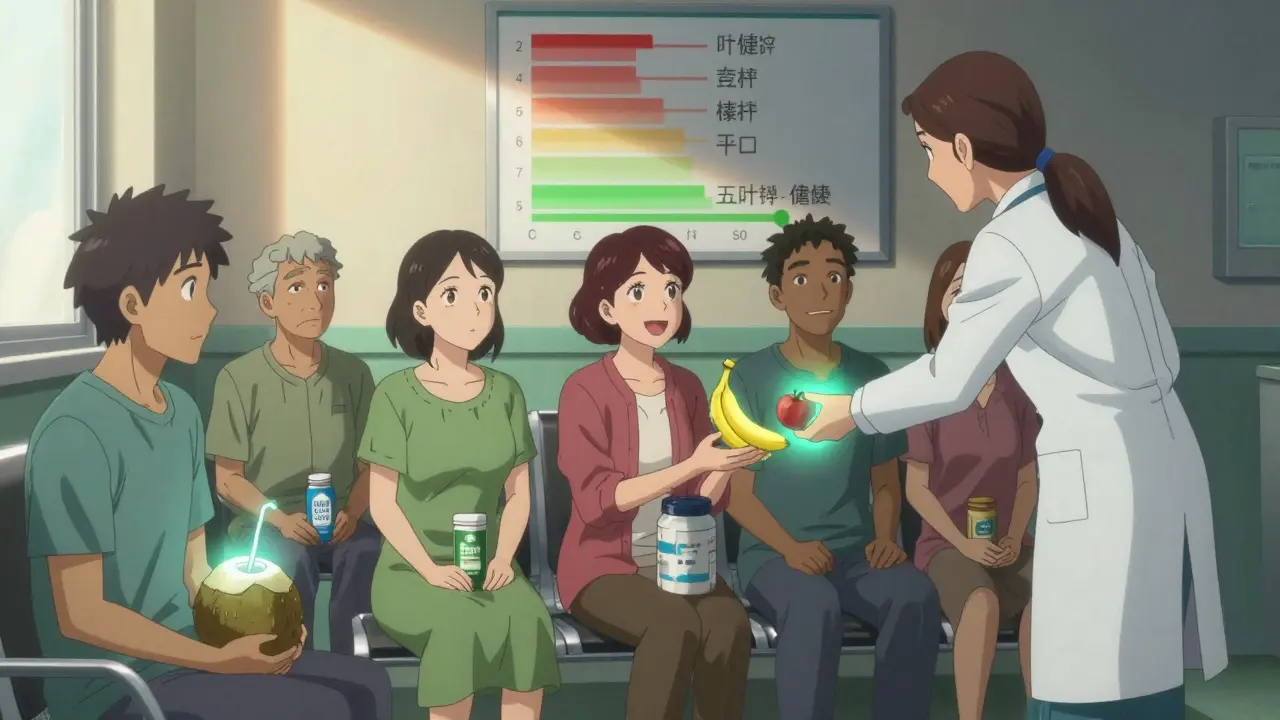
- Ask your doctor for a referral to a renal dietitian - studies show people who get in-person counseling are 42% more likely to stick to their limits.
- Don’t use salt substitutes. They’re full of potassium chloride.
- When dining out, ask for no added salt and skip the side of potatoes or spinach.
- Check labels on protein powders - many have added potassium. Look for "potassium-free" versions.
One woman in Dublin told her nephrologist she was eating "healthy" - oatmeal, bananas, oranges, and spinach. She had no idea those were her problem. Once she switched to white toast, apples, and cabbage, her potassium dropped from 5.8 to 4.2 in six weeks.
What If You Get Symptoms?
High potassium often has no symptoms - until it’s too late. But when levels rise fast, you might feel:
- Weakness or fatigue
- Numbness or tingling
- Irregular heartbeat
- Shortness of breath
If you feel any of these and you’re on an ACE inhibitor, call your doctor or go to urgent care. Don’t wait. A potassium level above 6.0 mmol/L can cause dangerous heart rhythms. It’s not common, but it’s life-threatening.
There’s no magic pill to fix this. It’s about awareness, consistency, and working with your care team. You don’t have to give up your favorite foods forever - just learn which ones to limit, how much, and when.
Can I still eat bananas if I’m on an ACE inhibitor?
If you have normal kidney function, one banana a day is usually fine. But if you have kidney disease, diabetes, or your potassium is already high, even one banana can push you over your limit. Swap it for an apple or a pear. You’ll still get fiber and vitamins without the potassium spike.
Is coconut water safe for people on ACE inhibitors?
No, it’s not safe if you have reduced kidney function. A 16-ounce bottle of coconut water contains about 1,150 mg of potassium - nearly half your daily limit if you’re on a 2,000 mg restriction. It’s marketed as a "natural electrolyte drink," but for people on ACE inhibitors, it’s a hidden risk. Stick to water or herbal tea.
Do I need to stop ACE inhibitors if my potassium goes up?
Not necessarily. Stopping the medication increases your risk of heart attack, stroke, and kidney damage. Instead, your doctor will likely adjust your diet, prescribe a potassium binder, or reduce your dose. Most people can stay on ACE inhibitors safely with proper management.
Can I use salt substitutes to reduce sodium?
Avoid them. Most salt substitutes are made with potassium chloride. One teaspoon can contain over 1,000 mg of potassium - more than a banana. If you need to lower sodium, flavor food with herbs, lemon, garlic, or vinegar instead.
How often should I get my potassium checked?
Before starting the medication, then again 7-14 days after starting or changing the dose. After that, every 4 months if your levels are stable. If you have kidney disease or diabetes, your doctor may check more often - sometimes every 2-3 months.
Final Thoughts
You’re not being punished. You’re being protected. ACE inhibitors save lives - but they need you to be part of the team. You don’t need to become a nutrition expert. You just need to know the big risks, make small swaps, and stay in touch with your care team. Most people who follow these steps never have another potassium problem. And they keep living well - with their heart, kidneys, and blood pressure under control.
Phil Davis
January 27, 2026 AT 12:51So let me get this straight - we’re being told to swap bananas for apples like we’re on some kind of renal diet reality show? 🤨 I mean, I get it, but also… my smoothie is now just sad water with a hint of fiber.
Irebami Soyinka
January 28, 2026 AT 01:23USA always overcomplicate everything 😒! In Nigeria, we eat plantain with pepper soup daily - no blood test, no app, no doctor. If your body can't handle it, maybe you're weak. ACE inhibitors? We call them 'magic pills' - don't blame the food, blame the weak kidneys! 🇳🇬🔥
Mel MJPS
January 30, 2026 AT 00:08This was so helpful - I’ve been on lisinopril for 3 years and had no idea coconut water was that bad. I used to drink it after yoga. Now I’m switching to herbal tea and feeling way more in control. Thank you for breaking it down like this 😊
Kathy Scaman
January 30, 2026 AT 20:00Okay but can we talk about how the word 'potassium binder' sounds like a villain in a Marvel movie? Veltassa. Lokelma. Like they’re trying to summon a demon to save your life. I’m here for it. 🧪💀
Anna Lou Chen
January 31, 2026 AT 14:45The entire paradigm of medical management here is a neoliberal farce. You’re being pathologized for consuming whole foods while Big Pharma pushes synthetic binders as the 'solution.' The real issue is the commodification of health - we’ve turned dietary wisdom into a monetized algorithm. Your body isn’t a biochemistry lab. It’s an ecosystem. And they’re draining it for profit. 🌍💊
Mindee Coulter
February 1, 2026 AT 02:35Just switched to white rice and apples and my potassium dropped from 5.6 to 4.5 in 3 weeks. No binders. No drama. Just small changes. You got this 💪
Sue Latham
February 2, 2026 AT 04:05Oh honey, you’re not eating bananas - you’re flirting with cardiac arrest. And coconut water? That’s not hydration, that’s a potassium bomb wrapped in a tropical fantasy. You think you’re being healthy? Sweetie, you’re just a walking electrolyte disaster with a yoga mat. 😘
Lexi Karuzis
February 3, 2026 AT 19:12Wait… did you know the FDA doesn’t require potassium labeling on most foods? That’s not an accident. That’s a cover-up. Big Pharma knows people will panic if they realize how much potassium is in 'healthy' foods. They want you dependent on binders. Check the labels. Read the fine print. They’re lying to you. 🚨
Brittany Fiddes
February 5, 2026 AT 06:38I mean, I’m British and I’ve been on ramipril for 12 years. We don’t do 'apps' or 'laminated charts' here. We just eat toast, tea, and bloody well don’t complain. Also, spinach? Please. We boil it until it’s grey and throw the water out - like our ancestors did. Modern medicine is just overcomplicating what our grandmas knew instinctively.
James Dwyer
February 7, 2026 AT 03:17You’re not losing your favorite foods - you’re upgrading your life. This isn’t a restriction, it’s a reset. One apple instead of a banana? That’s not sacrifice. That’s strategy. You’re still winning. 💯
Chris Urdilas
February 8, 2026 AT 18:51So you’re telling me my avocado toast habit is basically a slow-motion heart attack? Cool. I’ll just… eat it on Tuesdays and call it a lifestyle experiment. Also, who designed this system? Someone who’s never eaten a potato? 😂
Howard Esakov
February 9, 2026 AT 10:13Let’s be real - if you’re relying on a 2,000 mg potassium limit, you’re already in the danger zone. The real solution isn’t diet tweaks - it’s getting off ACE inhibitors entirely. They’re outdated. ARBs are cleaner. Less potassium drama. But of course, your cardiologist won’t tell you that. They’re paid to push the brand-name stuff. 🧠💸
Rhiannon Bosse
February 9, 2026 AT 23:13And yet… nobody talks about how the FDA approved these binders without long-term studies. Veltassa? It’s literally a synthetic sponge for potassium. What’s it doing to your gut microbiome? Are we just swapping one silent killer for another? And why are we treating the symptom and not the cause? This isn’t medicine - it’s damage control capitalism. 🤖🩺
Bryan Fracchia
February 11, 2026 AT 03:27It’s not about fear. It’s about harmony. Your body isn’t broken - it’s just asking you to listen. Swap the banana for the pear, not because you’re weak, but because you’re wise. The medicine helps. The food respects. And together? You’re not just surviving - you’re living, fully, quietly, deeply. 🌿