
Alcohol and Sleep: How Drinking Affects Your Night and Next-Day Energy
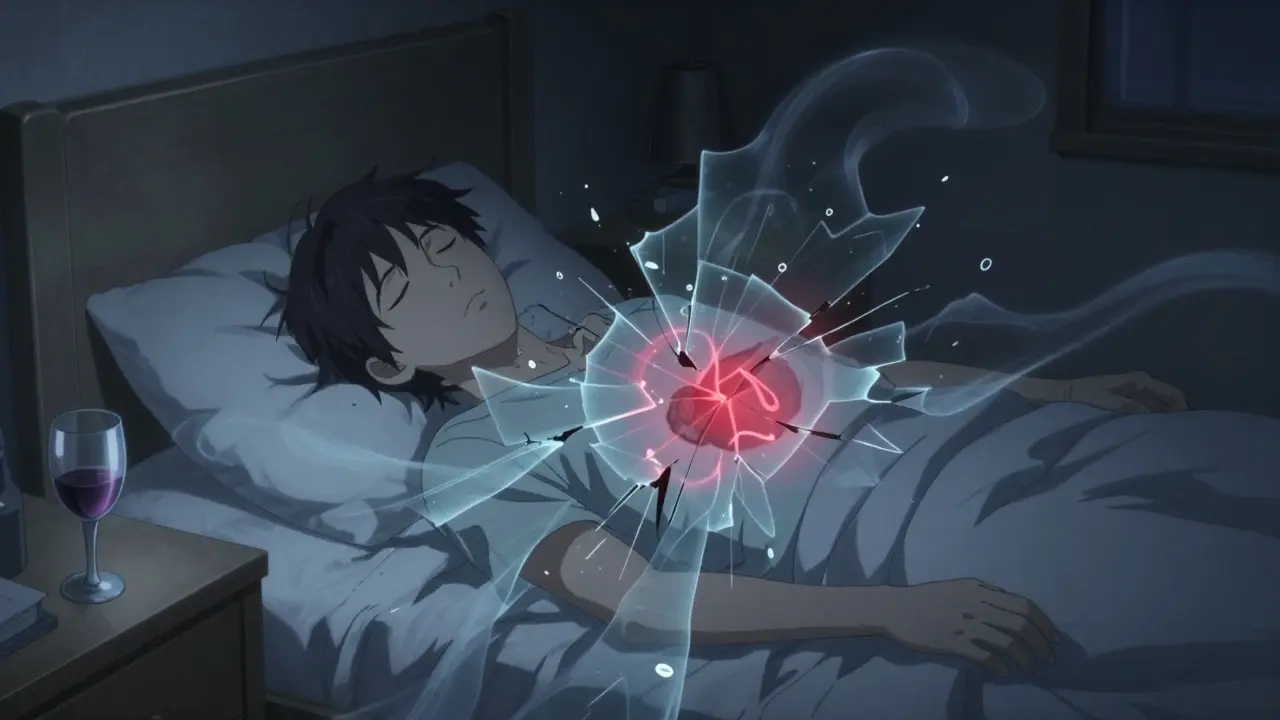
Many people swear by a nightcap to help them fall asleep faster. But what if that glass of wine or beer is actually wrecking your sleep - even if you don’t wake up? The truth is, alcohol doesn’t improve sleep. It just tricks your brain into thinking it does. And the damage doesn’t stop when you drift off.
How Alcohol Tricks Your Brain Into Falling Asleep
Alcohol hits your brain like a sedative. It boosts a chemical called adenosine, which naturally builds up during the day and tells your body it’s time to rest. A single drink can lower your sleep latency - the time it takes to fall asleep - by up to 20%. That’s why people feel like it works. But here’s the catch: your body doesn’t stay fooled for long.
As your liver processes alcohol (about one standard drink per hour), adenosine levels crash. Your brain, confused and overstimulated, starts firing up. That’s when your sleep falls apart. By 3 a.m., if you drank five drinks at 10 p.m., most of the alcohol is gone - and your sleep is in chaos. You’re not sleeping anymore. You’re just tossing and turning.
Fragmented Sleep: The Hidden Cost of Nightly Drinks
Alcohol doesn’t just make you wake up once - it shatters your sleep into pieces. A 2023 study with 31 adults found that drinking alcohol before bed increased nighttime awakenings by 44% compared to nights without alcohol. People who drink within two hours of bedtime are 67% more likely to wake up at least once, compared to just 39% of non-drinkers.
This isn’t just about being awake. It’s about what happens in those fragments. Your sleep cycles get scrambled. You lose the deep, restorative stages - especially slow-wave sleep (SWS), the kind that repairs muscles, strengthens immunity, and clears brain toxins. One study showed alcohol reduces SWS by 15.3%, even if total sleep time stays the same. That means you’re lying there for 8 hours, but your body isn’t recovering.
And then there’s REM sleep - the stage where dreams happen and your brain sorts memories and emotions. Alcohol slashes REM by up to 50% in the first half of the night. Later, your brain tries to make up for it, flooding you with intense, vivid dreams or nightmares. This rebound effect is why some people wake up feeling “dreamy” or anxious after drinking. It’s not imagination. It’s your brain scrambling to recover what alcohol stole.
Alcohol and Sleep Apnea: A Dangerous Mix
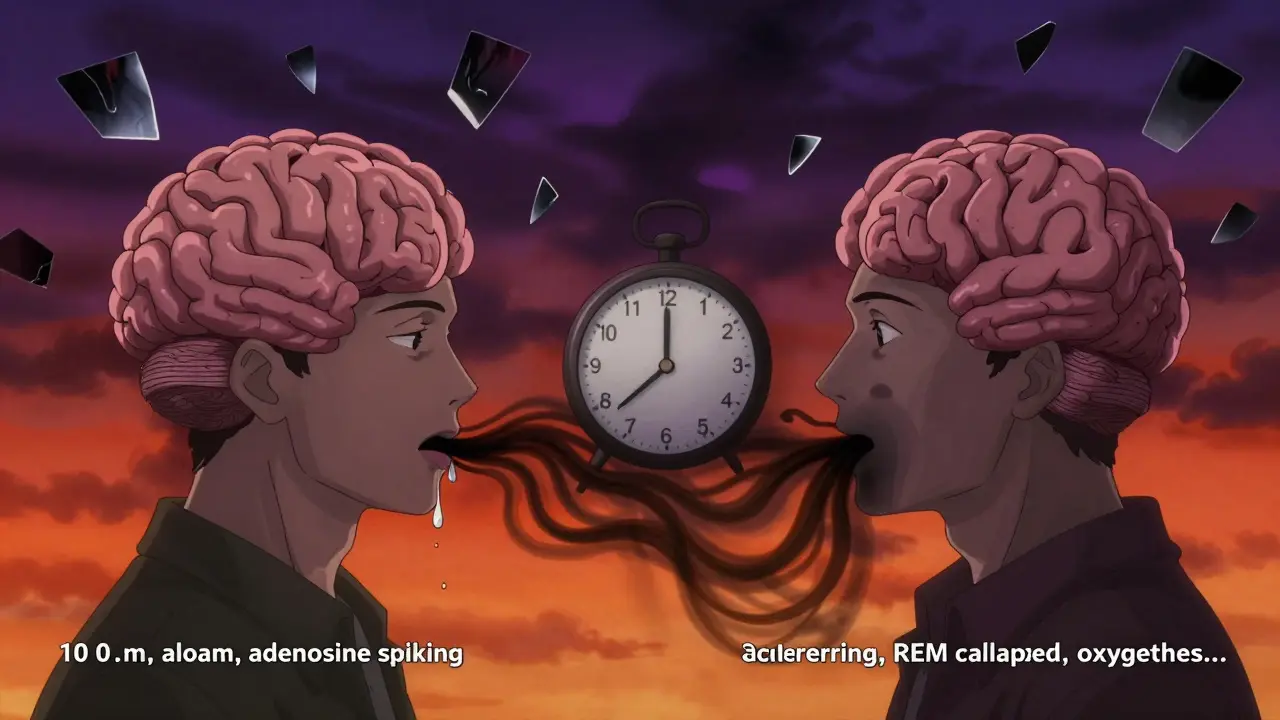
If you snore, or have been told you stop breathing at night, alcohol is making it worse. Alcohol relaxes the muscles in your throat - the same ones that keep your airway open. When they go limp, your airway collapses. That’s sleep apnea.
One standard drink before bed increases your apnea-hypopnea index (AHI) by 20%. Two drinks? That’s a 40% spike. Heavy drinkers (5+ drinks) see their risk of moderate-to-severe sleep apnea jump by 51%. Even if you’ve never been diagnosed, alcohol can turn mild snoring into full-blown breathing pauses. Oxygen levels drop. Your heart races. Your brain wakes you up - just enough to gasp for air, but not enough for you to remember it.
The American Thoracic Society says people with sleep apnea should avoid alcohol entirely within three hours of bedtime. Because it’s not just about comfort - it’s about survival. Every apnea event strains your heart, raises blood pressure, and increases stroke risk.
Next-Day Effects: You Feel Fine. But Your Brain Isn’t.
Most people think: “I slept 7 hours. I’m good.” But your brain knows the truth. Even if you don’t feel tired, alcohol’s sleep sabotage shows up in your performance.
A 2022 study found that after drinking before bed, people had 12.7% slower cognitive processing speed and 9.4% less working memory capacity the next day. That’s like missing a full night’s sleep. You’re slower to react, harder to focus, more forgetful. And you probably don’t realize it.
Emotions take a hit too. People who drank before bed showed 31.2% more emotional reactivity to negative stimuli. A rude email, a traffic jam, a child’s tantrum - all feel way more intense. Your brain’s emotional control center, the prefrontal cortex, doesn’t recover properly without deep, uninterrupted sleep. Alcohol steals that recovery.
And here’s the quiet danger: you start believing you need alcohol to sleep. A 2023 University of Missouri study found that people who binge drink and then suffer poor sleep are more likely to drink again the next night - not to party, but to fix their sleep. It’s a loop: alcohol ruins sleep → sleep deprivation increases craving → you drink again. This is how dependence starts.

Long-Term Damage: More Than Just Tiredness
One night? Maybe manageable. But if you drink before bed regularly, the damage piles up.
A 36-year twin study found that heavy drinkers were 3.37 times more likely to have poor sleep quality than non-drinkers. And it’s not just about feeling groggy. Regular alcohol use before bedtime increases your risk of chronic insomnia by 38%. That’s not a small bump - that’s a major health risk.
For older adults, the risks are even steeper. A 5-year study showed that people who regularly drank before bed experienced cognitive decline 23% faster than those who didn’t. Memory, attention, decision-making - all eroded more quickly. Alcohol doesn’t just mess up your sleep. It accelerates brain aging.
And if you’re trying to quit drinking? Sleep is your biggest hurdle. Half to 70% of people in recovery from alcohol dependence suffer from severe insomnia for months. It can take 3 to 6 months for sleep architecture to return to normal after stopping. That’s why many relapse - not because they crave the drink, but because they can’t sleep without it.
What’s the Real Answer? Stop Using Alcohol as a Sleep Aid
There’s no safe dose of alcohol for sleep. Even one drink reduces REM sleep by 9.3% and increases fragmentation by 11.7%. The European Sleep Research Society says it plainly: no level of alcohol before bed improves sleep quality.
If you use alcohol to fall asleep, you’re not fixing a problem - you’re creating one. Here’s what to do instead:
- Stop drinking within 3 hours of bedtime. That gives your body time to process it before sleep deepens.
- Try magnesium-rich foods (like almonds, spinach, or bananas) or a warm, non-alcoholic drink (chamomile tea, warm milk) to relax naturally.
- Keep your bedroom cool, dark, and quiet. Temperature matters more than you think.
- If you’re stressed and reach for a drink to unwind, try 10 minutes of breathing exercises or journaling instead.
- If you have sleep apnea or insomnia, talk to a doctor - don’t self-medicate with alcohol.
Alcohol might feel like a quick fix. But it’s a trap. It steals your deepest rest, worsens breathing, scrambles your emotions, and slowly damages your brain. The best way to sleep well isn’t to drink more - it’s to drink less, or not at all.
Does alcohol help you sleep better if you only have one drink?
No. Even one standard drink reduces REM sleep by 9.3% and increases sleep fragmentation by 11.7%. While it might help you fall asleep faster, it disrupts the quality of your sleep later in the night, especially the restorative stages. There’s no dose of alcohol that improves overall sleep quality.
Can alcohol cause sleep apnea, or just make it worse?
Alcohol doesn’t cause sleep apnea on its own, but it makes it significantly worse. It relaxes throat muscles, increasing the number and duration of breathing pauses. Each drink before bed can raise your apnea-hypopnea index (AHI) by 20%. For people who already have sleep apnea, even one drink can reduce oxygen levels by 3-5% during sleep.
Why do I wake up sweating or with a racing heart after drinking?
As alcohol leaves your system, your nervous system goes into overdrive. Your heart rate increases by up to 6.7 beats per minute, and your body temperature rises as your metabolism tries to clear the toxin. These are signs your body is struggling to regain balance after alcohol’s sedative effects wear off. It’s not just discomfort - it’s your body signaling disrupted sleep regulation.
How long does it take for sleep to improve after quitting alcohol?
For non-dependent drinkers, sleep architecture can normalize within 3-9 days. But for people with alcohol dependence, it can take 3 to 6 months for deep sleep and REM cycles to return to normal. During this time, insomnia is common and can be a major trigger for relapse. Patience and support are key.
Is there a difference between wine, beer, and spirits when it comes to sleep?
No. The effect on sleep depends on the amount of alcohol - not the type. One standard drink of wine, beer, or spirits all contain about the same amount of pure alcohol (14 grams). Whether it’s a glass of red or a pint of lager, if it’s alcohol, it disrupts sleep architecture the same way. What matters is the dose, not the drink.
Can improving sleep help someone quit drinking?
Yes. Poor sleep is one of the strongest predictors of relapse in people recovering from alcohol use disorder. When sleep improves - through better habits, therapy, or sometimes medication - cravings decrease and emotional stability returns. Fixing sleep isn’t just helpful - it’s often essential for long-term recovery.
Noluthando Devour Mamabolo
March 14, 2026 AT 21:06Kathy Leslie
March 16, 2026 AT 01:08Amisha Patel
March 17, 2026 AT 19:19Leah Dobbin
March 18, 2026 AT 13:57Elsa Rodriguez
March 19, 2026 AT 12:09Serena Petrie
March 21, 2026 AT 10:13Ali Hughey
March 23, 2026 AT 04:51ALSO: WHY ISN’T THE FDA BANNING NIGHTCAPS? WHY IS IT STILL LEGAL? SOMETHING’S WRONG. I’M NOT CRAZY. I’M AWARE.
Alex MC
March 24, 2026 AT 09:33tynece roberts
March 25, 2026 AT 08:01Rosemary Chude-Sokei
March 26, 2026 AT 14:49mir yasir
March 27, 2026 AT 12:49Buddy Nataatmadja
March 29, 2026 AT 00:16