
Amblyopia: How Vision Development and Patching Therapy Restore Childhood Sight
What Is Amblyopia?
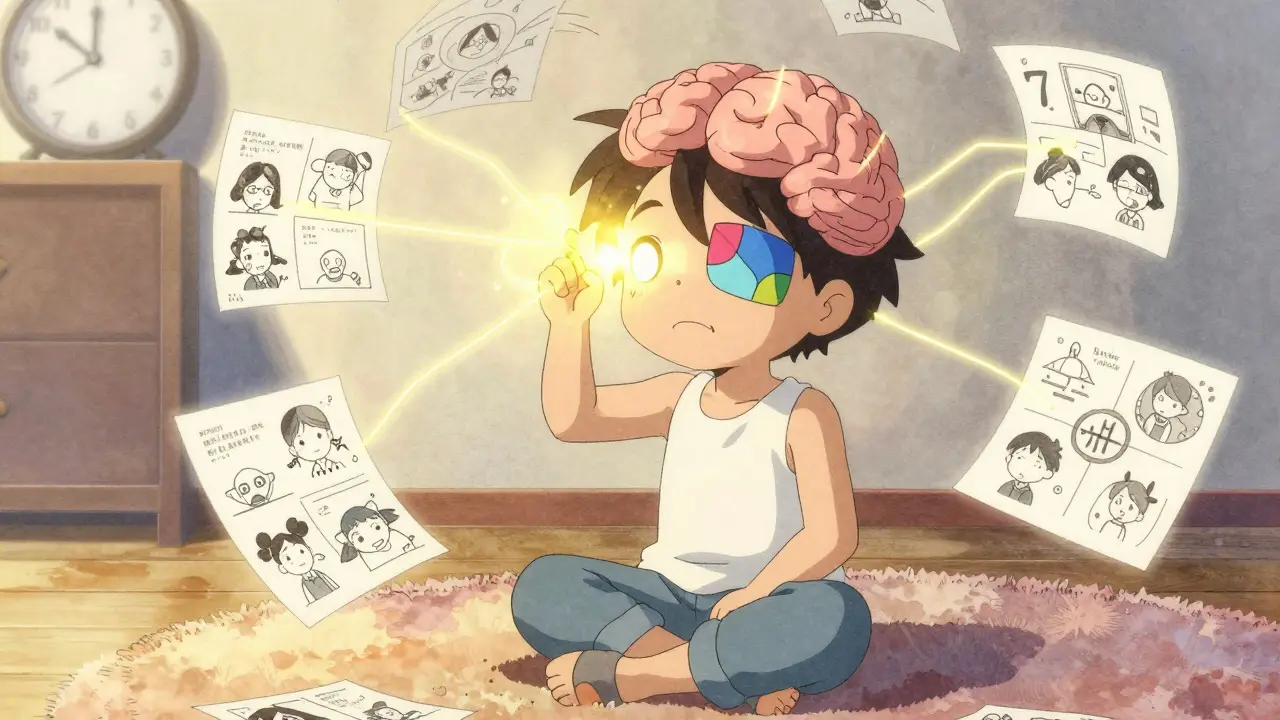
Amblyopia, often called "lazy eye," isn’t a problem with the eye itself-it’s a brain issue. It happens when one eye doesn’t develop normal vision during early childhood, so the brain starts ignoring signals from that eye. Even with glasses or contacts, the affected eye won’t see clearly. This isn’t something that fixes itself. If left untreated, it can lead to permanent vision loss in that eye.
It’s the most common cause of vision problems in kids, affecting 2% to 4% of children, according to the National Center for Biotechnology Information. The good news? Most cases can be corrected-if caught early. The critical window for treatment is between birth and age 7. After that, the brain’s ability to rewire itself for vision drops sharply.
Three Types of Amblyopia-and What Causes Each
Amblyopia doesn’t come in just one form. There are three main types, each with a different root cause:
- Strabismic amblyopia (about half of all cases) happens when the eyes aren’t aligned. One eye turns in, out, up, or down. The brain ignores the misaligned eye to avoid double vision, causing it to weaken.
- Anisometropic amblyopia (around 30% of cases) occurs when there’s a big difference in refractive error between the two eyes. One eye might be very nearsighted or farsighted while the other isn’t. The brain favors the clearer image and neglects the blurry one.
- Deprivation amblyopia (10-15% of cases) is caused by something physically blocking light from entering the eye-like a congenital cataract, droopy eyelid (ptosis), or corneal scar. This type is the most serious and needs urgent treatment.
Some kids develop bilateral amblyopia, where both eyes are affected, usually because both have high uncorrected prescriptions. These cases are harder to spot because the child doesn’t favor one eye over the other.
Who’s at Risk?
Not all children are equally likely to develop amblyopia. Certain factors raise the risk:
- Being born prematurely-this triples the chance of developing it.
- Low birth weight (under 5.5 pounds).
- Having a close family member with amblyopia or strabismus-this increases risk by 30-40%.
- Having developmental delays or neurological conditions.
These kids need more frequent eye checks. The American Academy of Pediatrics recommends vision screening for all children by age 3, and again before starting school. Waiting until school age can mean missing the window for full recovery.
How Is It Diagnosed?
Amblyopia can’t be caught by simply asking a child if they can see the board. Many kids don’t realize their vision is blurry because they’ve never seen clearly with both eyes. That’s why professional eye exams are essential.
A full pediatric eye exam includes:
- Visual acuity testing using pictures or letters suited to the child’s age.
- Refraction to check for nearsightedness, farsightedness, or astigmatism.
- Eye alignment tests to spot strabismus.
- Fundus examination to rule out cataracts or other structural problems.
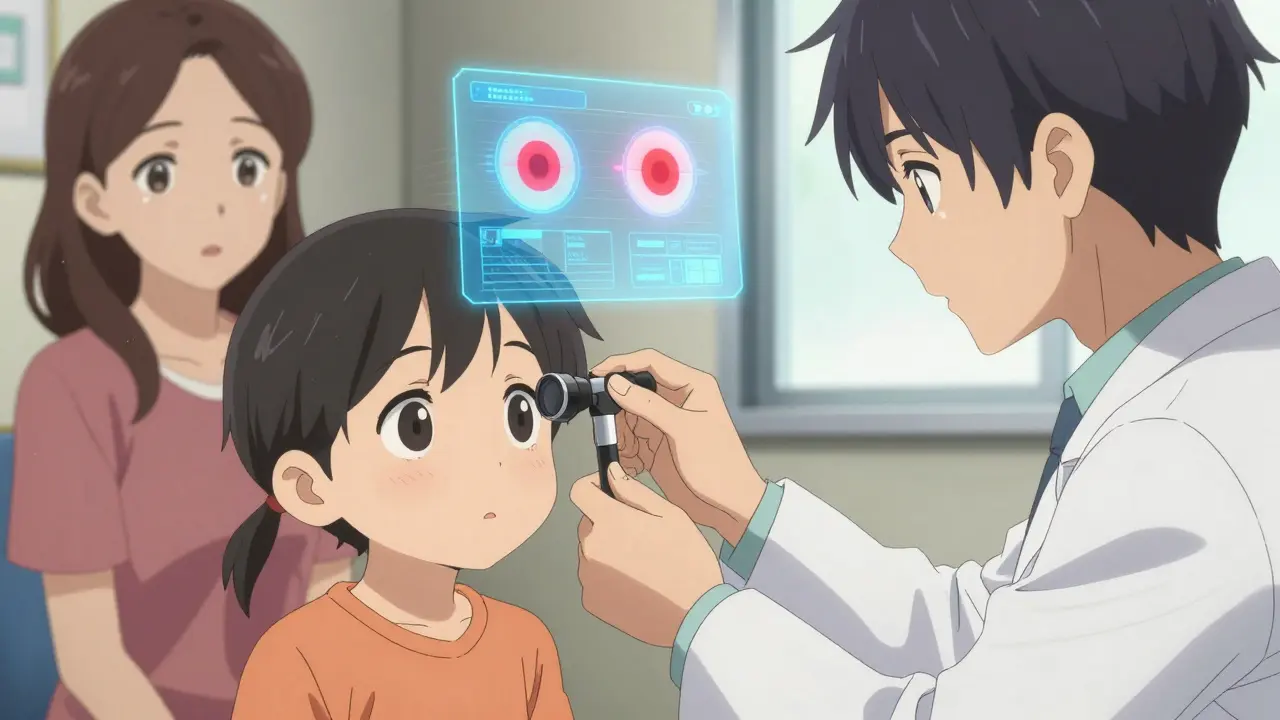
Doctors use specialized tools like retinoscopy and cover tests that don’t require the child to say anything. If a child consistently turns away from one eye during testing, or if one eye seems to drift, that’s a red flag.
Patching Therapy: The Gold Standard Treatment
The most proven way to treat amblyopia is patching therapy. The idea is simple: cover the stronger eye to force the brain to use the weaker one. Over time, the brain rewires itself, and vision improves.
How long should the patch be worn? It depends on severity and age. For moderate amblyopia (vision between 20/40 and 20/100), the landmark Amblyopia Treatment Study found that 2 hours of daily patching works just as well as 6 hours. That’s a game-changer for families.
For severe cases (vision worse than 20/100), doctors often start with 6 hours a day. Treatment usually lasts 6 to 12 months, with regular check-ins every 4 to 8 weeks to measure progress.
Why Compliance Is the Biggest Hurdle
Patching works-but only if kids wear the patch. Studies show only 40-60% of children stick with the full treatment plan. Parents report three big problems:
- Skin irritation from adhesive patches.
- Child resistance-kids feel self-conscious or get frustrated.
- Social stigma-other kids tease them, or parents worry about judgment.
Successful clinics now use behavioral strategies to boost adherence:
- "Patching parties" where kids wear patches with friends or siblings.
- Digital trackers like LazyEye Tracker, used by 22% of pediatric eye practices.
- Gradual exposure-starting with 30 minutes a day and building up.
- Reward systems-sticker charts, small prizes for daily patching.
One study found that when parents received detailed counseling about how the brain changes during treatment, adherence jumped from 45% to 89%. Understanding the science makes a huge difference.
Alternatives to Patching
Not every child tolerates patches. That’s where other options come in:
- Atropine drops-a drop of 1% atropine in the stronger eye once a day blurs near vision, making the lazy eye work harder. The Amblyopia Treatment Study found it just as effective as patching for moderate cases, with 79% of kids reaching 20/30 vision or better after 6 months.
- Bangerter filters-frosted adhesive films placed on spectacle lenses. They’re less noticeable than patches and work well for older kids who refuse traditional treatment. Efficacy is around 60-70%.
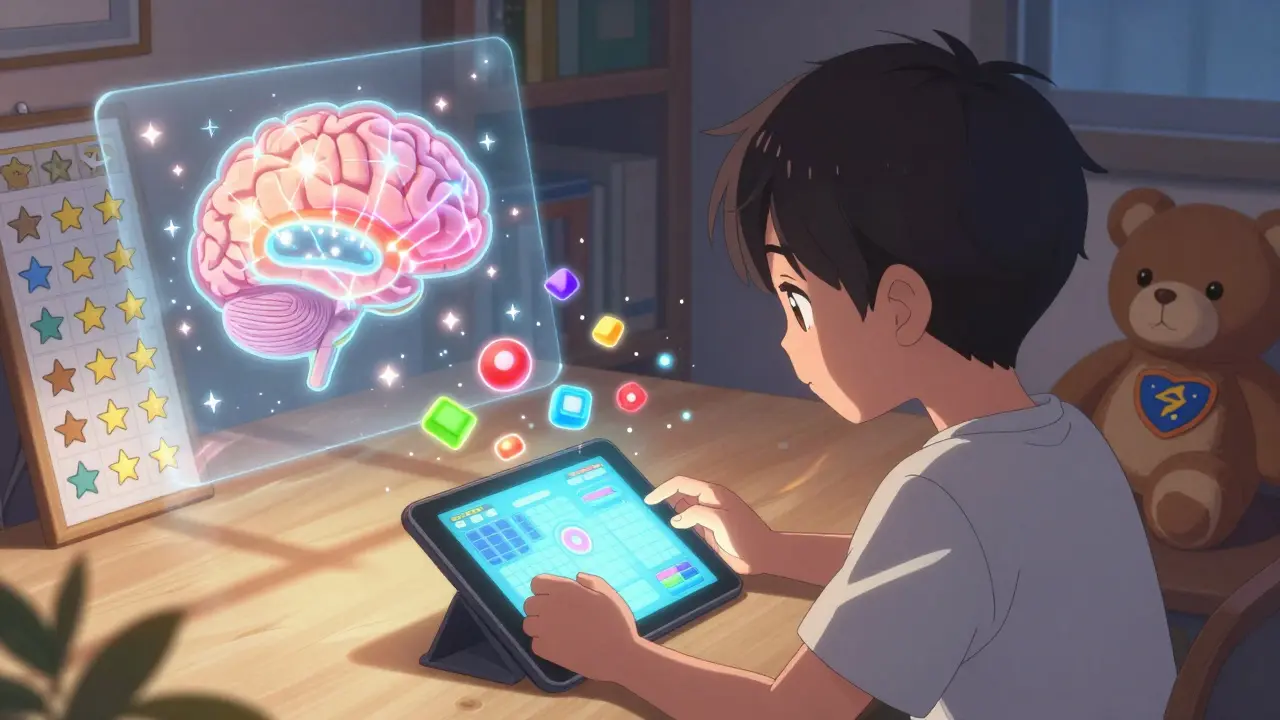
- Digital therapies-apps like AmblyoPlay use video games designed to stimulate the weaker eye. FDA-cleared since 2021, they show 75% compliance rates-far higher than patches. They’re especially helpful for kids who find patching boring or embarrassing.
Atropine and Bangerter filters are often used as first-line treatments for mild cases or as maintenance after patching.
When Surgery Is Needed
If amblyopia is caused by strabismus or a physical blockage like a cataract, surgery might come first. For example, if a child has a droopy eyelid blocking vision, the lid must be lifted before patching can help. Or if a cataract is present, it must be removed.
But surgery alone isn’t enough. After correcting the physical issue, patching or atropine is still required to train the brain. Studies show 70-80% of kids who have strabismus surgery need follow-up vision therapy to reach their best possible vision.
Can Adults Be Treated?
For decades, doctors believed amblyopia couldn’t be fixed after age 8. That’s changing. New research shows adults can still improve-just not as much.
Studies using intensive perceptual learning tasks (like identifying faint shapes or tracking moving dots) have shown modest gains in visual acuity and depth perception in adults with amblyopia. But results are slow, and full recovery is rare.
The bottom line: Childhood is still the best time. Kids treated before age 5 recover 85-90% of vision. Between ages 5 and 7, that drops to 50-60%. After age 8, improvement is possible but limited.
The Role of Vision Therapy
Patching fixes the signal-but not always the coordination. Many kids with amblyopia also struggle with eye teaming, focusing, and depth perception.
Adding vision therapy-structured exercises done 2-3 times a week for 12-24 weeks-can improve these skills. At Fox Eye Care Group, kids who got both patching and vision therapy showed 15-20% better stereo vision (depth perception) than those who only patched.
Therapy includes activities like using 3D glasses, tracking moving targets, and focusing on near-far objects. These aren’t magic tricks-they’re neuroscience-based training to help the eyes work together.
What’s Next in Treatment?
Research is moving fast. Here’s what’s on the horizon:
- Weekend-only atropine-a 2022 study showed that giving drops only on weekends maintained gains just as well as daily use, making life easier for families.
- Transcranial random noise stimulation (tRNS)-a non-invasive brain stimulation technique now in phase 2 trials. Early results show a 40% greater improvement in vision when combined with patching.
- AI-powered home monitoring-apps that use smartphone cameras to track patching time and eye movement, sending alerts to doctors if compliance drops.
The global market for amblyopia treatments is expected to grow 6.2% annually through 2028. But no new tech replaces the core message: early detection saves sight.
What Parents Should Do Now
If your child hasn’t had a professional eye exam by age 3, schedule one. Don’t wait for complaints. Kids rarely say, "I can’t see well." They adapt.
Signs to watch for:
- Closing or squinting one eye to see better.
- Head tilting or turning.
- Clumsiness or trouble with depth perception (bumping into things).
- One eye that seems to wander.
And if your child is diagnosed? Don’t panic. Treatment works. But it takes time, patience, and consistency. Stick with it. The goal isn’t just better vision-it’s full, lifelong visual function.
How Long Does Treatment Last?
Most children need treatment for 6 to 12 months. Some need it longer, especially if the amblyopia was severe or diagnosed late. Stopping too soon is a common mistake. Vision can regress if the brain reverts to ignoring the weaker eye.
Follow-up visits every 4 to 8 weeks are non-negotiable. Adjustments to patch time or treatment type are based on actual vision measurements-not guesses.
Final Thoughts
Amblyopia isn’t a life sentence. It’s a treatable condition-if caught early. Patching therapy remains the most effective, evidence-backed method. Alternatives like atropine and digital games are valuable tools, especially for kids who struggle with traditional patches.
The science is clear: the earlier the intervention, the better the outcome. Vision development happens in early childhood-and once that window closes, the brain’s ability to change is limited. That’s why routine screenings, parental awareness, and consistent treatment aren’t optional. They’re essential.
Margaret Khaemba
January 23, 2026 AT 08:39Malik Ronquillo
January 24, 2026 AT 21:57Brenda King
January 25, 2026 AT 17:17Keith Helm
January 27, 2026 AT 15:10Daphne Mallari - Tolentino
January 27, 2026 AT 21:19Neil Ellis
January 29, 2026 AT 20:23Akriti Jain
January 30, 2026 AT 19:54Mike P
January 31, 2026 AT 12:46Sarvesh CK
February 2, 2026 AT 02:04Hilary Miller
February 4, 2026 AT 00:04Lana Kabulova
February 4, 2026 AT 11:05Rob Sims
February 4, 2026 AT 21:21