
Benzodiazepines: What They Do, How They Help, and Why They Can Be Dangerous
For decades, benzodiazepines have been a go-to for sudden panic attacks, severe insomnia, or muscle spasms. They work fast-sometimes in under an hour. But here’s the catch: what helps today can hurt you tomorrow. If you’ve ever been prescribed a benzo for anxiety or sleep, you’ve probably heard the warning: don’t take this long-term. But why? And what happens if you do?
How Benzodiazepines Work in the Brain
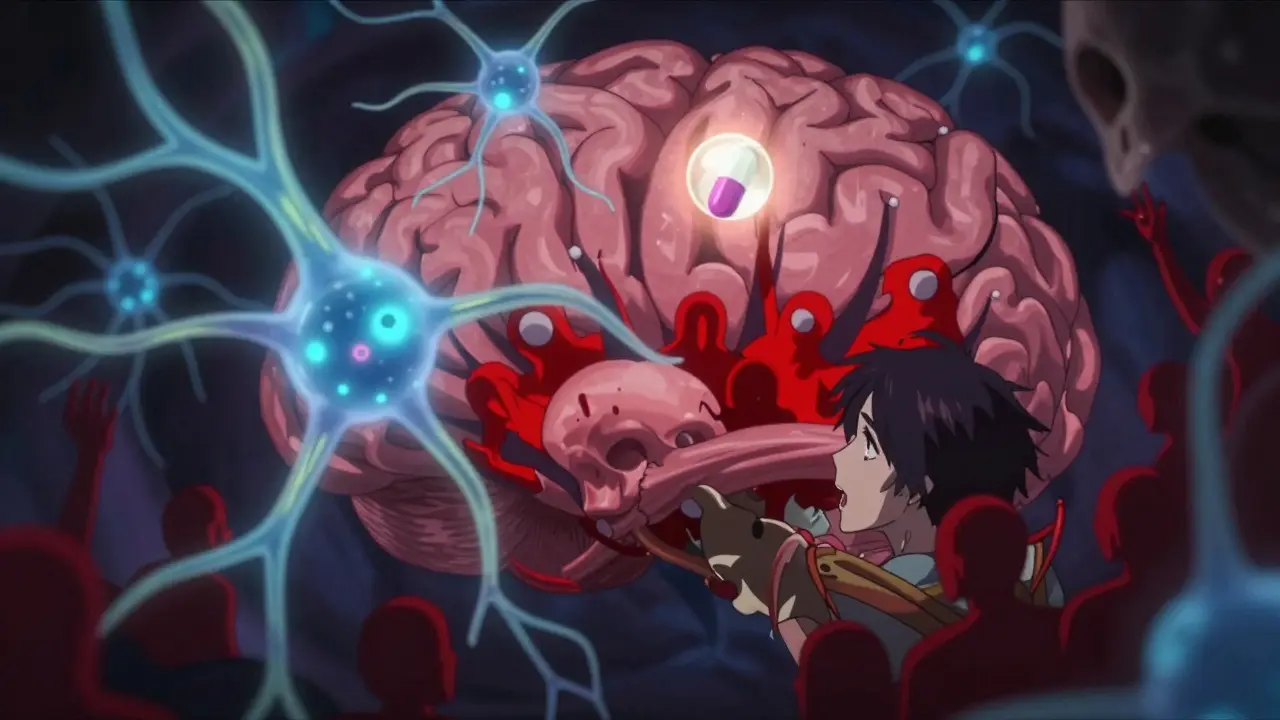
Benzodiazepines don’t just make you feel calm-they change how your brain processes fear and stress. They boost the effect of GABA, a natural chemical that slows down overactive nerve signals. Think of your brain like a room full of people shouting. GABA is the person who walks in and says, ‘Hey, everyone, calm down.’ Benzodiazepines make that person twice as loud.
This is why they’re so effective for acute problems. If you’re having a panic attack, your brain is stuck in overdrive. A single dose of alprazolam or lorazepam can shut that down fast. That’s why emergency rooms use midazolam to stop seizures, and why dentists give it before procedures. It’s not magic-it’s neuroscience.
But here’s what most people don’t realize: your brain adapts. After a few weeks, it starts making less GABA on its own because the drug is doing the job. That’s tolerance. And once that happens, you need more to feel the same effect-or you start feeling worse without it.
The Real Benefits: When They Actually Help
Benzodiazepines aren’t useless. They save lives. In the right situation, they’re the best tool available.
- For someone having a panic attack while driving, a quick-acting benzo like alprazolam can stop the spiral before it leads to a crash.
- During alcohol withdrawal, diazepam prevents seizures that could be fatal.
- For people with severe insomnia who can’t sleep for days, a short-term prescription of triazolam can reset their rhythm.
- In intensive care units, midazolam keeps ventilated patients calm without suppressing breathing too much.
Studies show that 60-80% of people with acute anxiety feel relief within days-something SSRIs can’t match. Those drugs take 4 to 6 weeks to work. If you’re in crisis, that’s too long.
But here’s the key: these benefits are meant to be temporary. The American Psychiatric Association says benzos should never be used longer than 2-4 weeks for anxiety. The NHS and FDA both warn that their effectiveness drops sharply after that. They’re not designed to be a lifelong fix.
The Hidden Risks: Dependence Is Faster Than You Think
Dependence doesn’t mean addiction. It means your body physically needs the drug to function normally. And it can happen in as little as two weeks.
According to the World Health Organization, 30-50% of people taking therapeutic doses for more than four weeks develop physical dependence. That’s not rare. That’s the norm.
People often think, ‘I’m not addicted-I’m just taking it as prescribed.’ But dependence doesn’t care about intent. Your brain changes. When you stop, your nervous system goes into overdrive. Symptoms include:
- Rebound anxiety (worse than before you started)
- Insomnia so severe you can’t sleep for days
- Tremors, sweating, heart palpitations
- Seizures in extreme cases
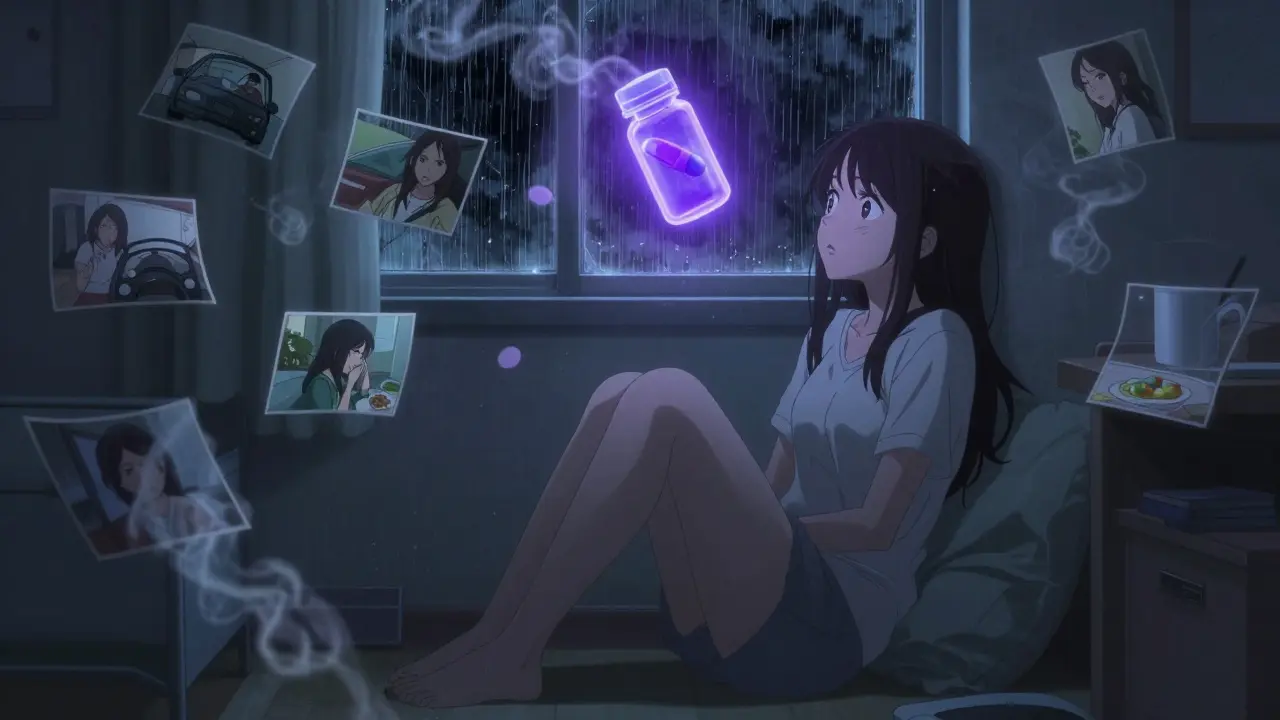
- Memory gaps-some users report not remembering conversations or driving
A 2022 survey from the Benzodiazepine Support Group found that 23% of users on prescribed doses had experienced anterograde amnesia-forgetting parts of their day while still feeling ‘fine.’ That’s not a side effect. That’s a warning sign your brain is being suppressed too deeply.
Reddit communities like r/Anxiety and r/PharmaCon are full of stories. One user described feeling like she was ‘drowning in her own thoughts’ after stopping alprazolam after six months. Another said he couldn’t leave his house for three weeks after quitting diazepam. These aren’t outliers. They’re predictable outcomes.
Why Long-Term Use Is a Trap
The biggest lie about benzodiazepines is that ‘it’s just a pill.’ It’s not. It’s a rewiring of your nervous system.
After a few months, the original problem-say, social anxiety-doesn’t go away. It just gets buried under layers of dependence. You’re not treating the anxiety anymore. You’re treating the withdrawal from the drug that was supposed to treat the anxiety.
And here’s the cruel part: antidepressants like sertraline or escitalopram are just as effective for long-term anxiety, but without the dependence risk. They take longer to work, sure-but once they kick in, you don’t need to taper off. You can stop safely.
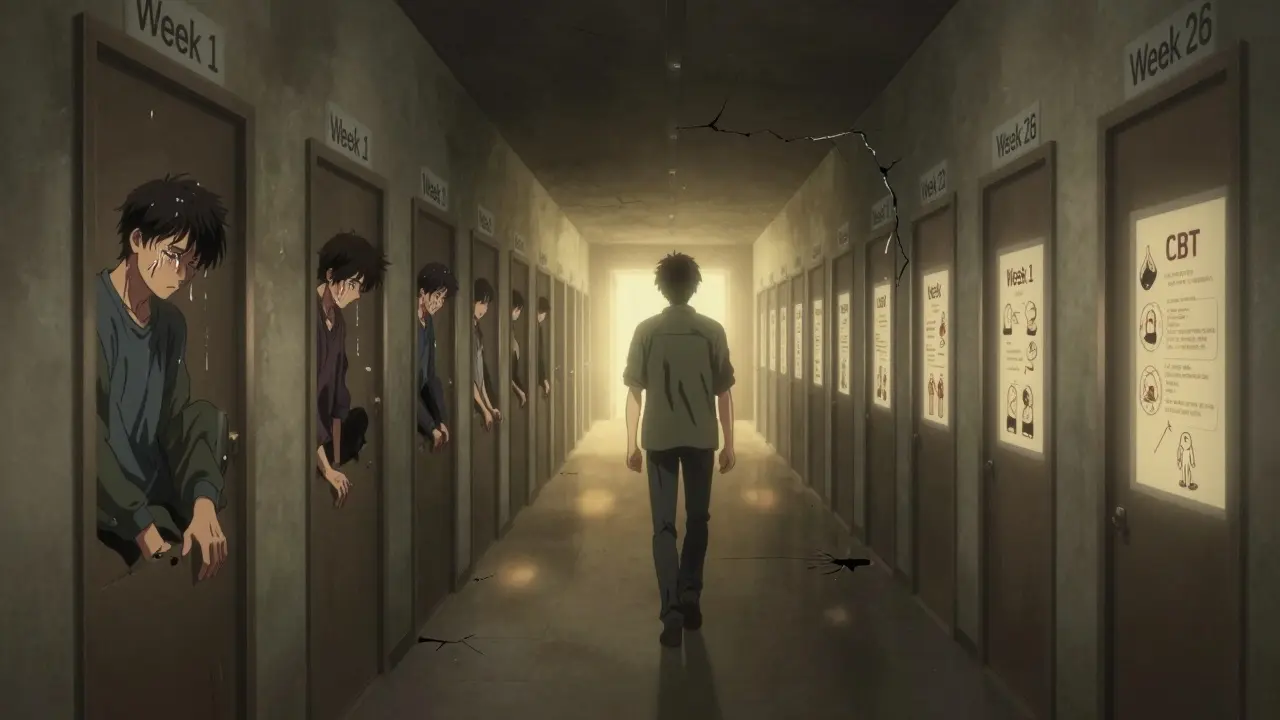
Studies from JAMA Internal Medicine in 2023 showed that combining low-dose benzos with cognitive behavioral therapy (CBT) cut dependence risk by 58%. That’s the real path forward: short-term relief, paired with long-term skills.
Meanwhile, older adults are especially vulnerable. The American Geriatrics Society warns that in people over 65, long-term benzo use increases fall risk by 50% and dementia risk by 32%. That’s not a small trade-off. That’s a life-altering cost.
What to Do If You’re Taking Them
If you’re on benzos and want to stop, don’t quit cold turkey. That’s dangerous. Withdrawal can trigger seizures or severe psychosis.
The Ashton Manual-the gold standard for tapering-recommends reducing your dose by 5-10% every 1-2 weeks. For someone on a high dose for years, that can take 6 months or longer. It’s slow. It’s uncomfortable. But it’s the only safe way.
Work with a doctor who understands this. Not every prescriber does. Many still think ‘just cut it in half’ is enough. It’s not.
Also, ask yourself: why did you start? Was it for a one-time event-a flight, a funeral, a surgery? Or did it become your daily crutch? If it’s the latter, you’re not alone. But you can change it.
Alternatives That Actually Work
You don’t need benzos to manage anxiety or sleep.
- CBT-I (Cognitive Behavioral Therapy for Insomnia) is the first-line treatment for chronic sleep problems-and it lasts longer than any pill.
- SSRIs and SNRIs (like fluoxetine or venlafaxine) are better for long-term anxiety, even if they take weeks to work.
- Mindfulness and breathing techniques reduce panic symptoms faster than most people realize. A 2021 study showed 10 minutes of daily diaphragmatic breathing cut anxiety scores by 40% in 4 weeks.
- Exercise boosts GABA naturally. A 30-minute walk five times a week can have effects similar to low-dose lorazepam.
And yes, there are non-benzodiazepine sleep aids like zolpidem-but they come with their own risks: sleepwalking, memory loss, and dependence too. Nothing’s perfect. But most alternatives are safer than long-term benzo use.
The Bigger Picture: Why Prescriptions Are Changing
Doctors are waking up. In the U.S., 76 million benzo prescriptions were filled in 2021. That’s 12.6% of adults. But hospitals like Kaiser Permanente have cut long-term use by 37% by adding alerts in electronic records when prescriptions go past 90 days.
In the UK, NICE guidelines now say: don’t start benzos for anxiety at all. In France, prescriptions are high-but so are monitoring rules. In the U.S., the DEA classifies them as Schedule IV controlled substances, meaning refills are limited and prescriptions must be written on special forms in many states.
The market is still worth over $1.7 billion, but growth is slowing. Experts predict a 15-20% drop in prescriptions over the next decade. Why? Because we’re learning that the cost of short-term relief is too high for long-term health.
Benzodiazepines have a place. But that place is small. Emergency. Short-term. Rare. Not daily. Not forever.
Can you get addicted to benzodiazepines if you take them as prescribed?
Yes. Addiction means compulsive use despite harm, but physical dependence is different-it’s your body adapting. Even people taking benzos exactly as directed can become physically dependent after just 2-4 weeks. That’s why doctors are told to limit prescriptions to short durations. Dependence doesn’t mean you’re a drug addict-it means your brain changed. That’s normal with these drugs.
How long does benzo withdrawal last?
It depends on how long you took them and which one. For short-acting benzos like alprazolam, acute withdrawal can last 1-4 weeks. For long-acting ones like diazepam, it can take months. The most intense symptoms usually peak around weeks 2-3, but some people report anxiety, insomnia, or brain zaps for 6 months or longer. The Ashton Manual says most people need 3-6 months of gradual tapering to avoid severe symptoms.
Are there any benzos that are safer than others?
Not really. All benzodiazepines carry the same risks of dependence and withdrawal. But some are easier to taper from because of their longer half-lives. Diazepam and clonazepam break down slowly, so withdrawal symptoms come on more gradually. Short-acting ones like triazolam or lorazepam cause sharper drops, making withdrawal harder to manage. That’s why doctors often switch people to diazepam before tapering-it’s smoother.
Can benzodiazepines cause memory loss even at normal doses?
Yes. Anterograde amnesia-forgetting events after taking the drug-is a known effect, even at prescribed doses. About 23% of users in a 2022 survey reported memory gaps during normal activities. This isn’t just ‘forgetting where you put your keys.’ It’s forgetting conversations, meals, or driving routes. That’s why they’re not recommended for older adults or people who need to stay alert.
What should I do if my doctor wants to keep me on benzos long-term?
Ask for a second opinion. Many doctors prescribe them out of habit or because they don’t know the alternatives. Bring up the American Psychiatric Association’s 2-4 week limit. Ask about CBT, SSRIs, or lifestyle changes. If your doctor dismisses your concerns, find one who specializes in psychopharmacology or addiction medicine. Your brain deserves better than a band-aid solution.
Final Thought: It’s Not About Fear-It’s About Balance
Benzodiazepines aren’t evil. They’re tools. Like a fire extinguisher-you don’t live with it on your wall every day. You keep it for when you really need it.
If you’ve benefited from them in a crisis, that’s valid. But if you’ve been taking them for months or years, you’re not just managing anxiety-you’re managing withdrawal. And that’s not sustainable. The good news? There are better ways. They take more effort. They take time. But they don’t steal your memory, your balance, or your future.