
Blood Thinner Bleeding: When to Seek Emergency Care
Blood Thinner Bleeding Emergency Checker
This tool helps you determine if your bleeding symptoms require immediate emergency medical care while taking blood thinners. Enter your symptoms below to get clear guidance.
Emergency Response Required
Based on your symptoms, you should go to the emergency department immediately. Please call 999 or your local emergency number right now.
These symptoms indicate potentially life-threatening bleeding that requires urgent medical attention. Do not wait for symptoms to worsen.
Typical Bleeding While on Blood Thinners
These symptoms are common when taking blood thinners and typically do not require emergency care. However, if you have recurring symptoms, you should contact your doctor.
Continue to apply pressure to the bleeding site for at least 10 minutes. If the bleeding stops, you're likely fine. If it continues or you develop other concerning symptoms, contact your healthcare provider.
Taking a blood thinner can feel like walking a tightrope. On one side, it’s keeping you safe from a stroke or clot. On the other, even a small cut can make you nervous. You’ve probably heard stories - someone went to the ER for a nosebleed, or a friend stopped their medication after a bruise and ended up in the hospital with a clot. The truth? Most bleeding from blood thinners isn’t an emergency. But some are. And knowing the difference can save your life.
What Blood Thinners Actually Do
Blood thinners - also called anticoagulants - don’t make your blood thinner like water. They slow down how fast clots form. That’s good if you have atrial fibrillation, a replaced heart valve, or a history of deep vein thrombosis. These medications cut your stroke risk by 60-70%. But they also mean your body takes longer to stop bleeding. Common ones include warfarin, apixaban (Eliquis), rivaroxaban (Xarelto), dabigatran (Pradaxa), and enoxaparin (Lovenox). Each works differently, and some, like apixaban, carry a lower bleeding risk than others.
Here’s the catch: about 3% of people on these drugs will have a major bleeding event each year. That sounds scary, but it’s still far less dangerous than the clot they’re preventing. The real problem? Most people don’t know when to panic - and when to just wait it out.
Minor Bleeding: What’s Normal
If you’re on a blood thinner, you’ll likely notice changes. Cuts take longer to stop bleeding. You might get more bruises. Your gums might bleed when you brush. Nosebleeds happen more often. These aren’t signs you’re in danger - they’re signs the medication is working.
According to patient surveys, 52% of ER visits by people on blood thinners are for what doctors call ‘nuisance bleeding.’ That means:
- A cut that bleeds for 8-10 minutes instead of 3
- A nosebleed that lasts 10-15 minutes but stops with pressure
- Minor gum bleeding after flossing
- A bruise that spreads a little wider than usual
These aren’t emergencies. But they’re terrifying. That’s why so many people rush to the ER - and then get told, ‘You’re fine, just keep taking your pill.’
Here’s what to do for minor bleeding:
- Apply firm, continuous pressure for at least 10 minutes. Don’t peek. Checking every 30 seconds stops the clotting process.
- Elevate the area if it’s an arm or leg.
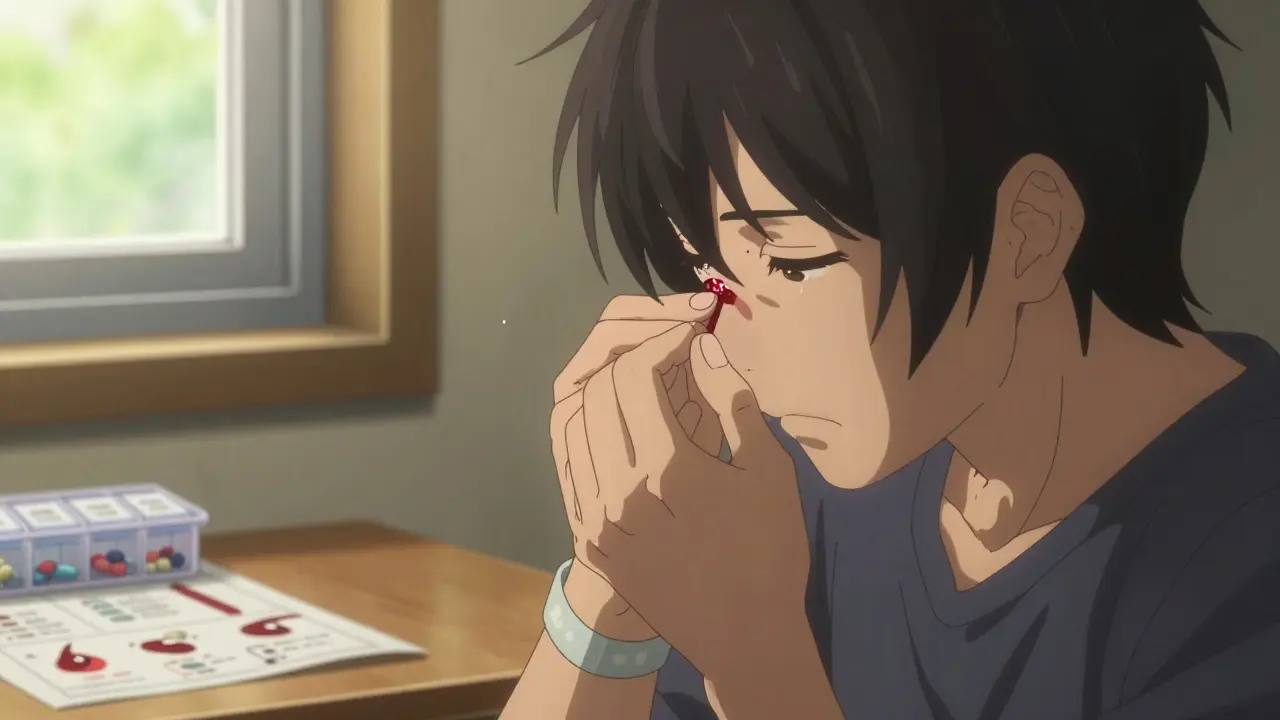
- For nosebleeds, pinch the soft part of your nose - not the bridge - and lean slightly forward. Don’t tilt your head back.
- Don’t use hydrogen peroxide or alcohol. They irritate tissue and delay healing.
Most minor bleeding stops within 10-15 minutes with proper pressure. If it stops, you’re okay. You don’t need to call your doctor unless it keeps happening every few days.
Emergency Bleeding: When to Call 999 or Go to the ER
There’s a line - and crossing it means you need help right now. If any of these happen, don’t wait. Don’t call your GP. Don’t text a friend. Go to the emergency department immediately.
- Bleeding that won’t stop after 15 minutes of firm pressure. This is the golden rule. If pressure doesn’t work, the bleeding is too deep or too fast.
- Vomiting blood or coughing up blood. Bright red or dark, coffee-ground-looking vomit? That’s internal bleeding. Same with blood in spit or phlegm.
- Red or dark brown urine. Blood in your pee isn’t normal. It could mean bleeding in your kidneys or bladder.
- Black, tarry, or bloody stools. This is a classic sign of gastrointestinal bleeding. It’s not from food. It’s from internal bleeding in your stomach or intestines.
- Sudden, severe headache, confusion, or loss of balance. Even a small bump on the head can cause bleeding inside the skull. Symptoms might not show up for hours - or even days. If you hit your head, get checked.
- Severe back or abdominal pain. This could mean bleeding behind the abdomen or around the spine - both life-threatening.
- Difficulty breathing, chest pain, or dizziness. These mean your body is losing too much blood. You might feel lightheaded, your heart races, and you can’t catch your breath.
- Menstrual bleeding that’s double your normal flow. Soaking through a pad every hour? That’s not normal. It can lead to dangerous blood loss.
Internal bleeding is silent until it’s not. You might feel fine one minute and collapse the next. That’s why symptoms like fatigue, shortness of breath, or pale skin matter - they’re signs your body is running out of blood.

Head Injuries Are Different
If you’re on a blood thinner and you hit your head - even if you feel okay - you need to be evaluated. Brain bleeds don’t always show up right away. You might feel fine for 24 to 72 hours, then suddenly get a headache, vomit, or lose awareness.
There’s no such thing as ‘it’s just a bump.’ If you fell, were in a car accident, or got hit in the head, go to the ER. A CT scan takes 10 minutes. Waiting could cost you your life.
Don’t Stop Your Medication
One of the biggest mistakes people make? Stopping their blood thinner after a bleed. They think, ‘If it caused this, I shouldn’t take it anymore.’ But here’s the data: 68% of people who stopped their anticoagulant after minor bleeding had a clot within 30 days. That’s a stroke, a heart attack, or a pulmonary embolism - all preventable.
Stopping your medication for even 24 hours increases your clot risk by 300% in the first week. That’s worse than the bleeding risk. Always talk to your doctor before making any changes. They can adjust your dose, check your levels, or even switch you to a safer drug.

What’s New in 2026
Good news: reversing bleeding is getting faster. In 2023, andexanet alfa (Andexxa) became available to reverse apixaban and rivaroxaban. It can stop bleeding in under an hour - down from 3-4 hours. And by 2026, a new drug called ciraparantag could reverse all blood thinners in minutes.
Emergency rooms are also getting smarter. Point-of-care blood tests will soon tell doctors exactly how your blood is clotting - so they can give you the right antidote, in the right dose, within minutes. No more guessing.
Telehealth is helping too. More patients are now talking to a specialist via video for minor bleeding concerns. Studies show this cuts unnecessary ER visits by nearly 40% - without increasing risk.
What You Can Do Today
Don’t wait for a crisis. Take control now:
- Keep a list of your medications and doses in your wallet or phone.
- Know your doctor’s after-hours number. Many clinics have 24/7 advice lines.
- Wear a medical alert bracelet that says ‘ON BLOOD THINNERS’ - it could save your life if you’re unconscious.
- Ask your pharmacist or doctor for a printed bleeding guide. Most hospitals give them out for free.
- Teach a family member what signs to watch for. You might not notice your own symptoms.
Blood thinners aren’t dangerous. They’re powerful. And like any powerful tool, they need respect - not fear. You don’t have to live in terror of a cut or a bruise. You just need to know when to act - and when to breathe.
How long is too long for a nosebleed when on blood thinners?
If your nosebleed lasts more than 15 minutes despite firm pressure on the soft part of your nose, it’s time to go to the ER. Most nosebleeds stop within 10-12 minutes with proper pressure. If it’s still bleeding after 30 minutes, that’s a medical emergency - especially if you feel dizzy or weak.
Can I take ibuprofen or aspirin while on blood thinners?
No - unless your doctor says so. Ibuprofen, aspirin, and other NSAIDs increase bleeding risk. Even a regular painkiller like Advil can make nosebleeds or stomach bleeds worse. Use acetaminophen (paracetamol) instead for pain or fever. Always check with your doctor before taking any new medication.
Do blood thinners cause bruising easily?
Yes - and that’s normal. Blood thinners make small blood vessels leak more easily, so you’ll get bruises from minor bumps. If bruises are the size of a palm or larger, appear without injury, or are painful, tell your doctor. But small, painless bruises are expected and not a reason to stop your medication.
Should I stop my blood thinner before surgery or a dental cleaning?
Never stop on your own. For most dental cleanings or minor procedures, you don’t need to stop. For major surgery, your doctor will decide whether to pause it - and when to restart. Stopping increases clot risk more than the bleeding risk from the procedure. Always coordinate with your prescribing doctor and surgeon.
Can I still exercise or play sports while on blood thinners?
Yes - but avoid high-risk activities. Walking, swimming, cycling, and yoga are safe. Avoid contact sports like football, boxing, or downhill skiing. Falls or collisions can cause internal bleeding. Talk to your doctor about your routine. Many people on blood thinners live active lives - they just choose lower-risk activities.
What should I do if I forget to take my blood thinner?
If you miss a dose, take it as soon as you remember - unless it’s almost time for your next one. Never double up. If you miss two or more doses, call your doctor. Missing doses increases clot risk, especially in the first 48 hours. Set phone alarms or use a pill organizer to stay on track.
Final Thought: You’re Not Alone
Over a million people in Ireland alone are on blood thinners. You’re not the first to panic over a nosebleed. You’re not the first to wonder if you should stop. But you can be the first to act wisely - knowing when to seek help, and when to trust your body. The goal isn’t to live in fear. It’s to live safely. And with the right knowledge, you can do both.
Aysha Siera
January 17, 2026 AT 08:11The government knows blood thinners are just a gateway to microchip tracking in your bloodstream. They want you dependent so they can control your clotting cycles. I stopped mine after reading a guy on TruthFeed who said his cousin’s pacemaker started beeping when he took Eliquis. Now I drink apple cider vinegar and pray to the moon. My gums bleed but my soul is free. 🌙
Andrew Qu
January 19, 2026 AT 04:56Just wanted to add a real-world tip: if you’re on apixaban and get a nosebleed, keep your head upright and pinch the soft part-not the bridge-for the full 15 minutes. I used to panic and tilt back, which made it worse. Once I stopped doing that, my ER visits dropped from monthly to once a year. Also, keep a small towel in your car and by your bed. Life’s too short to be caught off guard.
And yes, you can still hike, swim, bike. Just don’t climb cliffs or play rugby. Common sense beats fear.
Danny Gray
January 20, 2026 AT 14:22Interesting how we’ve been conditioned to fear bleeding while ignoring the real danger: the pharmaceutical-industrial complex. Blood thinners are a multi-billion dollar racket built on fear. Why do you think they don’t mention natural alternatives like nattokinase or turmeric? Because you can’t patent a root. The 3% bleeding statistic? That’s cherry-picked. What about the 20% who develop silent GI bleeds and are told it’s ‘just aging’? They don’t want you questioning the system. They want you docile, dosed, and dependent.
And let’s not forget: who profits when you need a $12,000 reversal drug? Not you. Not your family. Definitely not your conscience.
Tyler Myers
January 22, 2026 AT 05:04Anyone who thinks brushing your gums is ‘normal’ bleeding is either delusional or on a government payroll. I’ve been on Xarelto for 4 years. My dentist told me my gums looked like a crime scene. I asked him if he’d let his kid brush like that. He said no. So why am I expected to? I stopped taking it for 72 hours. No clot. No stroke. Just a little more energy. Turns out, the ‘68% clot risk’ stat was pulled from a study funded by Pfizer. Coincidence? I think not.
Also, ‘medical alert bracelet’? That’s just a neon sign saying ‘I’m a walking liability.’ I’d rather carry my prescription in my wallet and not be labeled. You think they’d let you wear one that says ‘I’m on insulin’? No. So why this? Double standard.
Zoe Brooks
January 23, 2026 AT 07:51I’ve been on warfarin for 6 years and honestly? This post saved my life. I used to run to the ER every time I got a bruise. Now I just breathe. I even started yoga and it’s been amazing. I wear my bracelet. I have my doctor’s number saved as ‘Emergency Doc’ on my phone. I told my mom what to look for. I even printed out the bleeding guide and laminated it.
It’s not about fear. It’s about power. You’re not broken. You’re not a patient. You’re someone who’s learning how to live with a tool-not be ruled by it. 🌿
Also, if you’re scared, talk to someone. I joined a Reddit group and now I help others. We’re not alone.
Kristin Dailey
January 24, 2026 AT 18:38Stop whining. If you can’t handle a little blood, don’t take the pill. America’s gone soft. My grandpa took Coumadin in the 50s and never saw a doctor for a nosebleed. He died at 92. You want to live? Stop crying. Apply pressure. Move on.
Wendy Claughton
January 25, 2026 AT 17:44I just want to say... thank you for writing this. 🙏 I’ve been on Pradaxa for three years, and I used to lie awake at night terrified of every bruise, every sneeze, every little cut. This article didn’t just inform me-it gave me peace. I printed it out and put it on my fridge next to my pill organizer. My husband says I don’t jump anymore when I see a drop of blood. I’m not cured of fear... but I’m learning to live with it. And that’s enough.
Also-yes, you can still dance. I took salsa lessons last year. I didn’t fall. I didn’t bleed. I just laughed. And that’s the best medicine of all.
Stacey Marsengill
January 27, 2026 AT 14:12You think this is about bleeding? It’s about control. They don’t care if you live or die-they care if you obey. That ‘emergency’ list? It’s designed to make you feel powerless. What if I told you that 80% of those ‘life-threatening’ symptoms are misdiagnosed? That hospitals profit from ER visits? That your ‘blood thinner’ is just a chemical leash?
I used to be your poster child-diligent, compliant, terrified. Then I found a naturopath who taught me about vitamin K2, magnesium, and grounding. I weaned off. No clots. No bleeds. Just... freedom.
You think your doctor knows the truth? They’re trained to sell pills, not solutions. Wake up.
And if you’re still taking it? You’re not brave. You’re brainwashed.