
Cold Sores vs. Pimples: How to Tell Them Apart and Treat Each One Correctly
What’s the Difference Between a Cold Sore and a Pimple?
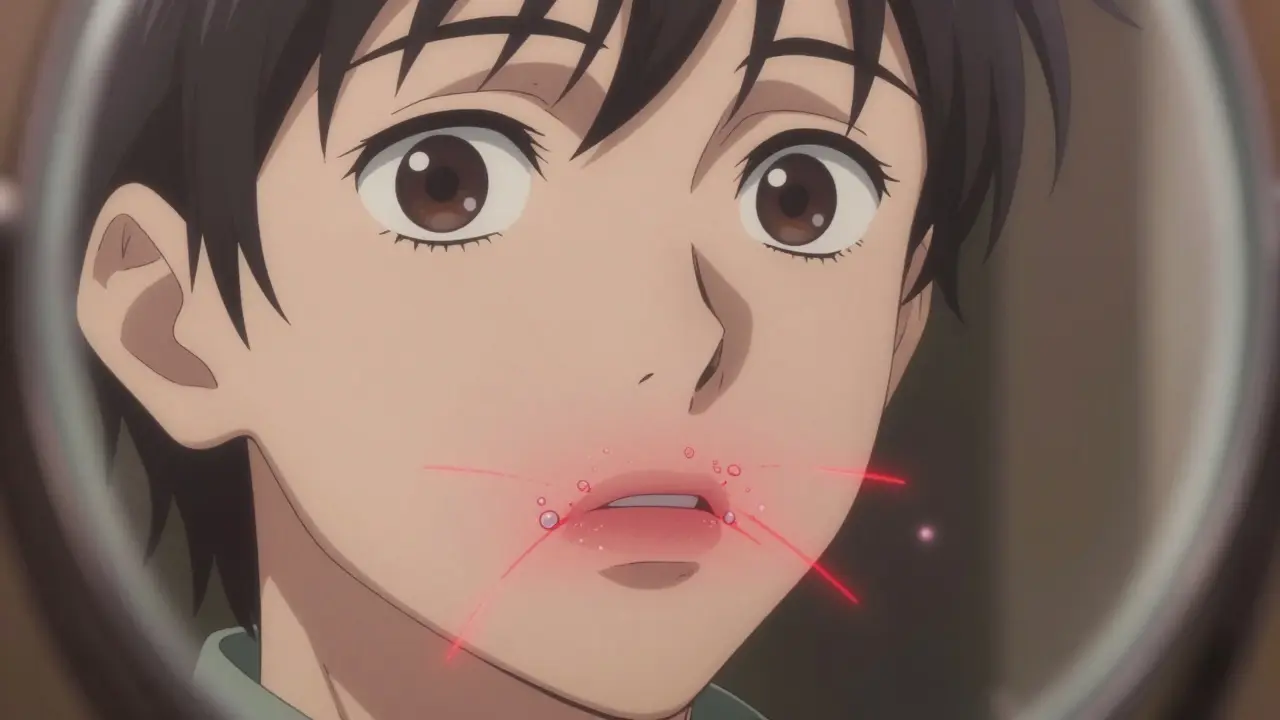
You wake up, look in the mirror, and there it is - a small, red bump near your lip. Is it a pimple? Or is it a cold sore? It’s easy to mix them up, especially when they show up in the same spot. But treating them the same way can make things worse. A cold sore isn’t just a zit with a virus - it’s a completely different condition that needs a different approach.
Cold sores are caused by the herpes simplex virus type 1 (HSV-1), a common viral infection that affects about 67% of people under 50 worldwide. Once you get it, the virus stays in your body for life. It hides in nerve cells and wakes up when you’re stressed, sunburned, sick, or hormonal. Pimples, on the other hand, come from clogged pores. When oil, dead skin, and bacteria like Cutibacterium acnes, a skin bacterium that thrives in blocked follicles build up, your immune system reacts - and you get a red, swollen bump.
Where Do They Usually Appear?
Location matters. Cold sores almost always show up on the vermillion border - that thin line where your lip meets your skin. You’ll see them on the edge of your upper or lower lip, sometimes near the corner of your mouth. They rarely appear on the actual lip surface or inside your mouth unless it’s a severe outbreak.
Pimples don’t care about borders. They pop up anywhere there are hair follicles - your forehead, chin, nose, jawline, and yes, even on the lip surface. The skin around your lips has tiny hairs and oil glands, so it’s totally normal for a pimple to form there. If you get a single bump right on the lip, not the edge, it’s far more likely to be acne.
What Do They Look Like?
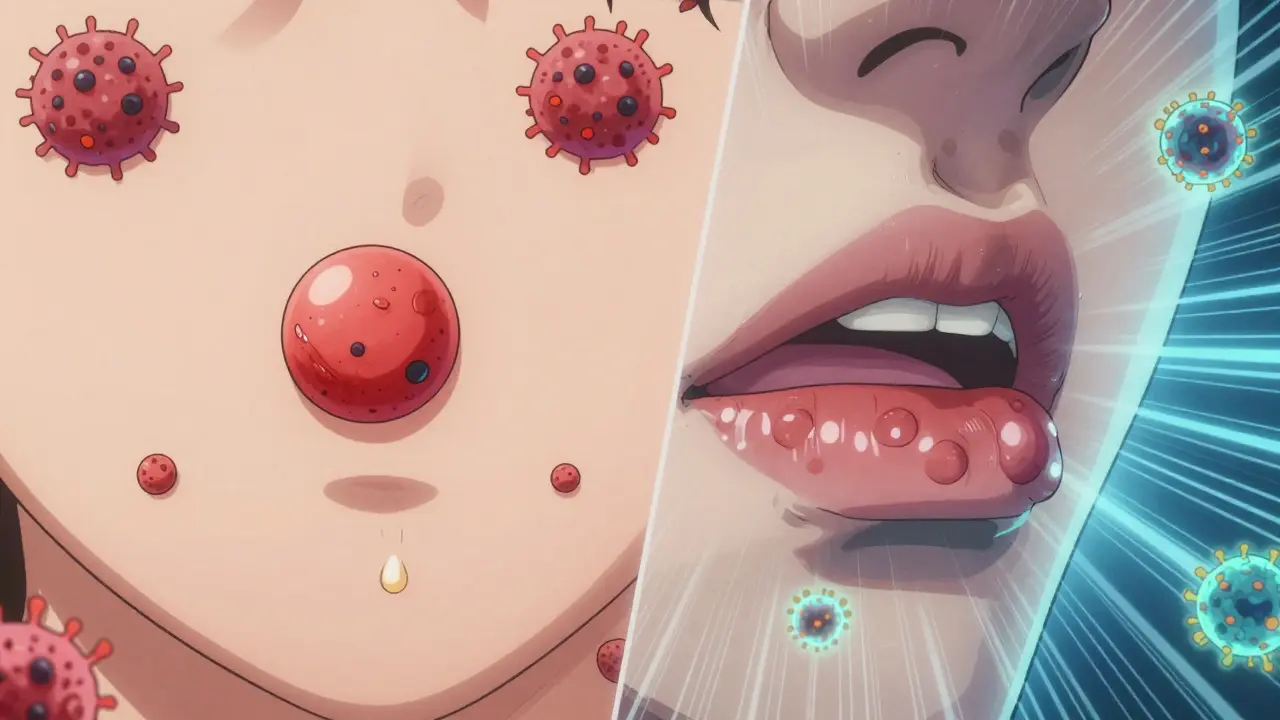
Cold sores start as a cluster of tiny, fluid-filled blisters - usually 2 to 5 of them grouped together. They look like little bubbles filled with clear liquid that turns cloudy as they mature. After a day or two, they burst, leak, and form a yellowish crust. The whole thing takes 7 to 14 days to heal.
Pimples are single bumps. They’re raised, often red or pink, and usually have a white or yellow head in the center - that’s pus. They don’t form clusters. They don’t blister. They don’t crust over like a cold sore. Instead, they might get more inflamed, then shrink and fade over 3 to 7 days. Cystic pimples can last weeks, but they still won’t look like a cluster of blisters.
How Do They Feel?
This is one of the biggest clues. Cold sores almost always come with a warning. About 12 to 48 hours before you see anything, you’ll feel it: tingling, burning, itching, or even a slight numbness on your lip. That’s your body’s signal that the virus is waking up. If you catch it then, you can start treatment early and cut the outbreak short.
Pimples don’t give you a heads-up. They just show up. You might feel a little tender or sore when you touch them, especially if they’re deep, but there’s no tingling before they appear. No warning. No itch. Just a bump.
Are They Contagious?
Cold sores are highly contagious. You can spread HSV-1 by kissing, sharing utensils, towels, or lip balm - even if you don’t have visible sores. The virus sheds in saliva during outbreaks, and in some cases, even when you feel fine. Studies show 30% to 50% of close contacts get infected during an active outbreak.
Pimples? Totally non-contagious. You can’t catch acne from someone else. No matter how much pus is in that bump, it’s not an infection you can pass on. It’s your own skin reacting to oil and bacteria - not something you caught from a friend or partner.
How Do You Treat Each One?
Treatment is where things get dangerous if you mix them up.
Cold sores need antivirals. The best options are prescription meds like acyclovir (Zovirax), an antiviral that blocks HSV-1 replication or valacyclovir (Valtrex), a faster-acting version that’s taken orally. These work best if you start them the moment you feel that tingling. They can shorten the outbreak by 1 to 2 days. Over-the-counter docosanol (Abreva), a topical antiviral approved by the FDA can help too, but it takes 4 to 5 days of daily use to reduce symptoms by half.
Pimples need acne treatments. Topical benzoyl peroxide (2.5%-10%), a germ-killing agent that reduces C. acnes bacteria and unclogs pores is the gold standard. It kills bacteria, reduces redness, and prevents new pimples. Salicylic acid (0.5%-2%), a beta-hydroxy acid that exfoliates inside pores is great for blackheads and mild bumps. Apply these daily - not just when you see a pimple, but to prevent them.
What Happens If You Treat Them Wrong?
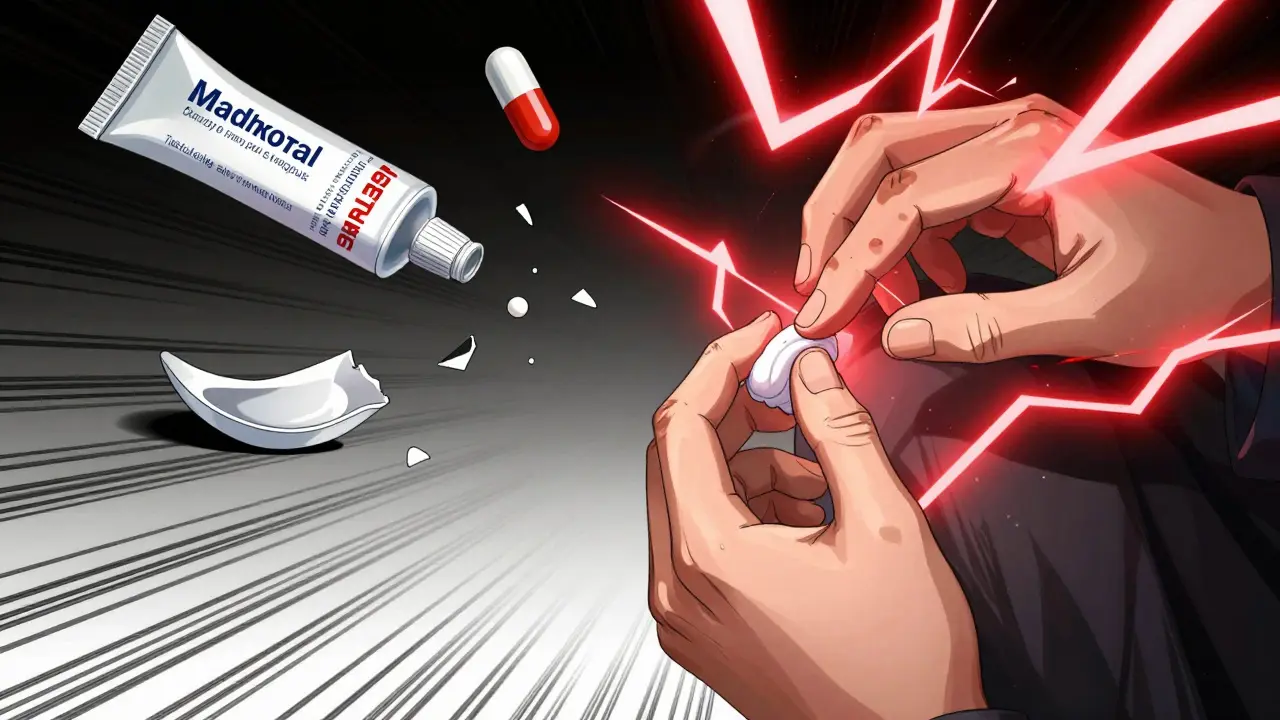
Applying acne cream to a cold sore is a common mistake. Benzoyl peroxide or salicylic acid can dry out and irritate the blister, making it rupture faster. That releases more virus into the air, onto your fingers, and onto your pillow. You might spread it to your nose, chin, or even your eye - which can be serious.
And don’t use toothpaste or baking soda on a cold sore. People swear by it, but it’s just drying out the skin. It doesn’t kill the virus. It just makes the sore more painful and slower to heal.
On the flip side, putting antivirals on a pimple does nothing. It’s like using a fire extinguisher to put out a puddle. You waste money and time. And if you pop a cold sore like a pimple, you’ll likely extend the healing time by 3 to 5 days.
How to Prevent Them
For cold sores: Sunscreen on your lips is key. UV exposure triggers outbreaks in 32% of people. Use a lip balm with SPF 30+ daily. Manage stress - it’s the second most common trigger. Wash your hands often, especially after touching your face. Don’t share lip products, drinks, or towels during an outbreak. Even if you’re not having a visible sore, the virus can still be active.
For pimples: Cleanse gently twice a day with a non-comedogenic face wash. Avoid heavy moisturizers or oil-based makeup. Wash your pillowcases twice a week. Don’t touch your face. If you wear masks often, make sure they’re clean - trapped sweat and oil can clog pores. Start using benzoyl peroxide or salicylic acid regularly, even when you don’t have breakouts.
When to See a Doctor
See a dermatologist if:
- Your cold sore lasts longer than two weeks
- You get them more than 5 times a year
- The sore spreads to your eye or nose
- You have a weakened immune system (from illness or medication)
- You’re not sure what it is - and it keeps coming back
For pimples, see a doctor if:
- You have deep, painful cysts
- Over-the-counter treatments don’t help after 8 weeks
- You’re left with scars or dark spots
- Pimples appear suddenly in large numbers
What’s New in Treatment?
Science is moving fast. In 2023, the FDA approved pritelivir, a new antiviral that cuts viral shedding by 70% in clinical trials. It’s not widely available yet, but it’s a sign that better cold sore control is coming.
For acne, new treatments are focusing on the skin’s microbiome - not just killing bacteria, but protecting the good ones. Products with prebiotics and gentle antibacterial agents are becoming more common. They reduce inflammation without stripping your skin dry.
Also, laser treatments for cold sore prevention are growing in popularity. Some clinics now offer low-level laser therapy to calm nerves and reduce outbreak frequency - with 20% more people trying it each year.
Final Takeaway
Don’t guess. Pay attention to the signs. Tingling before a bump? It’s likely a cold sore. A single, painful bump with no warning? Probably a pimple. Treat them correctly - and stop the cycle of confusion, irritation, and spreading.
Knowing the difference isn’t just about saving time. It’s about protecting yourself and others. A cold sore isn’t just a blemish - it’s a viral infection. And a pimple isn’t a virus - it’s your skin’s reaction to everyday habits. Get the diagnosis right, and you’ll heal faster, feel better, and avoid making things worse.
Can you get a cold sore inside your mouth?
Yes, but it’s less common. Cold sores usually appear on the outer lip border. Inside the mouth, HSV-1 can cause ulcers on the gums or palate - these are called gingivostomatitis and are more common in children. In adults, inner mouth sores are more likely to be canker sores, which are not caused by herpes and aren’t contagious.
Can stress cause pimples?
Yes. Stress doesn’t cause acne directly, but it increases cortisol, which boosts oil production. That can clog pores and trigger breakouts. Stress can also make existing acne worse. But unlike cold sores, stress doesn’t activate a virus - it just makes your skin more reactive.
Is it safe to pop a cold sore?
No. Popping a cold sore releases infectious fluid that can spread the virus to other parts of your face or to other people. It also delays healing by 3 to 5 days and increases the risk of scarring or secondary infection. Let it heal naturally or use antiviral treatment.
Can you get a pimple on your lip?
Yes. The skin around your lips has hair follicles and oil glands, so pimples can form there. But if it’s right on the edge of your lip, especially with tingling or clustering, it’s more likely a cold sore. Look at the shape and sensation - not just the location.
Do cold sores mean you have an STD?
Not necessarily. HSV-1, which causes most cold sores, is usually spread through non-sexual contact - like kissing, sharing utensils, or touching a sore and then your face. It’s not the same as HSV-2, which typically causes genital herpes. Most people with cold sores didn’t get it through sexual activity.
How long do cold sores last without treatment?
Without treatment, cold sores typically last 10 to 14 days. The first few days involve tingling and blistering, then they rupture and crust over. Healing begins around day 5 to 7. Antiviral treatments can shorten that to 5 to 7 days if started early.
Can you prevent cold sores forever?
No, because the virus stays in your nerves for life. But you can reduce outbreaks by avoiding triggers: use SPF lip balm daily, manage stress, get enough sleep, and avoid sunburn. Antivirals taken daily can also suppress outbreaks in people who get them frequently.
Is acne contagious?
No. Acne is not contagious. You can’t catch it from someone else. It’s caused by your own skin’s oil production, dead skin cells, and bacteria that naturally live on your skin. Sharing towels or makeup won’t give you acne - though it might irritate your skin and make breakouts worse.
Jodi Olson
January 31, 2026 AT 09:43And yes-pimples don’t whisper. They just show up. Like uninvited guests who brought their own furniture.
Melissa Cogswell
February 1, 2026 AT 05:07Also, SPF lip balm isn’t optional. It’s armor.
Blair Kelly
February 2, 2026 AT 11:20Rohit Kumar
February 4, 2026 AT 10:11Gaurav Meena
February 6, 2026 AT 05:08You don’t need to fix yourself. Just understand what’s happening.
Katie and Nathan Milburn
February 7, 2026 AT 10:28Don’t overthink it. Look. Feel. Wait.
Beth Beltway
February 8, 2026 AT 13:14kate jones
February 10, 2026 AT 05:37Practical takeaway: Use gentle cleansers. Avoid over-exfoliation. Let the skin self-regulate.
Kelly Weinhold
February 10, 2026 AT 13:07Kimberly Reker
February 12, 2026 AT 06:30calanha nevin
February 14, 2026 AT 03:11Russ Kelemen
February 15, 2026 AT 15:56April Allen
February 16, 2026 AT 10:47Sheila Garfield
February 18, 2026 AT 02:15