
Counterfeit Drugs in Developing Nations: How Fake Medicines Are Killing People and What Can Be Done
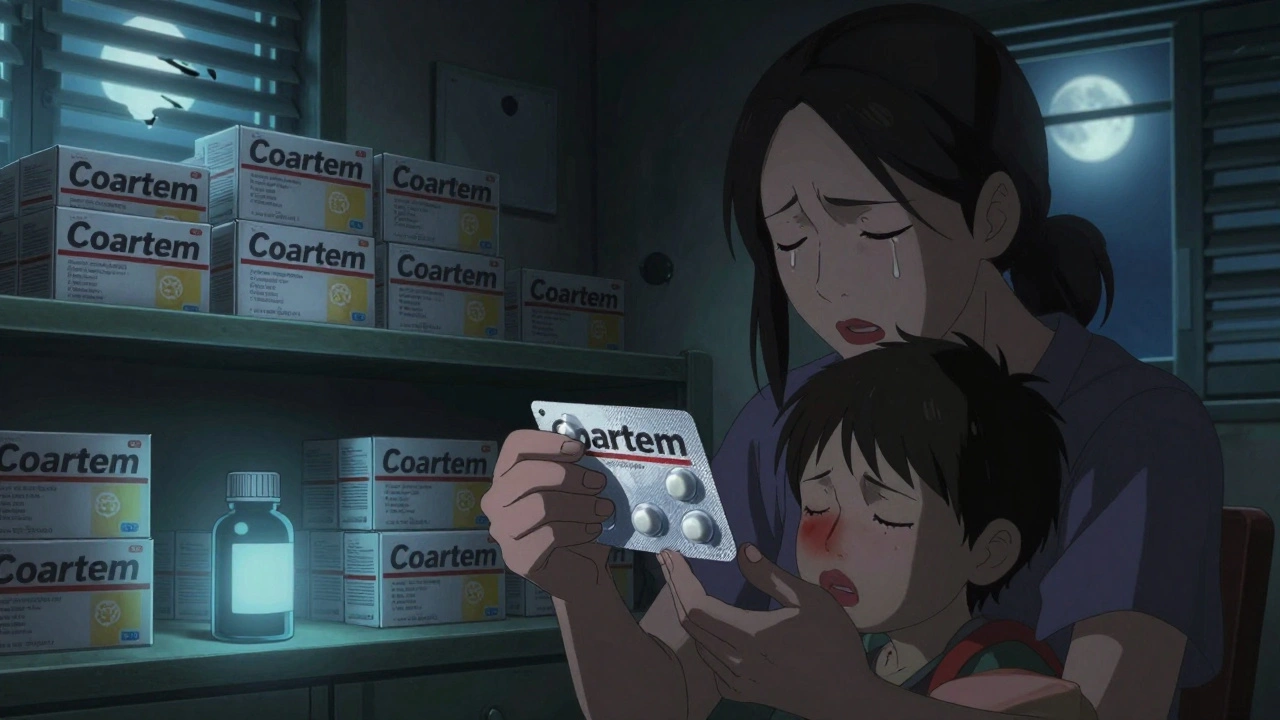
Every year, counterfeit drugs kill more children than malaria in some parts of Africa. Not because the disease is out of control, but because the medicine meant to save them is fake.
In rural clinics across Nigeria, Bangladesh, or Peru, a parent might buy what looks like a life-saving antimalarial pill for $0.20. It’s cheaper than the real thing. It’s packaged just like the brand-name version. The label says Coartem. The color matches. The imprint is right. But inside? No active ingredient. Just starch, chalk, or worse-poison. When the child doesn’t get better, the family blames the illness. They don’t know they were sold a death sentence.
What Exactly Are Counterfeit Drugs?
Counterfeit drugs aren’t just knockoffs like fake sneakers. They’re medical products designed to look real but fail at their most basic job: treating disease. The World Health Organization divides them into two categories: substandard and falsified.
Substandard drugs are made by legitimate manufacturers but go bad due to poor storage, expired ingredients, or bad manufacturing. Falsified drugs are outright frauds-made in secret labs, often in China or Bangladesh, with zero quality control. They might contain no active ingredient at all. Or too little. Or the wrong chemical entirely. Some have been found to contain rat poison, paint thinner, or industrial solvents.
According to WHO data, about 1 in 10 medicines in low- and middle-income countries are substandard or falsified. In some regions-like the Greater Mekong Subregion-up to 35% of antimalarial drugs fail basic quality tests. In parts of West Africa, counterfeit antibiotics make up nearly half the market. These aren’t rare cases. They’re the norm.
Why Are These Drugs So Common in Developing Nations?
The answer isn’t just corruption or greed. It’s a perfect storm of poverty, weak systems, and global supply chain gaps.
First, real medicines are expensive. A full course of genuine antimalarials can cost $5-$10. That’s more than a day’s wage for many families. Counterfeit versions sell for pennies. People choose them not because they’re foolish, but because they have no other option.
Second, regulatory systems in many developing countries are underfunded and overstretched. A single inspector might be responsible for checking hundreds of pharmacies across a whole region. There’s no budget for lab testing. Many clinics don’t even have electricity to run basic equipment.
Third, the supply chain is long and broken. Legitimate drugs travel through 5 to 7 middlemen before reaching a village pharmacy. At every stop, someone can swap the real product for a fake. By the time it gets to the patient, no one knows where it came from-or if it’s safe.
And the criminals? They’re smart. They use 3D printing to copy packaging with 99% accuracy. They mimic QR codes and holograms. They even fake digital verification systems. In 2024, Interpol found that 90% of counterfeit drug packaging looks identical to the real thing. Even trained pharmacists can’t tell the difference without lab tools.
The Human Cost: More Than Just Treatment Failure
When a fake drug doesn’t work, the consequences aren’t just personal-they ripple through entire communities.
Children die from pneumonia because the antibiotics they took had no active ingredient. WHO estimates 72,000 to 169,000 child deaths each year from fake pneumonia meds. In sub-Saharan Africa, over 116,000 people die annually from fake antimalarials. That’s more than the population of a mid-sized city-every year.
But death isn’t the only outcome. Fake antibiotics that contain just enough drug to kill weak bacteria-but not enough to cure infection-are breeding superbugs. Drug-resistant malaria, tuberculosis, and sepsis are spreading because people take half-strength pills. The WHO calls this one of the biggest global health threats of the 21st century.
Then there’s the loss of trust. When people get sick and take medicine that doesn’t work, they stop believing in healthcare. They stop going to clinics. They turn to traditional healers or online pharmacies with no oversight. This creates a cycle: weaker health systems → more counterfeit drugs → less trust → even weaker systems.
A mother in Kenya posted on a WHO community forum in January 2025: “Fifty percent of our malaria test kits in rural clinics were fake. We were diagnosing people with malaria when they didn’t have it. We gave them drugs they didn’t need. Others we missed entirely.”
How Are Fake Drugs Made and Sold?
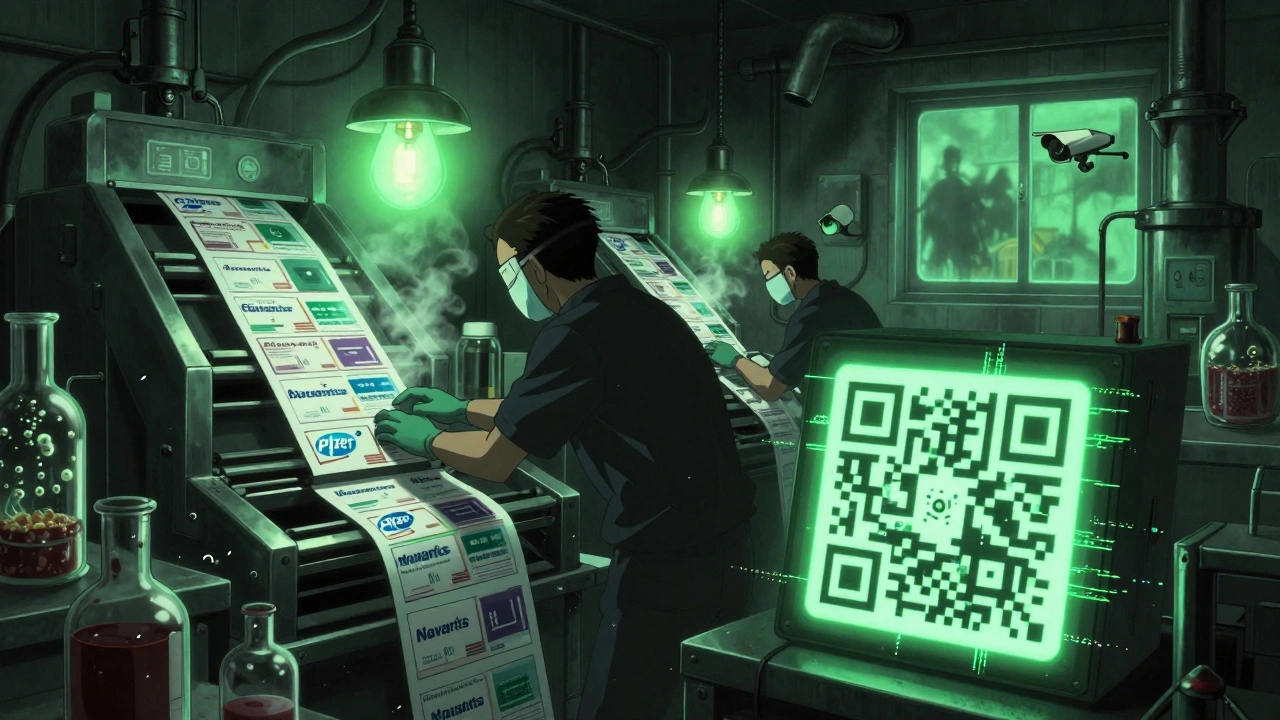
Counterfeit drugs aren’t made in garages anymore. They’re produced in industrial-scale labs, often in China, which supplies 78% of high-fidelity fakes. Bangladesh, Lebanon, Syria, and Turkey are major distribution hubs.
The process is chillingly efficient:
- Manufacturers reverse-engineer real drugs using public data and stolen packaging designs.
- They source cheap chemicals-sometimes toxic-from unregulated suppliers.
- Pills are pressed, colored, and stamped to match the original.
- Packaging is printed using high-end printers and copied labels.
- Drugs are shipped through legal trade routes, hidden in containers of legitimate goods.
- They enter local markets through informal vendors, street stalls, or fake online pharmacies.
Online sales have exploded. In Southeast Asia, 68% of negative reviews on online pharmacy sites mention suspected counterfeits. Common complaints? “Pills dissolved in water when they shouldn’t.” “No effect even after taking the full dose.” “The color changed after a few days.”
Some criminals even use cryptocurrency to avoid traceability. Others partner with local gangs to distribute drugs through black-market networks. The UN Office on Drugs and Crime found that 63% of seized counterfeit operations were linked to broader organized crime-drug trafficking, human smuggling, even terrorism funding.
What’s Being Done to Fight Back?
There are solutions-but they’re not being scaled fast enough.
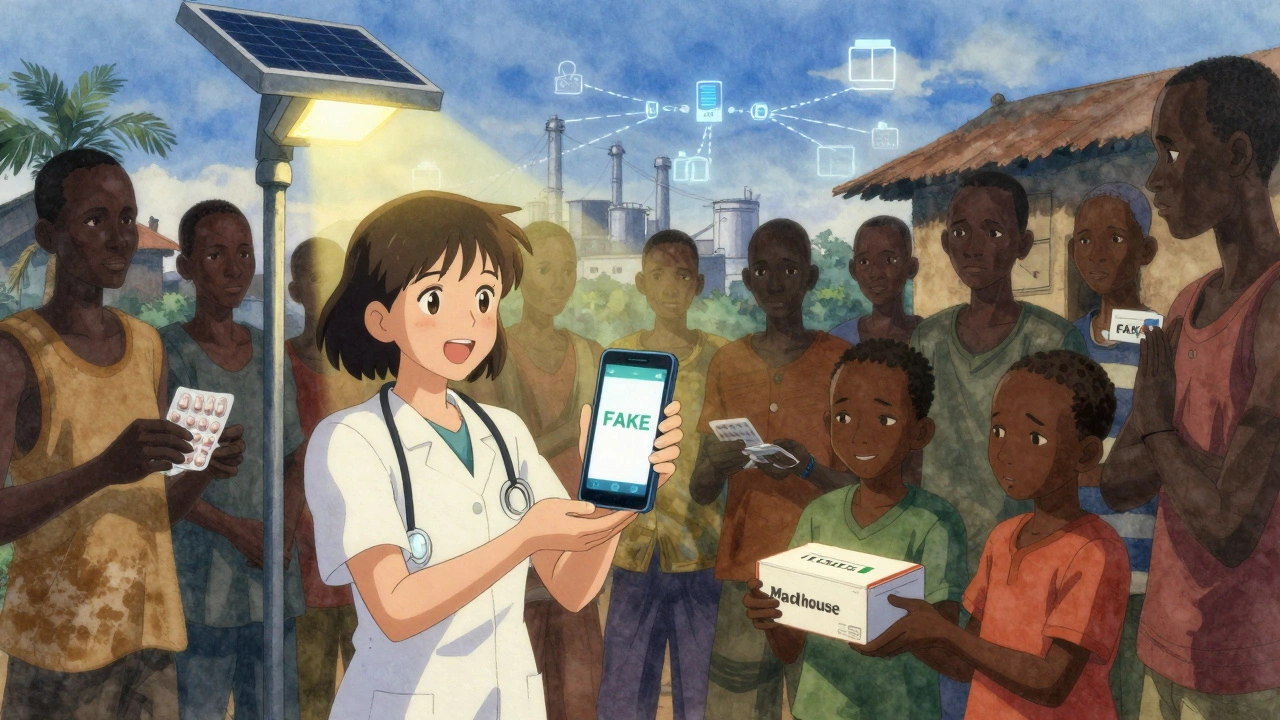
One of the most effective tools is mobile verification. Systems like mPedigree let users text a code from the pill package to a free number and get an instant reply: “Real” or “Fake.” In Ghana, this system reduced counterfeit use by 37% in pilot areas. But only 28% of users in low-literacy regions can use it without help.
Some countries are rolling out solar-powered testing kits that cost under $10 and give results in minutes. Others are using blockchain to track drugs from factory to pharmacy. Pfizer’s system has blocked over 302 million fake doses since 2004. The WHO launched its Global Digital Health Verification Platform in March 2025-it’s already active in 27 countries and claims 99.9% accuracy.
Law enforcement is stepping up too. Interpol’s 2025 Operation Pangea XVI shut down 13,000 websites, arrested 769 suspects, and seized over 50 million fake doses. But arrests are rare. Penalties in most developing countries are minimal. A man caught selling fake insulin in India might pay a $200 fine. In the U.S., he’d go to prison for decades.
The Medicrime Convention, signed by 76 countries, is the only international treaty specifically targeting fake medicines. But only 45 have turned it into national law. Without enforcement, it’s just paper.
What Can Be Done-Now?
Change won’t come from big institutions alone. It needs local action.
- Train community health workers to spot fake packaging. A 40-hour training program can teach them to check for spelling errors, mismatched batch numbers, or odd pill texture.
- Expand mobile verification using simple SMS systems. Even basic phones can work. In rural India, a pilot with SMS-based verification cut fake drug use by 41% in six months.
- Make real medicines affordable. Governments and NGOs must negotiate bulk pricing. Generic drug makers in India produce quality antimalarials for under $0.50 a dose. They just need to reach the villages.
- Strengthen local regulators. One lab with a spectrometer can test hundreds of samples a week. But 85% of rural clinics in low-income countries don’t have one. Solar-powered, portable devices are the answer.
- Empower patients. Public awareness campaigns in local languages can teach people to ask: “Can I check this medicine?” “Do you have a verification code?” “Where did this come from?”
One Ghanaian father told the WHO: “The SMS verification saved my child’s life. We thought the antimalarial was real. We got the code. It said ‘Fake.’ We went back to the pharmacy and demanded a real one. They gave us another pack-this time, it worked.”
The Future: A Race Against Time
Counterfeit drug production is growing faster than the legitimate market. The global fake medicine trade hit $83 billion in 2024-and it’s rising at 12.3% a year. The OECD predicts it could hit $120 billion by 2027.
Worse, criminals are adapting. AI now generates fake labels. Deepfakes mimic official websites. Cryptocurrency makes payments invisible. Some fakes now include security features that were once only on real drugs-making them harder to detect.
If nothing changes, the World Bank warns that counterfeit medicines could cause 5.7 million deaths in developing nations by 2030.
But it’s not inevitable. The tools exist. The knowledge exists. What’s missing is the will-and the funding.
The EU has pledged €250 million to help 30 developing nations secure their drug supply chains by 2026. That’s a start. But it’s not enough. Every dollar spent on fighting fake drugs saves $10 in healthcare costs and prevents avoidable deaths.
Real medicine should save lives. Not end them.
Jackie Petersen
December 4, 2025 AT 23:28So let me get this straight-we’re supposed to trust African clinics to hand out pills from some back-alley Chinese lab while our own pharma CEOs make billions? Classic. The real crime is letting this happen in the first place. And don’t even get me started on how the WHO is just a PR machine for Big Pharma anyway.
Annie Gardiner
December 5, 2025 AT 13:47Isn’t it funny how we call it ‘fake medicine’ like it’s some villainous plot? What if the real fake thing is the idea that medicine should be a human right? We treat health like a luxury product-then act shocked when people buy knockoffs. Maybe the problem isn’t the pills… it’s the system that made them necessary.
Rashmi Gupta
December 5, 2025 AT 18:37Everyone’s blaming China. But have you seen how many Indian generic makers sell the same drugs for $0.30? We don’t need foreign villains-we need local accountability. Our own pharmacies? Half of them don’t even know what’s in their own stock. And no one’s checking.
Andrew Frazier
December 5, 2025 AT 21:26lol so now we’re supposed to feel bad for people who buy fake drugs? dude they’re poor and dumb. if you can’t afford real medicine you shouldn’t be taking it. the solution? stop being poor. or better yet-move to america where we have real drugs and real consequences for fraud. also china is evil.
Kumar Shubhranshu
December 6, 2025 AT 21:21Real drugs cost too much. Fake ones kill. But the real killer is the system that lets both exist. Fix pricing. Fix supply. Fix trust. No more talk.
Mayur Panchamia
December 8, 2025 AT 21:18STOP THE MADNESS!!! This isn’t just about pills-it’s about COLONIALISM 2.0!!! Western pharma monopolies? Chinese counterfeit cartels? WHO as a puppet? It’s all connected!!! We’re being poisoned by a global conspiracy that profits from our suffering!!! And they’re laughing at us while our children die!!!
Karen Mitchell
December 9, 2025 AT 12:07It is, without a doubt, a profoundly troubling and deeply systemic issue that reflects a catastrophic failure of global public health governance. The normalization of substandard pharmaceuticals in low-resource settings is not merely an economic problem-it is an ethical abdication of the most basic human duty to preserve life.
Geraldine Trainer-Cooper
December 10, 2025 AT 03:53we’ve been sold a lie that medicine is about healing. it’s about control. the real drug isn’t the pill-it’s the belief that someone else has to fix this for us. maybe we’re all just waiting for a miracle when the answer was in our hands all along
Nava Jothy
December 10, 2025 AT 14:42OMG I just cried reading this… 😭💔 I mean… how can anyone sleep at night knowing a child died because someone cared more about profit than a life? I’ve donated to mPedigree, I’ve shared this post 3x, I’ve even unfollowed my cousin who said ‘it’s just Africa’… but it’s not enough… it’s NEVER enough…
Kenny Pakade
December 12, 2025 AT 11:47Oh so now we’re supposed to feel bad for people who choose pennies over their kid’s life? Nah. This is what happens when you let third-world countries run their own healthcare. They don’t have the infrastructure. They don’t have the discipline. They don’t have the will. Fix your own house before you ask us to fix yours.
brenda olvera
December 14, 2025 AT 03:28There’s so much hope here. Community health workers in Ghana. SMS verification saving lives. Real generics at 50 cents. This isn’t just a crisis-it’s a movement waiting to happen. We’ve got the tools. We just need to stop waiting for permission to act. Start local. Start now. We got this
Myles White
December 14, 2025 AT 09:15It’s important to recognize that the issue of counterfeit pharmaceuticals is not merely a matter of supply chain inefficiency or criminal malfeasance-it is a complex convergence of socioeconomic disparity, institutional fragility, global trade asymmetries, regulatory capture, and the commodification of biological necessity. The fact that a single pill can be the difference between life and death for a child, while simultaneously being the product of a multi-billion-dollar illicit economy, underscores the profound moral failure of our current global health architecture. We must move beyond reactive enforcement and toward structural equity: universal access, transparent traceability, and the de-commodification of essential medicines as a foundational human right. Anything less is just bandaging a hemorrhage while the heart keeps bleeding.
olive ashley
December 16, 2025 AT 02:36And you think the US is clean? Ever heard of the OxyContin crisis? Or the 40% of prescriptions that get filled with expired generics? We export our bad practices. We outsource our guilt. Then we act surprised when the same thing happens overseas. Wake up. This is our mess too.
Ibrahim Yakubu
December 16, 2025 AT 05:59I work in a clinic in Lagos. I’ve seen it. Pills with no powder. Pills with chalk. Pills that dissolve in your hand. We don’t have money for tests. We don’t have power for fridges. We don’t have time. We just give what’s there. And pray. Every day. This isn’t a story. It’s my job.