
FDA Medication Safety Apps: Best Mobile Tools for Tracking Side Effects and Drug Interactions
Drug Interaction Checker
Check Your Medication Interactions
Enter medications you're taking to identify potential interactions. This tool provides general information only and is not a substitute for medical advice.
How It Works
This tool uses medical knowledge to identify potential interactions between the medications you enter. Note that:
- It may not detect all possible interactions
- It doesn't account for individual health conditions
- Always consult your doctor or pharmacist
Interaction Results
Every year, medication errors send over 1.3 million people to U.S. emergency rooms. Many of these mistakes happen because patients forget doses, mix up pills, or don’t realize how a new drug interacts with what they’re already taking. The good news? Mobile apps are stepping in to help-and some are backed by the FDA.
What Makes an App a "Medication Safety Tool"?
Not every app that lists drug side effects is created equal. Some are just digital drug guides. Others are built to actually prevent harm. The FDA doesn’t approve every app, but it does regulate ones that act like medical devices. That means if an app tells you what dose to take, warns you about dangerous interactions, or even adjusts your schedule based on your symptoms, it might need FDA clearance.Apps like Medisafe and Drugs.com don’t make medical decisions-they give you information. That puts them in the lower-risk category. But if an app starts analyzing your blood test results or suggesting treatment changes, that’s a different story. The FDA’s new PDURS guidelines, rolling out in 2025, will make that line clearer. Apps that provide prescription drug advice will need to prove they’re accurate, reliable, and safe.
Top Apps You Can Use Right Now
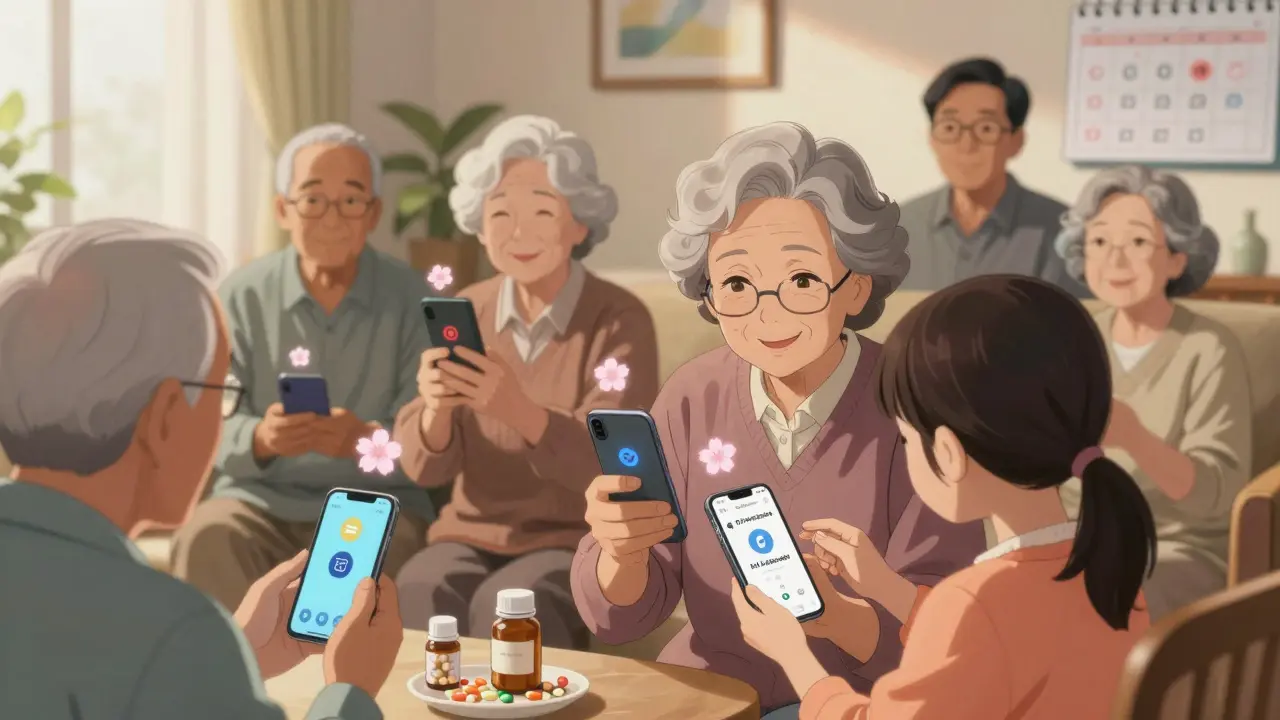
- Medisafe: This is the most downloaded medication reminder app in the U.S. It tracks when to take each pill, sends alerts, and even lets caregivers see your schedule. Over 7 million people use it, and 40% of them are 65 or older. It doesn’t just remind you-it learns your habits. Data from 7 million users shows Fridays and Saturdays are the hardest days to stay on track. Medisafe adjusts its alerts accordingly.
- Drugs.com: If you’ve ever Googled a drug name, you’ve probably landed here. It’s the top result for over 80% of medication searches. You can look up side effects, check interactions with up to 50 drugs and foods at once, and even find overdose treatment steps. It’s free, works offline for previously viewed pages, and has a pill identifier that scans barcodes or takes a photo of your pill.
- UpToDate: This one’s for doctors, not patients. It’s used in 78% of U.S. teaching hospitals. It has over 11,000 clinical topics, updated daily. But it costs nearly $500 a year. Most people won’t use it unless their doctor shares a summary.
- Pill Identifier & Med Scanner (v2.3, July 2025): A recent update added real-time camera scanning. Point your phone at a pill, and it tells you the name, dosage, manufacturer, and possible side effects. It cut data entry time by 60% in testing.
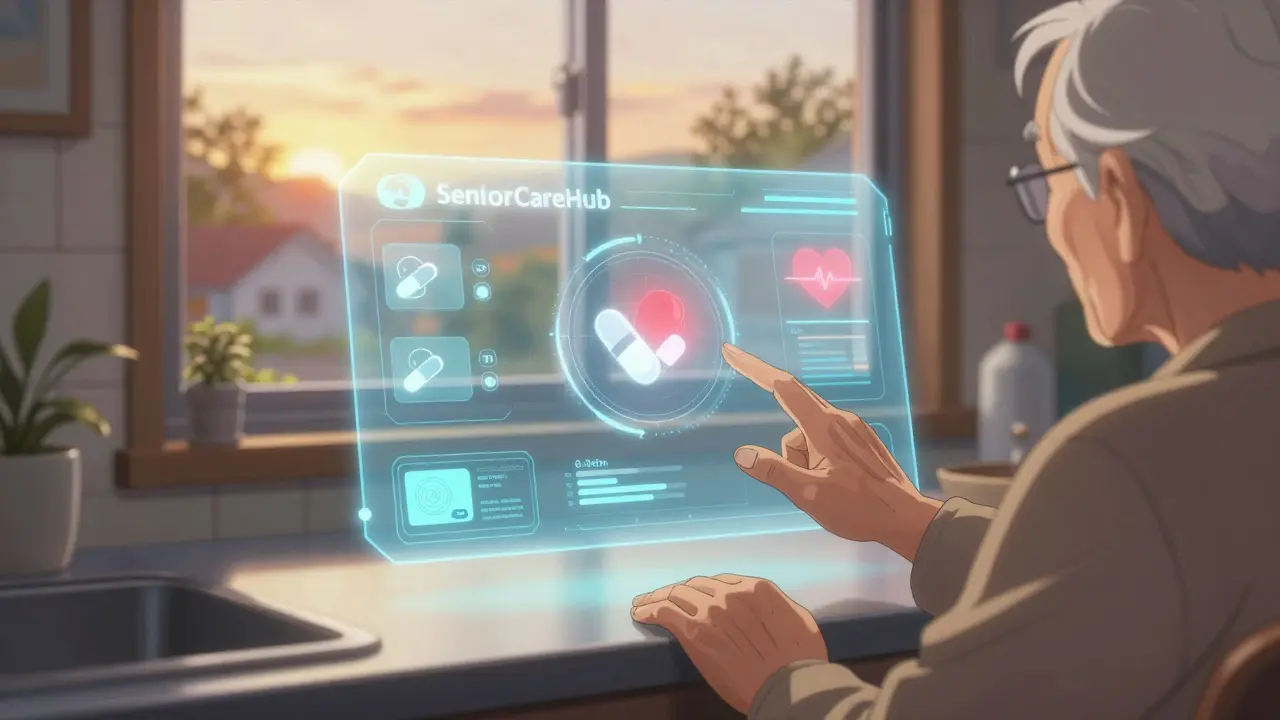
- mySeniorCareHub: Designed specifically for older adults and caregivers, this app simplifies drug interaction checks with big buttons, voice prompts, and pictorial guides. It launched its simplified checker in February 2025 after feedback showed seniors struggled with complex interfaces.
How These Apps Actually Prevent Harm
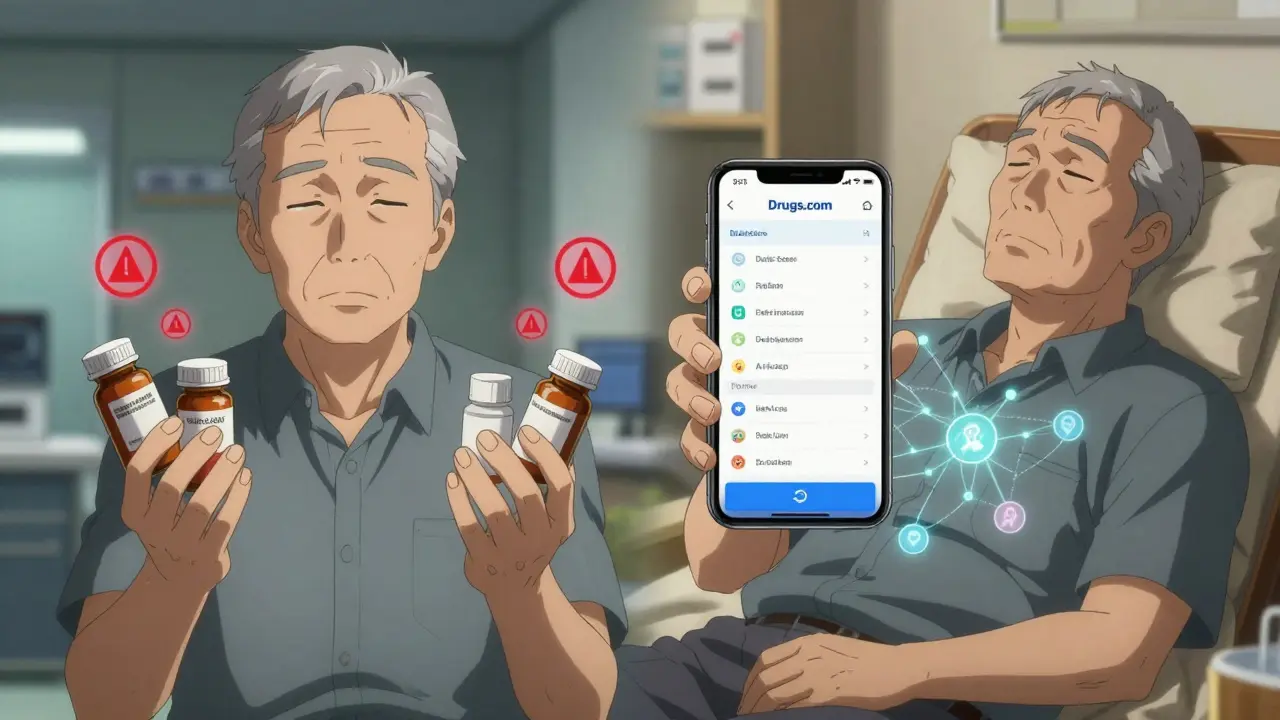
It’s not just about reminders. The real power comes from connecting the dots. Take a 72-year-old on five medications. One’s for blood pressure, another for arthritis, and a third for sleep. Without a tool, they might not know that the arthritis pill can raise blood pressure-and the sleep aid can make dizziness worse. That’s a fall risk.Apps like Medisafe and Drugs.com flag these conflicts in real time. AI algorithms analyze your list and compare it against millions of known interactions. Studies show these systems can cut medication errors by 30-50%. One trial found AI predicted adverse reactions with 85-92% accuracy.
Some apps even let you report side effects directly. While most don’t send data straight to the FDA’s MedWatch system yet, they often guide you on how to report. That’s critical-over 90% of serious side effects go unreported because patients don’t know how.
What You Can’t Rely On
Not every app with "FDA" in its description is FDA-approved. That’s a common misunderstanding. The FDA doesn’t review or endorse most consumer apps. Only a few, like Somryst, are actually cleared as medical devices. Somryst treats chronic insomnia and requires a prescription. It’s proven to work in clinical trials.Other apps might say they’re "FDA-referenced"-meaning they pull data from FDA databases. That’s good. But if the app hasn’t been tested for accuracy, it could be outdated. One 2025 review found that 12% of free apps had incorrect dosage info for common drugs like metformin or lisinopril.
Also, don’t trust symptom checkers for rare conditions. Reddit users praise Drugs.com’s checker for colds or rashes-but say it fails for autoimmune or neurological issues. These tools are great for common problems. They’re not diagnostic.
Getting Started: No Tech Skills Needed
Setting up one of these apps takes less than 15 minutes. Here’s how:- Download the app (Medisafe or Drugs.com are the easiest starts).
- Enter your medications: name, dose, time, and reason. Use the pill scanner if you have it.
- Set alerts for morning, afternoon, night. You can customize them.
- Turn on interaction alerts. Most apps do this by default.
- Share your schedule with a family member or caregiver if you want.
Seniors often need help. Caregiver reports show it takes 3-5 sessions for someone over 70 to feel comfortable. That’s normal. Apps like mySeniorCareHub were built for this. Voice-guided setup, large fonts, and simplified language make a big difference.
Free vs. Paid: What’s Worth It?
Most apps offer free versions with solid core features:- Free: Medication reminders, basic side effect info, interaction alerts, pill scanner.
- Paid ($3-$10/month): Unlimited caregiver access, detailed reports, advanced analytics, offline access, priority support.
For most people, free is enough. If you’re managing 5+ meds, have multiple caregivers, or need to track symptoms over time, the premium version adds real value. Medisafe’s premium plan lets you export reports to share with your doctor. That’s a game-changer during appointments.
UpToDate is expensive and meant for professionals. Skip it unless you’re a clinician.
What’s Coming in 2025 and Beyond
The FDA’s PDURS guidelines will change everything. Apps that give advice on prescription drugs will need to prove they’re accurate, updated, and tested. That means fewer apps will make bold claims-and the ones that do will be more trustworthy.AI is getting smarter. Future apps will:
- Link to your EHR (electronic health record) to auto-update meds after doctor visits.
- Use genetic data to warn you about drugs you might react badly to.
- Send real-time alerts to your doctor if you miss doses or report severe side effects.
- Connect directly to MedWatch for faster adverse event reporting.
By 2027, analysts predict 40% of medication safety apps will need some level of FDA review. That’s not bad-it means the best tools will rise to the top.
Real Stories, Real Results
Jessica, 68, had a seizure and ended up on eight different medications. "I couldn’t keep track. I was scared I’d take the wrong one. Medisafe saved me. Now I know exactly when to take each pill-and I don’t have to call my daughter every time." On Reddit, a user wrote: "I was on a new antibiotic and started feeling weird. I checked Drugs.com. It flagged the interaction with my blood thinner. I called my doctor before it got worse." These aren’t rare cases. They’re happening every day.Final Thought: Your Phone Is a Lifeline
Medication errors aren’t just accidents-they’re preventable. You don’t need to be tech-savvy to use these tools. You just need to start. Pick one app. Add your meds. Turn on alerts. Share it with someone who cares about you. That’s all it takes.The FDA doesn’t hand out gold stars to every app. But the ones that help people stay safe? They’re already working.
Are FDA medication safety apps free to use?
Yes, most core features are free. Apps like Medisafe and Drugs.com let you track medications, check side effects, and scan pills without paying. Premium features-like unlimited caregiver access or detailed reports-cost $2.99 to $9.99 per month. UpToDate is expensive ($500/year) and meant for healthcare professionals.
Can these apps replace my doctor?
No. These apps are tools to help you manage your meds and spot potential problems, but they can’t diagnose, prescribe, or replace medical advice. Always talk to your doctor before changing doses or stopping a drug. Apps like Somryst are FDA-approved for treating insomnia, but even those require a prescription.
Do these apps work offline?
Some do, partially. Drugs.com lets you view previously searched drug pages without internet. Medisafe can send reminders offline, but syncing with caregivers or updating drug info requires Wi-Fi or cellular data. If you’re in an area with poor signal, download your med list ahead of time.
How do I know if an app is safe to use?
Look for apps that cite FDA or NIH sources, update drug info regularly, and don’t make medical claims like "cures" or "diagnoses." Check reviews-apps with 4.5+ stars and 100,000+ downloads (like Medisafe) are generally reliable. Avoid apps that ask for unnecessary personal data or promise miracle results.
Can I report side effects through these apps?
Most apps don’t send reports directly to the FDA, but they guide you on how to do it. Drugs.com and Medisafe include links or instructions to file a report through MedWatch. Reporting side effects helps the FDA track safety issues faster. If you experience something serious, don’t wait-call your doctor and file a report.
Are these apps good for seniors?
Yes, especially if they’re designed for older users. mySeniorCareHub and Medisafe have features like voice prompts, large buttons, and simplified language. Over 40% of Medisafe users are 65 or older. If a senior struggles with small text or complex menus, choose an app built for seniors-it makes a big difference in adherence and safety.
What’s the difference between Medisafe and Drugs.com?
Medisafe is a medication manager-it reminds you when to take pills and tracks adherence. Drugs.com is a drug reference tool-it gives detailed info on side effects, interactions, and overdose steps. Many people use both: Medisafe for reminders, Drugs.com for checking details. They complement each other.
Do these apps work with Apple Health or Google Fit?
Medisafe syncs with Apple Health and Google Fit to track things like heart rate or sleep patterns that might relate to medication side effects. Drugs.com doesn’t sync directly, but you can manually log data. If you use a health tracker, choosing an app that integrates helps you see the full picture.
Donna Macaranas
February 2, 2026 AT 01:08Just downloaded Medisafe last week after my grandma had a mix-up with her blood pressure pills. It’s been a game-changer. The alerts are gentle but firm, and I love that it shows me which days she’s most likely to miss. No more frantic calls at 8 PM asking if she took her pills. Seriously, if you’re managing meds for someone older, just try it. It’s free and doesn’t require a PhD to use.
Naomi Walsh
February 3, 2026 AT 23:02Ugh. Another feel-good listicle pretending apps are ‘FDA-approved.’ The FDA doesn’t ‘approve’ consumer apps unless they’re Class II medical devices - and only Somryst qualifies. Drugs.com? It’s a glorified Wikipedia with a pill scanner. Medisafe? A reminder app with a fancy algorithm. Stop pretending these are clinical tools. Real medicine requires human oversight - not a 14-year-old’s app update log.
Nidhi Rajpara
February 5, 2026 AT 03:53It is important to note that while the apps mentioned are useful, one must ensure that the data sources are updated regularly. Many free applications rely on outdated databases, which may contain incorrect dosing information. For example, a 2025 study published in the Journal of Clinical Informatics found that 12% of free medication apps contained erroneous data regarding metformin and lisinopril dosages. Always cross-reference with official FDA or NIH sources when in doubt.
June Richards
February 6, 2026 AT 20:18LOL. ‘AI predicts adverse reactions with 85-92% accuracy.’ Bro, my Fitbit predicted I was ‘stressed’ because I drank coffee. 😂 These apps are just fancy calculators with buzzwords. I’d trust my pharmacist more than some algorithm trained on Reddit posts.
Jaden Green
February 8, 2026 AT 14:09Let’s be real - these apps are a Band-Aid on a systemic failure. The real issue is that doctors prescribe too many drugs without coordinating care, and patients are left to navigate the chaos alone. The FDA’s PDURS guidelines are a step forward, but they’re still reactive. We need mandatory EHR integration across all prescribers, not just a push notification on your phone. And don’t get me started on how Medicare doesn’t cover these tools - why should patients pay $10/month to not die from polypharmacy? This isn’t convenience - it’s negligence dressed up as innovation.
Lu Gao
February 10, 2026 AT 12:10Y’all are overthinking this. 🙃 I use Drugs.com to check my meds and Medisafe to remind me. Done. No premium. No EHR. No AI. Just two free apps that don’t lie. My aunt’s 78 and uses mySeniorCareHub with voice mode - she says it’s like having a nurse in her pocket. 📱❤️ If it helps someone not end up in the ER, it’s working. Stop the elitist takes.
Angel Fitzpatrick
February 10, 2026 AT 15:24Let me guess - the FDA’s ‘PDURS’ is just another corporate carve-out disguised as regulation. Big Pharma’s lobbying arm is rewriting the rules so only apps they fund get cleared. Somryst? That’s a Sleepio spinoff owned by a pharma subsidiary. The pill scanner apps? They’re collecting your med history to sell to insurers. You think your data’s private? Nah. Your ‘safety app’ is just a spyware Trojan horse with a pill icon. The FDA doesn’t protect you - they rubber-stamp surveillance.
Chris & Kara Cutler
February 10, 2026 AT 22:34Just started using Medisafe and already saved my life. 💪 My blood thinner and ibuprofen were clashing - app flagged it before I even took the pill. I called my doc, switched meds, and boom - no more dizziness. Free app. 2 minutes setup. 100% worth it. If you’re on more than 3 meds, DO THIS. Your future self will thank you. 🙌
Rachel Liew
February 11, 2026 AT 11:18i just wanted to say thank you for this post. my mom is 82 and she was so scared to use any app because she thought they’d be too hard. i showed her mySeniorCareHub and now she uses it every morning with her tea. the voice thing makes her feel less alone. she says it’s like talking to a kind neighbor. 🥹 we all need this kind of help. no tech skills needed. just care.
Jamie Allan Brown
February 11, 2026 AT 23:19As someone who’s worked in geriatric care for 20 years, I’ve seen patients lose their independence because they’re overwhelmed by meds. These apps aren’t magic - but they’re the closest thing we’ve got to a safety net in a broken system. The fact that Medisafe has 7 million users, mostly seniors, tells me something: people are desperate for help. Let’s not nitpick the tech. Let’s expand access. Free versions should be promoted in clinics. Pharmacies should hand out QR codes. This isn’t about innovation - it’s about dignity.