
How Medicare Drug Price Negotiation Works and What It Means for Your Prescription Costs
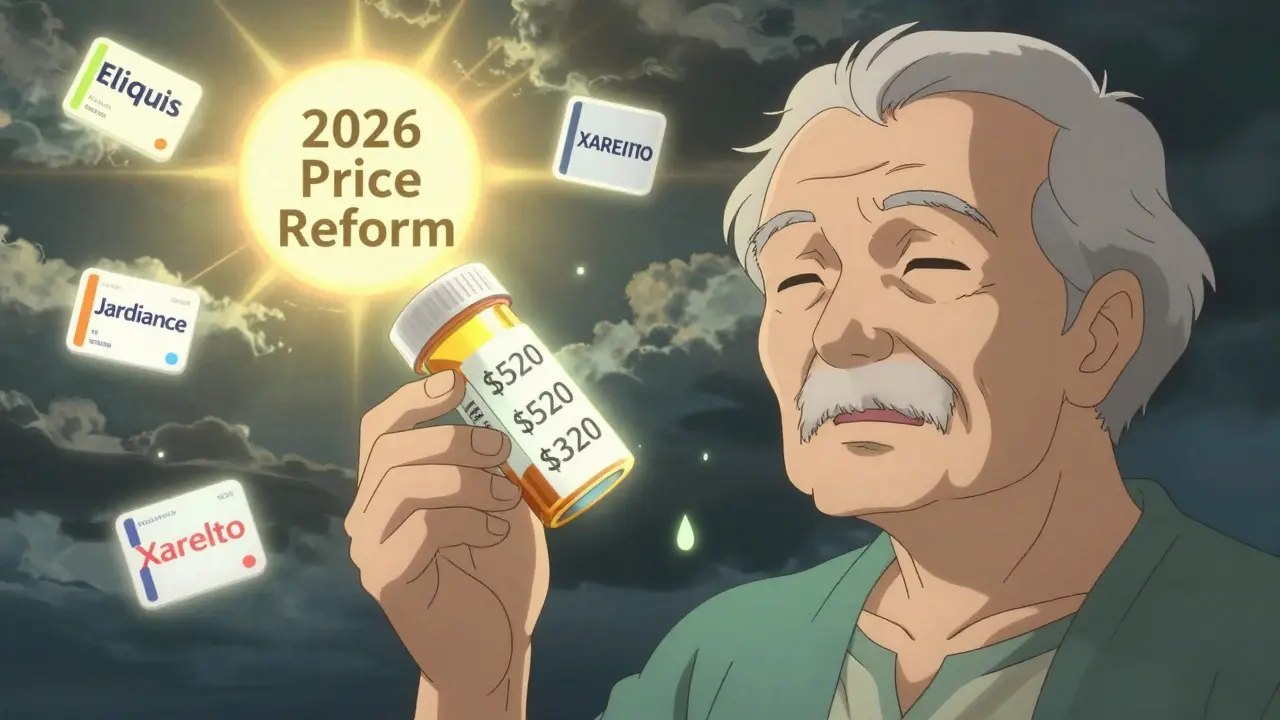
For decades, Medicare wasn’t allowed to negotiate drug prices. That changed in 2022, when the Inflation Reduction Act gave Medicare the power to directly bargain with drug makers for the most expensive medications. Starting January 1, 2026, this new system kicks in for 10 high-cost drugs - and the discounts are huge. Some are as deep as 79%. This isn’t just a policy change. It’s reshaping how millions of Americans pay for their prescriptions.
What Exactly Is Medicare Negotiating?
Before 2026, Medicare Part D - the prescription drug benefit - relied on private insurers to negotiate prices with drug companies. But those deals happened behind closed doors, and Medicare had no say. The result? The government paid whatever price was set, even if a drug cost 10 times more than similar ones in other countries. The new law fixes that. Now, Medicare can pick drugs that are:- Single-source (no generic or biosimilar competition)
- At least 7 years old (for small-molecule drugs) or 11 years old (for biologics)
- Spending over $100 million annually on Medicare
How the Negotiation Process Actually Works
This isn’t a backroom deal. It’s a tightly timed, rule-based process with clear steps:- February 1, 2024: CMS (Centers for Medicare & Medicaid Services) sent initial price offers to each drugmaker. These offers weren’t random. They were based on what other countries pay, how much the drug is used, and whether cheaper alternatives exist.
- March 2, 2024: Drug companies had exactly 30 days to respond with counteroffers.
- Spring-Summer 2024: CMS held three formal negotiation meetings with each company. Some deals were reached in person. Others were finalized through written offers.
- August 1, 2024: The negotiation window closed. CMS announced the final prices on August 16.
- January 1, 2026: These new prices take effect for Medicare Part D beneficiaries.
- The average price Medicare plans paid last year (after rebates and discounts)
- A percentage of the drug’s average price to non-Medicare buyers (called non-FAMP)
How Big Are the Discounts?
The numbers speak for themselves. According to the Department of Health and Human Services, the 10 negotiated drugs are getting price cuts between 38% and 79%. Here’s what that means in real dollars:| Drug | Previous Average Price (per month) | Negotiated Price (per month) | Discount |
|---|---|---|---|
| Eliquis (apixaban) | $520 | $320 | 38% |
| Jardiance (empagliflozin) | $480 | $200 | 58% |
| Xarelto (rivaroxaban) | $460 | $110 | 76% |
| Farxiga (dapagliflozin) | $450 | $180 | 60% |
| Stelara (ustekinumab) | $720 | $190 | 74% |
Why This Matters for Insurers and Private Plans
You might think, "This is just for Medicare. What about my private insurance?" But here’s the catch: drug companies don’t want to have two price lists. It’s messy, expensive, and confusing. So, most manufacturers are lowering prices for everyone - not just Medicare. This is called a "spillover effect." Private insurers, pharmacy benefit managers (PBMs), and even Medicaid are seeing lower prices too. Stanford Medicine estimates private insurers could save $200-250 billion over the next decade because of this ripple effect. It’s not guaranteed, but it’s already happening. In 2024, after the first round of negotiations, several drugmakers announced they were lowering prices for commercial plans. That’s because they’d rather cut prices once than deal with multiple pricing tiers.What About Other Drugs? What’s Next?
The first 10 drugs are just the start. The law is designed to scale:- 2027: 15 more drugs added
- 2028: 15 more, plus the first Part B drugs (injected or infused drugs given in doctors’ offices)
- 2029 and beyond: 20 drugs per year
Who’s Winning? Who’s Losing?
Patients? They’re winning. A Kaiser Family Foundation poll found 72% of Medicare beneficiaries support this change. For those stuck in the "donut hole" - the coverage gap where you pay full price - these discounts mean fewer out-of-pocket costs. Drug companies? They’re not happy. Four of the 10 manufacturers sued, claiming the law is unconstitutional. A federal judge dismissed those lawsuits in August 2024, but appeals are expected. The industry claims this will kill innovation. But the Office of Management and Budget says their estimates are exaggerated. Pharmacies and insurers? They’re adapting. By October 15, 2025, all Part D plans must update their formularies and pricing systems. Pharmacy staff are being trained. Billing systems are being reprogrammed. It’s a logistical overhaul - but it’s necessary.
What You Need to Do Now
If you’re on Medicare Part D:- Check your 2026 plan documents. The new prices will be listed.
- If you take one of the 10 negotiated drugs, expect lower copays starting January 2026.
- Don’t assume your doctor will automatically switch you. Talk to them - ask if there’s a cheaper alternative, even if it’s not on the list.
- Watch your explanation of benefits (EOB). You might see lower prices on your prescriptions.
- If you’re paying full price for a brand-name drug, ask your pharmacist: "Is there a negotiated price available?" Some PBMs are already applying the Medicare discounts.
What’s Still Unresolved?
This system isn’t perfect. Here are the big open questions:- What about newer drugs? Drugs under 7 years old aren’t eligible. That means the newest, most expensive drugs - like those for rare diseases - won’t be negotiated for years.
- What if drugmakers raise prices before negotiation? Some companies have already increased prices for the 10 drugs, hoping to lock in higher baseline costs. CMS is watching for this, but there’s no rule yet to stop it.
- Will other insurers follow? Medicaid and private plans aren’t required to adopt these prices. But most will - because it’s cheaper than fighting.
Final Thoughts
This isn’t just about Medicare. It’s about resetting the entire system. For the first time, the U.S. government is saying: "We won’t pay what you ask. We’ll pay what’s fair." The 38% to 79% discounts aren’t magic. They’re the result of a long-overdue shift in power. Drugmakers can’t control prices anymore. Patients can. And that’s the real win.Will my Medicare Part D premiums go down because of these price cuts?
Not directly. Premiums are set based on overall program costs and enrollment. But lower drug spending means less pressure to raise premiums in future years. The bigger benefit is lower out-of-pocket costs at the pharmacy - not lower monthly premiums.
Can I ask my doctor to switch me to a drug that’s being negotiated?
Yes - but only if it’s medically appropriate. The negotiated drugs are not necessarily "better" than others. They’re just cheaper. If you’re doing well on your current medication, there’s no need to switch. But if cost is a problem, talk to your doctor about alternatives.
Are biosimilars affected by this negotiation?
Not directly. The law only applies to drugs with no generic or biosimilar competition. But the success of these negotiations may push manufacturers to lower prices on biosimilars too - because they don’t want to be undercut.
Why does it take until 2026 for the prices to take effect?
The law gives drugmakers time to adjust. The negotiation process itself takes about six months. Then, Part D plans need time to update their formularies, pharmacy systems, and billing. January 1, 2026, is the earliest date allowed under the law.
Will this affect my prescription if I’m not on Medicare?
Possibly. Many drugmakers are lowering prices for all buyers to avoid having multiple price lists. If your insurer or pharmacy benefit manager adopts the Medicare rate, you could see lower costs too - even if you’re on private insurance.
Andrew Mamone
March 16, 2026 AT 10:13MALYN RICABLANCA
March 17, 2026 AT 00:26gemeika hernandez
March 18, 2026 AT 10:44Linda Olsson
March 20, 2026 AT 04:19Ayan Khan
March 20, 2026 AT 14:35Emily Hager
March 22, 2026 AT 14:09Lauren Volpi
March 23, 2026 AT 03:54jared baker
March 24, 2026 AT 13:03Michelle Jackson
March 26, 2026 AT 09:13becca roberts
March 26, 2026 AT 19:00SNEHA GUPTA
March 26, 2026 AT 20:49Gaurav Kumar
March 28, 2026 AT 03:24Laura Gabel
March 29, 2026 AT 12:26