
How to Follow Professional Society Safety Updates on Medications
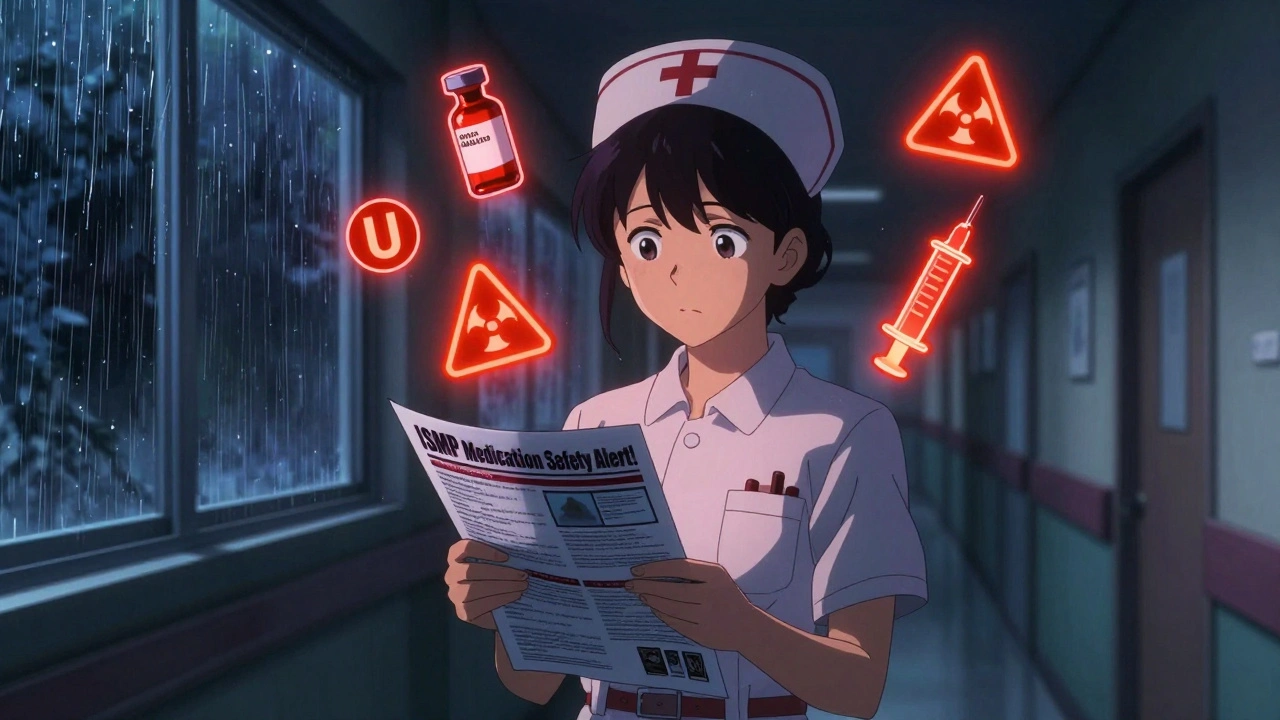
Every year, thousands of patients are harmed by preventable medication errors. Some of these errors happen because a doctor, nurse, or pharmacist didn’t know about a new safety alert. It’s not about forgetting-it’s about not knowing where to look. The truth is, if you’re not actively tracking updates from professional societies, you’re working with outdated information. And in medication safety, outdated means dangerous.
Why Professional Society Updates Matter
Professional societies like the Institute for Safe Medication Practices (ISMP), the American Society of Health-System Pharmacists (ASHP), and the World Health Organization (WHO) don’t just publish guidelines-they save lives. These organizations collect real-world data from thousands of medication errors reported by frontline staff. They don’t guess what’s risky. They see what actually went wrong.For example, ISMP’s National Medication Errors Reporting Program (MERP) processed over 2,800 medication error reports in 2022. That’s not theory. That’s real incidents: a nurse giving the wrong dose because of a confusing label, a pharmacist misreading an abbreviation, a patient getting the wrong drug because of a similar-sounding name. These reports turn into actionable updates-like banning the use of “U” for units (it can look like a zero) or warning about high-risk drugs like insulin or heparin.
The FDA issues alerts too, but they often come after harm has already happened. A 2022 analysis in the New England Journal of Medicine found the median time between a drug safety issue being identified and the FDA warning being issued was 47 days. Professional societies move faster because they’re not waiting for regulatory review-they’re listening to the people on the ground.
Where to Find the Most Important Updates
You don’t need to subscribe to every organization. But you do need to pick the right ones based on your role.- ISMP Medication Safety Alert! - Published weekly, this is the gold standard for frontline providers. It’s short, direct, and packed with real cases. Over 45,000 healthcare workers subscribe. If you’re in a hospital, clinic, or pharmacy, this is non-negotiable. The 2022-2023 Targeted Medication Safety Best Practices document alone led to 87% of U.S. hospitals implementing at least one new safety protocol.
- ASHP Medication Safety Resource Center - Offers free access to practice guidelines, including how to build safe medication processes. Their biennial Medication Safety Self-Assessment tool helps teams identify gaps. If you’re responsible for policy or training, this is your playbook.
- AORN Medication Safety Guideline - If you work in surgery or perioperative care, this is essential. Their October 2023 update added new sections on technology use and organizational oversight. Many OR teams now run monthly safety huddles based on AORN’s checklist.
- FDA Drug Safety Communications - Free to sign up for. These are official warnings on drug recalls, label changes, and serious side effects. They’re slower but authoritative. Use them to confirm what you’re hearing from ISMP or ASHP.
- WHO’s Medication Without Harm - This is global strategy, not daily guidance. Great for understanding trends and policy, but not for deciding how to label a vial tomorrow. Still, if you’re in public health or work in low-resource settings, their handoff communication toolkit is invaluable.
Most of these services are accessible via email, web portals, or mobile apps. ISMP’s newsletter is delivered directly to your inbox every Tuesday. ASHP’s resources are downloadable as PDFs. FDA alerts can be customized by drug class or condition. You don’t need special software-just an email address and 10 minutes a week.
How to Avoid Information Overload
Here’s the problem: if you subscribe to everything, you’ll drown. A 2023 ASHP survey found that 37% of subscribers felt overwhelmed by the volume of updates. You don’t need to read every word. You need a system.Start by designating one person per unit or department as the “safety liaison.” This person subscribes to all key sources and filters what’s relevant. They don’t send every alert-they send the top 1-2 each week that apply to your team. For example:
- Monday morning: Safety liaison shares one ISMP alert about a new high-risk drug interaction.
- Wednesday: AORN update on labeling for injectables in the OR.
- Friday: FDA alert on a recalled batch of metformin.
Use a simple spreadsheet or shared document to track what’s been implemented. Did you change your barcode scanning protocol? Did you remove a dangerous abbreviation from your EHR? Mark it. That’s how you turn alerts into action.
Some teams integrate updates into their monthly competency checks. AORN found that when their guideline changes were tested in simulation training within 30 days of release, medication errors dropped by 63%. You don’t need a fancy system. Just ask: “Did we see this update? Did we change anything?”
What You Need to Know to Understand the Updates
You don’t need a pharmacology degree to use these resources-but you do need to understand a few key terms.- NCC MERP Index - This is how errors are ranked by severity, from Category A (no harm) to Category I (death). ISMP and ASHP use this to prioritize alerts. If an alert says “Category F or higher,” it means it could cause serious harm.
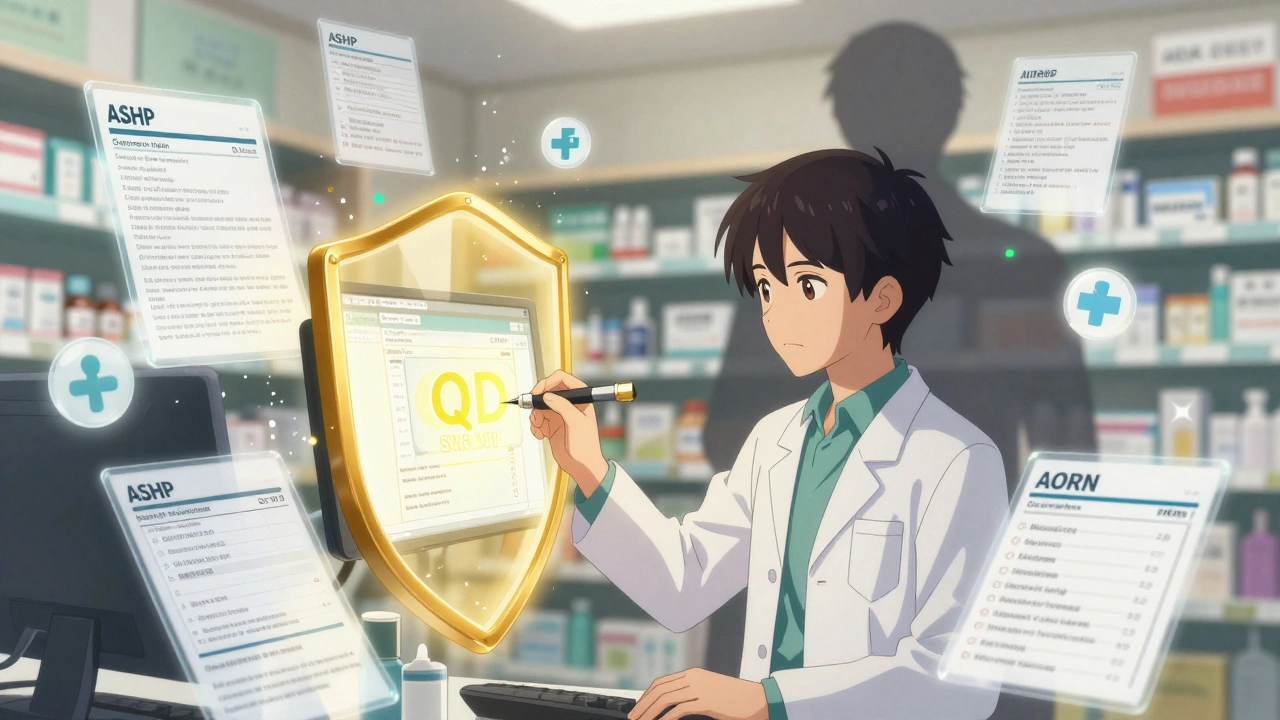
- ISMP’s List of Error-Prone Abbreviations - This is updated every year. It tells you which abbreviations to ban: “QD” (can look like QID), “U” (for units), “cc” (use mL instead). These aren’t suggestions-they’re rules in most hospitals.
- High-Alert Medications - These are drugs with a high risk of causing serious harm if misused. Insulin, opioids, heparin, IV potassium, and chemotherapy agents are on the list. Updates often focus on these.
Most organizations have these lists posted in medication rooms or embedded in their EHR. If yours doesn’t, ask for them. This isn’t busywork-it’s the foundation of safe prescribing and dispensing.
What to Do When Updates Conflict
Sometimes, you’ll get conflicting advice. ISMP says to use one protocol. ASHP says another. The FDA hasn’t weighed in yet. What now?Go with the most specific and recent guidance. For example, if ISMP and ASHP both recommend avoiding a certain drug combination, but the FDA only flagged one drug, follow ISMP and ASHP-they’re responding to real incidents. If AORN says to use a different labeling system in the OR than your hospital currently uses, follow AORN. Specialty guidelines are tailored for context.
Don’t assume one source is “better.” Each has a different focus. ISMP sees errors across all settings. AORN sees them in the OR. WHO sees them in low-income countries. Use them together. Dr. Michael Cohen, former president of ISMP, put it simply: “Relying on a single source for medication safety updates is as dangerous as using a single verification step in medication administration-redundancy saves lives.”

Real Stories from the Frontlines
A nurse in Ohio stopped a potential overdose after reading an ISMP alert about a new generic version of a high-risk drug that looked identical to another. She checked the vial label-same shape, same color, same font. But the concentration was different. She called the pharmacy. The error was caught before it reached the patient. A pharmacist in Texas changed his unit’s insulin ordering process after an ASHP guideline warned about decimal point errors. He added a mandatory second check and a warning pop-up in the EHR. Within six months, insulin dosing errors in his unit dropped by 80%. A surgical team in Ireland started using AORN’s new checklist for medication handoffs between the OR and PACU. They found that 3 out of 10 patients were being given the wrong pain medication because no one was confirming the dose. They added a verbal read-back step. No errors since.These aren’t rare cases. They happen every day. And they’re preventable-if you’re looking.
What’s Changing in 2025
The field is evolving fast. In March 2024, ISMP released its 2024-2025 Targeted Medication Safety Best Practices, which included two new recommendations: one on AI-assisted medication management and another on compounding pharmacy oversight. These reflect real concerns-algorithms making dosing suggestions, and small labs mixing drugs without proper checks.AORN is moving away from biennial updates. Starting in 2025, they’ll release quarterly micro-updates. That means you’ll get changes faster-but you’ll need to check more often.
WHO is focusing on transitions of care-when patients move from hospital to home, or from one provider to another. That’s where many errors happen. A new toolkit launched in late 2023 helps teams create standardized handoff checklists.
And in 2024, Epic and Cerner, the two biggest EHR systems, announced they’re integrating ISMP best practices directly into their software. That means safety alerts could pop up right when you’re prescribing-no extra login needed. This could raise adherence from 58% to over 80%.
Final Thought: This Isn’t Optional
You don’t have to be a safety officer to care about medication safety. You don’t have to be in a hospital. If you prescribe, dispense, administer, or monitor medications-this is your job. Every update you ignore is a risk you’re taking. Every alert you act on is a life you might save.Start small. Subscribe to ISMP’s Medication Safety Alert! It’s $299 a year. That’s less than a daily coffee for most providers. Set aside 10 minutes every Tuesday to read it. Share one tip with your team. That’s it. You don’t need to do everything. Just do something.
Because in medication safety, the difference between a near miss and a tragedy is often just one alert you read-and acted on.
Do I need to pay for all these updates?
No. The FDA’s Drug Safety Communications are free. ASHP offers free access to core guidelines. ISMP’s Medication Safety Alert! is paid ($299/year), but many hospitals cover it. If you’re an individual practitioner, start with FDA alerts and free ASHP resources. You can always upgrade later.
How often should I check for updates?
At minimum, check weekly for ISMP and FDA alerts. If you’re in surgery, review AORN updates every quarter. Don’t wait for a crisis. Set a recurring calendar reminder-Tuesday mornings work well. Even 10 minutes a week keeps you current.
Can I rely only on my hospital’s internal alerts?
No. Internal alerts are helpful, but they’re often based on local incidents. Professional societies see patterns across thousands of facilities. You might miss a nationwide warning if you only rely on your hospital. Use both: internal alerts for your facility, society updates for broader risks.
What if my workplace doesn’t provide these resources?
Start by sharing one alert with your supervisor. Say: “I read this ISMP alert about a dangerous drug interaction. It could affect our unit. Can we discuss how to prevent this?” Most leaders will support it-especially if you show how it prevents harm. If you’re a student or independent practitioner, sign up yourself. Your license depends on staying current.
Are these updates only for hospitals?
No. ISMP, ASHP, and FDA updates apply to pharmacies, clinics, long-term care, and even home care. AORN is surgical-specific, but the others are universal. If you handle medications, you need these updates-no matter where you work.
Sheldon Bird
December 13, 2025 AT 19:26Karen Mccullouch
December 15, 2025 AT 08:13Michael Gardner
December 15, 2025 AT 11:50Willie Onst
December 16, 2025 AT 14:43Ronan Lansbury
December 18, 2025 AT 12:46Jennifer Taylor
December 20, 2025 AT 08:10Shelby Ume
December 20, 2025 AT 09:01Jade Hovet
December 21, 2025 AT 06:30nithin Kuntumadugu
December 22, 2025 AT 19:15John Fred
December 24, 2025 AT 09:54Harriet Wollaston
December 24, 2025 AT 11:29Lauren Scrima
December 25, 2025 AT 18:46sharon soila
December 27, 2025 AT 14:24nina nakamura
December 29, 2025 AT 11:04Sheldon Bird
December 29, 2025 AT 13:13