
Medication Adherence: Proven Strategies to Take Your Pills as Prescribed

One in two people with chronic illnesses don’t take their meds like they’re supposed to. Not because they’re careless. Not because they don’t care. But because it’s hard. Life gets busy. Pills get confusing. Costs add up. And before you know it, you’re skipping doses - maybe just one or two a week - and wondering why you still don’t feel better.
Why Medication Adherence Matters More Than You Think
Medication adherence isn’t just about taking your pills. It’s about staying out of the hospital, avoiding complications, and living longer. The World Health Organization says that in developed countries, only about half of people stick to their long-term medication plans. That’s not a small gap. That’s a public health crisis.
Think about it: if you have high blood pressure and skip your pills every other day, your risk of stroke goes up. If you’re diabetic and miss insulin doses, your blood sugar spikes - and those spikes damage your kidneys, eyes, and nerves over time. The CDC estimates that poor adherence causes around 125,000 deaths in the U.S. every year. That’s more than car accidents. More than flu. It’s the silent killer behind so many preventable hospital stays.
And it’s not just about dying. It’s about living. People who take their meds as prescribed report better energy, fewer flare-ups, and more control over their lives. Adherence isn’t a chore. It’s your best tool for staying well.
The Two Kinds of Non-Adherence - And How to Fix Each
Not all missed doses are the same. There are two main types, and they need totally different fixes.
Unintentional non-adherence happens when you mean to take your pills - but you forget. Maybe your schedule changes. Maybe you’re juggling five different medications. Maybe you travel and leave your pillbox at home. This is the most common kind. A 2022 survey found 68% of people said forgetting was their biggest problem.
Intentional non-adherence is when you decide not to take the medicine. Maybe you think it’s not working. Maybe you’re scared of side effects. Maybe the cost is too high. You’re not being lazy - you’re making a choice based on your experience. But that choice can be dangerous if it’s based on misinformation.
The fix for forgetting? Systems. The fix for choosing not to take meds? Conversation.
Simple Systems That Actually Work
If forgetting is your main issue, you don’t need fancy tech. You need a routine.
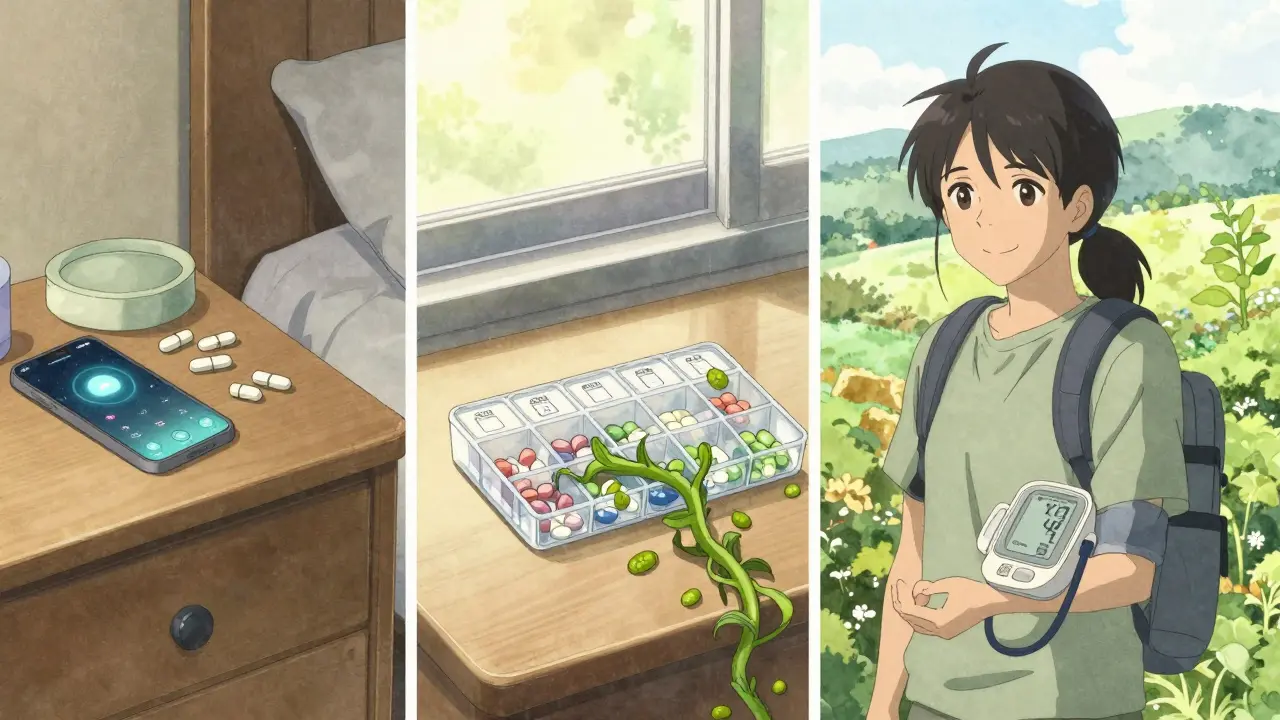
- Pill organizers - the kind with compartments for morning, afternoon, evening, and night. Use a weekly one. Fill it every Sunday. You’ll see at a glance if you missed a dose. A Farmington Drugs survey found 73% of users called these "lifesavers."
- Alarm reminders - set your phone or smart speaker to chime when it’s time. Name the alarm: "Take BP pill." Not just "Meds." The more specific, the better.
- Link it to something you already do - brush your teeth? Take your pill right after. Eat breakfast? Take it with your coffee. Habit stacking works better than willpower.
- Blister packs - ask your pharmacist to pre-pack your meds in daily strips. No sorting. No counting. Just tear and take. Great for seniors or anyone with memory issues.
For people on complex regimens - say, four or five pills a day - adherence drops to just 51%. But if you can switch to once-daily meds? Adherence jumps to 79%. Talk to your doctor. Is there a combination pill? A long-acting version? Sometimes, simplifying the regimen is the most powerful fix.
When Cost Stops You - What to Do
One in two non-adherent patients say cost is their main barrier. A pill that costs $200 a month? You’re not going to take it. No matter how good it is.
But you don’t have to give up. Here’s what works:
- Ask your doctor for a 30-day trial. Many pharmacies let you buy a small supply first to see if it’s tolerable.
- Check for patient assistance programs. Most big drugmakers offer free or low-cost meds if you meet income limits. Just call the manufacturer - they’ll guide you.
- Use generic versions. They’re the same drug, same effect, 80% cheaper.
- Compare prices at different pharmacies. Sometimes Walmart or Costco has the same drug for $10 while your local pharmacy charges $70.
- Ask about mail-order pharmacies. Many insurers offer 90-day supplies at lower copays.
And if you’re on Medicare? Starting in 2025, the cap on out-of-pocket drug costs will be $2,000 a year. That’s a game-changer. Don’t assume you can’t afford it - ask someone who knows the system.
When You Don’t Believe It’s Working
"I’ve been taking this for two weeks and I feel the same." That’s a common reason people quit. But many meds don’t work overnight. Blood pressure pills? They take 2-4 weeks. Antidepressants? 6-8 weeks. Cholesterol meds? Months.
Don’t stop because you don’t feel different. Feelings aren’t the measure. Lab results are.
Instead, ask your provider: "What should I expect to see change? When? How will we know if it’s working?" Then track it. Write down your blood pressure readings. Log your pain levels. Note your energy. Bring that to your next visit. You’ll see patterns - and your doctor will too.
And if side effects are the issue? Don’t suffer in silence. There’s often another option. Maybe a lower dose. Maybe a different drug in the same class. Your doctor can’t help you if you don’t tell them.
Technology Can Help - But Only If It Fits You
Apps like Medisafe, Mango Health, and AdhereCard send reminders, track doses, and even notify family members if you miss a pill. In diabetes studies, these apps boosted adherence by 12-18%.
But here’s the catch: they only work if you use them. And many older adults struggle. One CDC study found 57% of people over 65 found smartphone apps too confusing.
So don’t force tech. If you’re not comfortable with phones, stick with pillboxes and alarms. If you love tech, try a smart pill dispenser - some even auto-dispense and call your caregiver if you miss a dose.
The best tool? The one you’ll actually use.
How Your Doctor Can Help - And How to Talk to Them
Your doctor doesn’t always know if you’re skipping pills. They assume you’re taking them. So you have to speak up.
Next time you visit, try this:
- Start with: "Many people have trouble taking meds as prescribed - have you ever had that happen?" That’s the exact phrase the NHS recommends. It’s non-judgmental. It opens the door.
- Bring your pill bottles or a list. Don’t rely on memory.
- Ask: "Is this regimen too complicated? Can we simplify it?"
- Ask: "What happens if I miss a dose?" Most meds have clear guidelines - and you deserve to know them.
Doctors are busy. But if you come prepared, you’ll get better care. And if your doctor doesn’t ask about adherence? Ask them. It’s your health. You have the right to be heard.
What Works Best - The Big Picture
There’s no single magic fix. But research shows the most effective programs combine three things:
- Simplification - fewer pills, once-daily doses.
- Support - pharmacist check-ins, family reminders, nurse follow-ups.
- Communication - open, shame-free talks about what’s really going on.
A Mayo Clinic program for heart failure patients cut hospital readmissions by 37% by doing exactly that. Pharmacists reviewed meds every two weeks. Patients got personalized education. And they were called if they didn’t refill on time.
It wasn’t fancy. It wasn’t expensive. It was consistent.
Final Thought: You’re Not Failing - The System Often Is
Missing a dose doesn’t mean you’re weak. It doesn’t mean you’re irresponsible. It means the system didn’t fit your life.
Adherence isn’t about perfect obedience. It’s about finding a way to make your meds work for you - not the other way around.
Start small. Pick one strategy. Try it for two weeks. If it doesn’t stick, try another. You’ve got this. And you’re not alone.
What does it mean to be "adherent" to my medication?
Being adherent means you take your medication exactly as your doctor prescribed - the right dose, at the right time, for the full duration. The American Medical Association defines adherence as taking at least 80% of your prescribed doses over a set period. So if you’re supposed to take a pill daily for 30 days, you’d need to take it at least 24 times to be considered adherent.
Can I just stop taking my meds if I feel better?
No - not without talking to your doctor first. Many medications manage symptoms but don’t cure the underlying condition. Stopping blood pressure or cholesterol pills, for example, can cause your numbers to spike again, increasing your risk of heart attack or stroke. Even if you feel fine, the disease may still be active. Always consult your provider before making changes.
Are pill organizers worth it for someone taking five different medications?
Yes - especially if you’re taking multiple pills at different times of day. A weekly pill organizer with AM/PM/night compartments can cut confusion in half. A 2022 survey found 73% of people using them said they helped reduce missed doses. For complex regimens, they’re one of the most reliable, low-tech tools available.
How can I tell if I’m unintentionally or intentionally skipping doses?
Ask yourself: Do I forget because I’m busy or distracted? Then it’s unintentional. Do I skip because I think the drug doesn’t work, scares me, or costs too much? Then it’s intentional. Both are common - but the fix is different. Forgetting needs reminders. Belief-based skipping needs honest conversations with your doctor.
Is it safe to use a mobile app to track my medications?
Yes - if you choose one that’s reputable and doesn’t require unnecessary permissions. Apps like Medisafe and Mango Health are FDA-recognized tools used in clinical studies. They’re designed to protect your privacy and only store data locally unless you choose to sync. But if you’re not tech-savvy, a simple pillbox and alarm may be more reliable. The best tool is the one you’ll use every day.
What should I do if I miss a dose?
Don’t panic. Don’t double up unless your doctor says so. Check the medication guide or call your pharmacist. For most drugs, if you remember within a few hours of the missed time, take it then. If it’s almost time for the next dose, skip the missed one and continue your schedule. Never double a dose to make up for it - that can be dangerous.
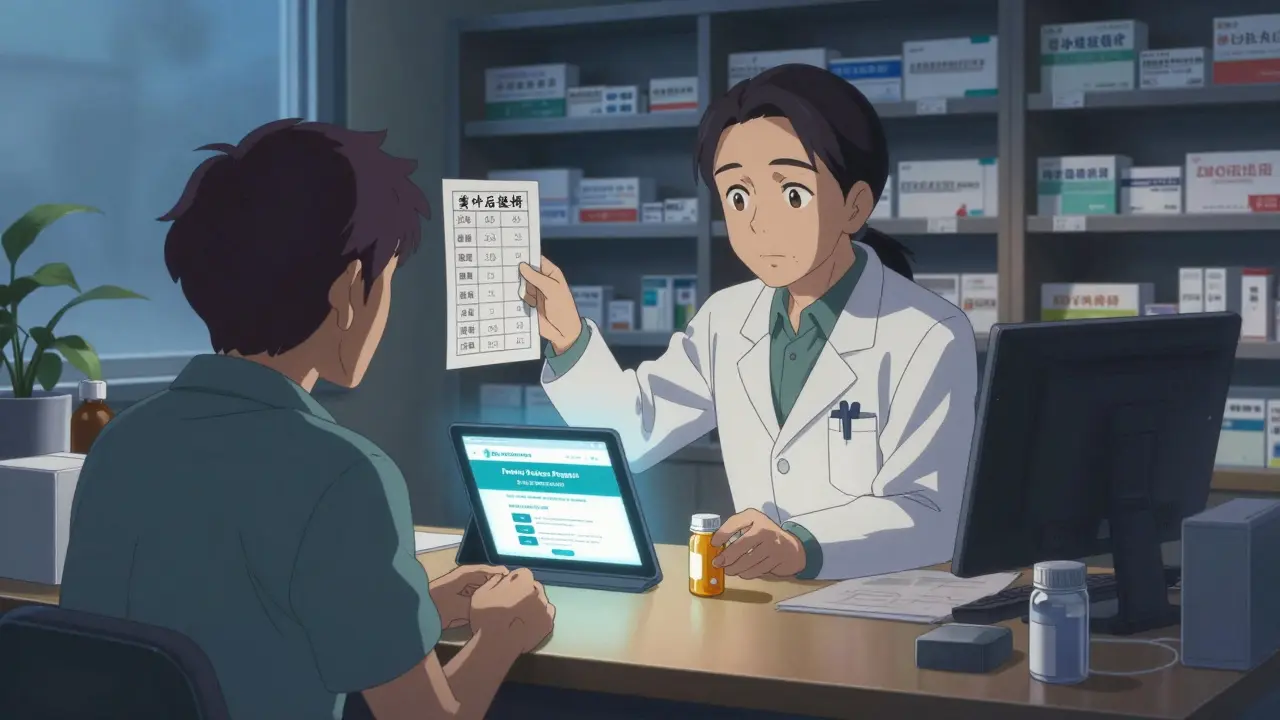
Can my pharmacist help me with adherence?
Absolutely. Pharmacists are medication experts - often more than doctors are. They can review all your prescriptions for interactions, simplify your regimen, set up blister packs, and even call you to check in. Many pharmacies offer free adherence counseling. Ask them. They’re trained to help.
For those managing multiple conditions, each new diagnosis makes adherence harder. Every extra medication reduces your chance of sticking with your plan by 4-6%. But you’re not alone. Millions are in the same boat. The goal isn’t perfection. It’s progress. One pill. One day. One conversation at a time.
John O'Brien
January 27, 2026 AT 14:03Kegan Powell
January 28, 2026 AT 08:30Kathy McDaniel
January 29, 2026 AT 07:41Conor Flannelly
January 30, 2026 AT 11:51Conor Murphy
January 31, 2026 AT 21:51Marian Gilan
February 2, 2026 AT 16:10Paul Taylor
February 3, 2026 AT 00:20Desaundrea Morton-Pusey
February 3, 2026 AT 09:36Kirstin Santiago
February 5, 2026 AT 05:05Murphy Game
February 6, 2026 AT 23:59April Williams
February 8, 2026 AT 20:44Harry Henderson
February 9, 2026 AT 01:28suhail ahmed
February 9, 2026 AT 03:47Candice Hartley
February 9, 2026 AT 04:11astrid cook
February 10, 2026 AT 09:54