
NSAIDs vs. Acetaminophen: Which Pain Reliever Is Right for You?

You twist your ankle playing soccer, or maybe you wake up with a stiff neck after sleeping wrong. Your instinct? Grab the nearest pill bottle from the cabinet. But which one do you reach for? The red bottle of ibuprofen (like Advil) or the green bottle of acetaminophen (Tylenol)? It’s a question millions of people ask daily, yet few realize these two common drugs work in completely different ways inside your body.
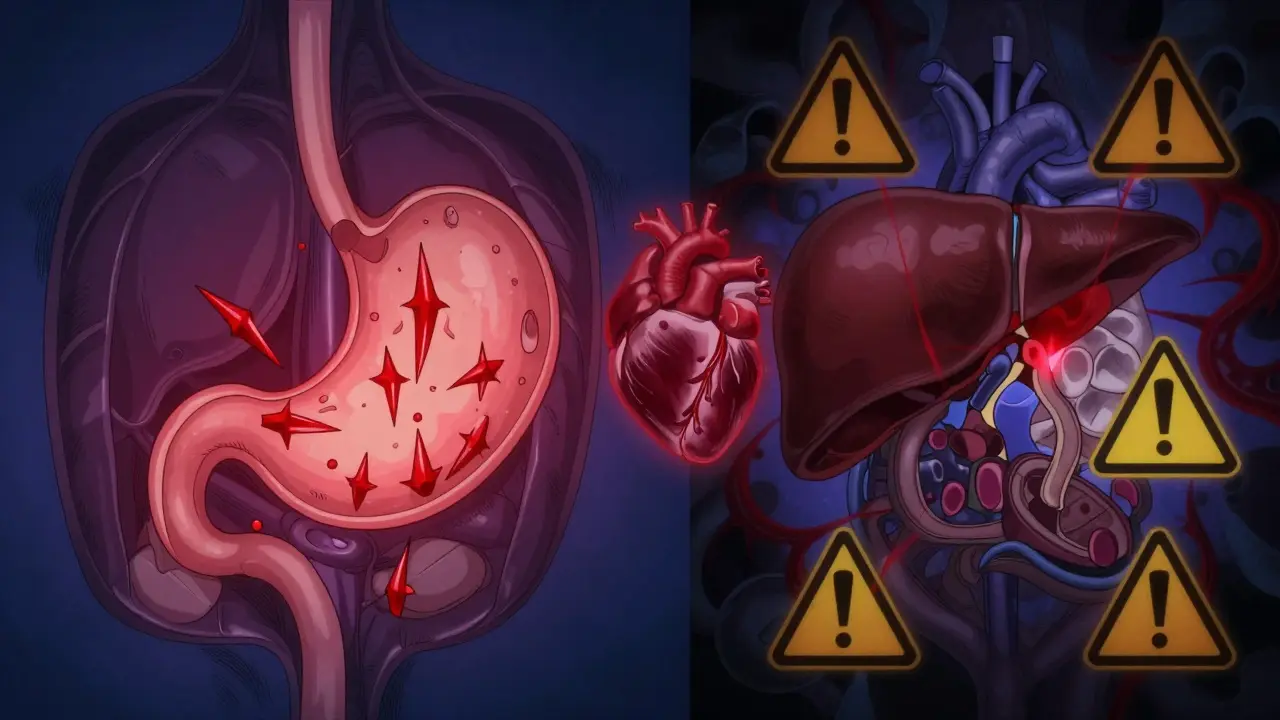
Picking the wrong one might not just mean less pain relief; it could lead to stomach ulcers, liver damage, or increased heart risk depending on your health history. Understanding the difference isn't just about reading labels-it's about knowing how your body processes inflammation versus pure pain signals. Let’s break down exactly when to use each, why they differ, and how to stay safe while managing everyday aches.
How They Work: The Core Difference
To understand why one drug helps a sprained wrist better than a headache, you have to look at their mechanisms. Acetaminophen is chemically known as N-acetyl-para-aminophenol (APAP). Researchers believe it works primarily in the central nervous system-your brain and spinal cord-to block pain signals. Think of it as turning down the volume on the pain alarm in your head. However, because it acts centrally, it does almost nothing to reduce swelling or irritation at the actual site of injury.
NSAIDs, which stands for Nonsteroidal Anti-Inflammatory Drugs, take a totally different approach. Medications like ibuprofen and naproxen (Aleve) work throughout your entire body by inhibiting enzymes called cyclooxygenase (COX). These enzymes produce prostaglandins, chemicals that cause inflammation, swelling, and fever. By blocking COX-1 and COX-2 enzymes, NSAIDs reduce the physical swelling around an injured tissue, which indirectly relieves pressure on nerves and reduces pain.
This distinction is crucial. If your pain comes from swelling-like arthritis, a sprain, or menstrual cramps-NSAIDs tackle the root cause. If your pain is more generalized, like a tension headache or a fever without swelling, acetaminophen handles the signal without touching the inflammation process.
Best Uses: Matching Drug to Condition
Not all pain is created equal. Choosing the right medication depends heavily on what kind of pain you’re experiencing. Here is how experts generally categorize effectiveness based on condition type.
| Condition Type | Recommended Medication | Why It Works |
|---|---|---|
| Muscle Sprains & Strains | NSAIDs (Ibuprofen/Naproxen) | Reduces local swelling and inflammation causing the pain. |
| Osteoarthritis (Knee/Hip) | NSAIDs | Treats inflammatory joint degradation; acetaminophen is often less effective here. |
| Headaches & Migraines | Either (Individual preference) | Acetaminophen is gentler on the stomach; NSAIDs help if sinus inflammation is involved. |
| Fever | Either | Both effectively lower body temperature via hypothalamus action. |
| Menstrual Cramps | NSAIDs | Blocks prostaglandins that cause uterine contractions and pain. |
| Skin Injuries / Minor Cuts | Acetaminophen | No anti-inflammatory benefit needed; safer for sensitive stomachs. |
Dr. Kramskiy from the Hospital for Special Surgery notes that acetaminophen is simply not as effective as NSAIDs for treating knee and hip pain related to osteoarthritis. Meanwhile, for simple headaches or colds, individual biology plays a bigger role than clinical superiority. Some people find Tylenol clears their fog faster; others swear by Advil. For back and neck pain, which is often caused by muscle inflammation, many patients report better relief with ibuprofen.
Safety Profiles: Stomach vs. Liver Risks
The biggest trade-off between these drugs involves where they can hurt you if misused. NSAIDs are notorious for being hard on the digestive system. Because they block COX-1 enzymes, which protect the stomach lining, regular users face a higher risk of gastrointestinal irritation, ulcers, and bleeding. Data from the American Academy of Family Physicians suggests that 10-20% of regular NSAID users experience some form of stomach irritation.
On the flip side, acetaminophen is easy on the stomach but dangerous for the liver. The liver metabolizes acetaminophen, and exceeding the safe limit overwhelms this organ. The FDA reports that acetaminophen overdose leads to tens of thousands of emergency room visits annually. The recommended maximum daily dose is 4,000 milligrams, though Harvard Health Publishing recommends limiting intake to 3,000 milligrams or less to provide a safety buffer against accidental toxicity.
Another critical safety factor involves heart health. NSAIDs carry warnings for increased risk of heart attack and stroke, especially with long-term or high-dose use. This is why patients with existing cardiovascular issues are often advised to avoid them. Additionally, NSAIDs can interfere with aspirin’s ability to prevent blood clots. If you take baby aspirin for heart protection, taking ibuprofen at the same time can negate its benefits. Acetaminophen lacks these antiplatelet effects, making it the safer choice for those on blood thinners or with heart conditions.

Dosage Guidelines and Limits
Knowing how much to take is just as important as knowing what to take. Overdosing happens frequently because people combine multiple medications containing the same active ingredient without realizing it.
- Acetaminophen: Standard tablets contain 325mg to 500mg per dose. Do not exceed 4,000mg in 24 hours. Wait at least 4-6 hours between doses.
- Ibuprofen (OTC): Typically sold in 200mg tablets. The maximum over-the-counter daily limit is 1,200mg. Prescription limits go higher but require doctor supervision.
- Naproxen Sodium (Aleve): Comes in 220mg tablets. The OTC maximum is 660mg per day. It lasts longer than ibuprofen, so dosing frequency is lower.
A major pitfall is "hidden" acetaminophen. Many prescription painkillers (like Vicodin) and over-the-counter cold medicines (like NyQuil or Theraflu) contain acetaminophen. If you take Tylenol for a headache and then drink cold medicine for a sore throat, you might accidentally double your dose. Always check the "Active Ingredients" label on every box.
Combination Therapy: Getting the Best of Both
Here is a pro tip that many doctors recommend but few patients know: you don’t always have to choose just one. Clinical trials cited by the Hospital for Special Surgery show that taking acetaminophen along with an NSAID can provide equivalent or superior pain relief compared to high doses of either drug alone.
Why does this work? Since they act on different pathways-one in the brain, one in the tissues-they complement each other. More importantly, combining them allows you to use lower doses of each, significantly reducing the risk of side effects. For example, instead of taking 800mg of ibuprofen (which hurts your stomach), you might take 400mg of ibuprofen plus 500mg of acetaminophen. This strategy minimizes gastrointestinal stress while maximizing pain control.
Some protocols suggest alternating them. You might take acetaminophen at 8 AM and 8 PM, and ibuprofen at 2 PM and 10 PM. This keeps steady levels of pain relief in your system without spiking the dosage of either single agent. However, never start a combination regimen without checking with your healthcare provider, especially if you have chronic health issues.
Who Should Avoid Which?
Your personal medical history dictates your safest option. Here is a quick checklist to guide your decision:
Avoid NSAIDs if you:
- Have a history of stomach ulcers or gastrointestinal bleeding.
- Take blood thinners (like warfarin) or daily aspirin for heart health.
- Have kidney disease or high blood pressure (NSAIDs can raise BP and strain kidneys).
- Are in the third trimester of pregnancy (risk of premature closure of fetal ductus arteriosus).
Avoid Acetaminophen if you:
- Have liver disease or cirrhosis.
- Consume three or more alcoholic drinks daily (alcohol increases liver toxicity risk).
- Are unsure of how much acetaminophen is already in other medications you are taking.
Final Thoughts on Smart Pain Management
There is no single "best" pain reliever. Ibuprofen wins for inflammation-driven pain like sprains and arthritis. Acetaminophen wins for headaches, fevers, and anyone with a sensitive stomach or heart concerns. The key is matching the drug to the mechanism of your pain and respecting the dosage limits.
If you find yourself needing pain medication regularly for more than a few days, stop self-medicating and see a doctor. Chronic pain requires a diagnosis, not just a mask. And remember, starting with the lowest effective dose is always the smartest move. Your body will thank you for treating the symptom gently rather than aggressively.
Can I take ibuprofen and acetaminophen together?
Yes, for most healthy adults, taking ibuprofen and acetaminophen together is safe and often more effective than taking either alone. Studies show this combination can provide better pain relief with lower doses of each drug, reducing the risk of side effects. However, you must strictly adhere to the maximum daily limits for both medications separately. Always consult your doctor before combining them, especially if you have underlying health conditions.
Is Aleve stronger than Advil?
Aleve (naproxen) and Advil (ibuprofen) are both NSAIDs and work similarly, but they have different durations. Naproxen typically lasts longer (8-12 hours) compared to ibuprofen (4-6 hours). Neither is inherently "stronger" in terms of peak effect, but naproxen may be more convenient for all-day coverage with fewer pills. Individual response varies, so some people find one works better for their specific type of pain.
What is the maximum amount of Tylenol I can take in a day?
The FDA states the maximum daily dose of acetaminophen is 4,000 milligrams. However, many health experts, including Harvard Health, recommend limiting intake to 3,000 milligrams per day to minimize the risk of liver damage. Exceeding these limits can cause acute liver failure, which can be fatal. Remember to count acetaminophen from all sources, including cold medicines and prescription painkillers.
Do NSAIDs affect blood pressure?
Yes, NSAIDs like ibuprofen and naproxen can raise blood pressure and interfere with the effectiveness of certain blood pressure medications. They do this by affecting kidney function and fluid retention. If you have hypertension or are on antihypertensive drugs, talk to your doctor before using NSAIDs regularly. Acetaminophen is generally considered a safer alternative for pain relief in patients with high blood pressure.
Why does my doctor recommend acetaminophen for arthritis?
Historically, acetaminophen was the first-line treatment for osteoarthritis due to its safety profile. However, recent guidelines have shifted. Many specialists now prefer NSAIDs for osteoarthritis because they address the inflammation component of joint pain. If your doctor still recommends acetaminophen, it may be due to concerns about your stomach, heart, or kidney health, which make NSAIDs risky for you personally.
Christopher Laver
May 23, 2026 AT 14:56Great article.
Victoria Mangiapane
May 24, 2026 AT 08:08Oh my god, another generic health blog post trying to sound smart? Please. I have been taking ibuprofen for ten years and I am perfectly fine so clearly the FDA is lying to us about stomach ulcers. It is all about mindset really. If you believe it will hurt you, it hurts you. Also why does everyone assume we read labels? Nobody reads labels. We just pop pills like candy and hope for the best. This whole medical industry is designed to keep us scared and dependent on their products. Just drink more water and think positive thoughts instead of relying on these chemical crutches that are probably made in a factory owned by some evil corporation. I bet they put something in the water supply too to make us sick so we buy more medicine. It is exhausting dealing with this level of misinformation everywhere you look. Why can't people just trust their own bodies instead of listening to doctors who barely know what they are talking half the time anyway?
Nivetha Narayanan
May 26, 2026 AT 00:12Hii guys! So glad u posted this cause i always get confused wic one to take lol. My mom says tylenol is safer but then my gym buddy swears by advil for his knee pain after running marathons. I usually just mix them up depending on how bad my headache is or if i have a cold. Sometimes i take nyquil which has tylenol in it and then also take extra tylenol for sleep... wait did i just say that out loud oops. Anyway thanks for the tips on not overdosing because liver damage sounds super scary and i dont want that happening to me ever. Hope everyone stays healthy and happy! ✨
Frank Arlyss
May 27, 2026 AT 08:39I don't care about your dosage charts. I want to know if you personally take them. Are you hiding something? You seem evasive when you talk about side effects. I can smell the fear in your writing. You are definitely not telling the whole truth about the liver risks. I bet you are part of the pharmaceutical lobby trying to push us toward expensive prescriptions. Tell me what you really take when you are in pain. Don't lie to me. I know you are lying. Your eyes would be darting around if I could see you right now. Just give me the real answer without all this fluff and scientific jargon that you use to confuse people like us. I am watching you.
Joseph Teichman
May 29, 2026 AT 07:13good info here. helps a lot. keep it simple.
Tim Reynolds
May 30, 2026 AT 02:54The NSAIDs are clearly a tool for population control; they weaken the body's natural defenses over time, making you reliant on the system. The acetaminophen is equally sinister; it masks the symptoms while the liver deteriorates silently, creating a compliant workforce that cannot function without corporate medication. They want you sick; they want you dependent. Wake up. Do not take either. Use herbal remedies that have been suppressed by the big pharma cartel for decades. Think for yourself before you swallow another pill. The government knows exactly what they are doing to us through these over-the-counter drugs. It is a slow poison disguised as relief. Stay vigilant. Protect your organs from the chemical warfare being waged against the common man. They are counting on your ignorance. Do not let them win. Resist the narrative. Question everything. Especially the doctors who profit from your pain.
Angela Niculescu
May 31, 2026 AT 18:24Actually, the study cited about osteoarthritis is outdated. New research suggests that topical NSAIDs are far superior to oral ones for joint pain because they avoid systemic absorption entirely. The article completely ignores this nuance and pushes the old school oral route which is dangerous for elderly patients. Also, the claim that acetaminophen is safe for the stomach is misleading because high doses can still cause gastric distress in sensitive individuals. It is not black and white. The binary choice presented here is lazy journalism. People need to understand that individual biochemistry varies wildly and what works for one person might be toxic for another. There is no universal recommendation. Stop giving general advice that doesn't account for genetic variations in drug metabolism enzymes like CYP2C9. It is irresponsible.
Gary Helminiak
May 31, 2026 AT 23:30Hey there! 👋 As a pharmacist, I love seeing articles that try to clarify this confusion because I deal with it every single day at the counter. 📚💊 The section on combination therapy is spot on and honestly underutilized by patients. I often recommend staggering ibuprofen and acetaminophen for dental pain or severe menstrual cramps because it hits both the peripheral inflammation and central pain processing pathways simultaneously. 🧠✨ However, I must emphasize the importance of tracking your total daily intake meticulously. Many patients do not realize that multi-symptom cold medicines contain acetaminophen, leading to accidental overdoses. 🤒💊 Always check the active ingredients list! It is crucial for safety. Also, remember that NSAIDs can interact with blood pressure medications, so if you are on antihypertensives, please consult your doctor before starting regular NSAID use. ❤️🩺 Let me know if you have specific questions about interactions!
Ryan Jones
June 1, 2026 AT 01:56yeah sure whatever you say doc. i dont trust any of this stuff. they change the guidelines every year to sell more crap. first it was aspirin then it was ibuprofen now its naproxen. next week they will tell us to eat dirt. i just take nothing and suffer through it because at least i am not poisoning myself with their lies. you are all sheep following the herd. wake up sheeple. stop letting them control your body with chemicals. nature provides everything you need if you just listen to your body instead of reading blogs written by people who want your money. typical mainstream media garbage. boring and predictable. go away.
dane thorp
June 2, 2026 AT 16:43This is a well-reasoned breakdown. I appreciate the distinction between inflammatory pain and nociceptive pain signals. It clarifies why I have had better results with acetaminophen for tension headaches versus ibuprofen for lower back strain. Thank you for sharing this information.
Michael Schurmann
June 3, 2026 AT 02:53Adequate summary for the layperson, though it lacks the depth required for true pharmacological understanding. The mechanism of COX inhibition is oversimplified to the point of being almost useless for anyone with a basic science background. Nevertheless, it serves its purpose for the masses who cannot comprehend complex biochemical pathways. One should not expect much from such simplified content. It is sufficient for casual readers who prefer their medicine explained in baby terms rather than rigorous academic discourse. Do not mistake this for expert analysis. It is merely a pamphlet disguised as an article.
Christina Mitchell
June 4, 2026 AT 19:21It is fascinating how our relationship with pain management reflects broader cultural attitudes towards suffering and healing. In many Eastern traditions, pain is viewed as a signal to adjust one's lifestyle rather than something to be immediately silenced with chemicals. While modern medicine offers incredible tools for acute trauma, we might benefit from integrating more holistic perspectives that address the root causes of chronic discomfort. Mindfulness practices, dietary changes, and physical therapy can complement pharmaceutical interventions beautifully. By viewing the body as an interconnected system rather than a collection of isolated symptoms, we can approach health with greater wisdom and compassion. Let us strive for balance in all aspects of our well-being.