
Opioids and Depression: How Mood Changes Happen and How to Monitor Them
Opioid-Related Depression Tracker
PHQ-9 Depression Screening
This is a standard 9-question depression assessment. Rate how often you've experienced each symptom in the past 2 weeks:
Daily Mood Tracker
Track your mood daily alongside opioid use and other factors
When you take opioids for chronic pain, you expect relief - not a heavy fog over your emotions. But for many people, the very drugs meant to ease physical suffering can slowly steal their joy. Depression isn’t just a side effect of opioids - it’s a recurring pattern, often missed, and sometimes even worsened by the treatment itself. If you’re on long-term opioids, or know someone who is, understanding how mood changes happen and how to track them isn’t optional. It’s essential.
Why Opioids Can Make You Feel Worse, Not Better
At first, opioids might seem to lift your mood. Pain fades, and with it, the constant stress of discomfort. That relief can feel like a boost. But this is temporary. Over time, the brain adapts. The natural chemicals that regulate happiness - dopamine, serotonin, endorphins - start to rely on the drug. When opioids are present, they trigger a flood of feel-good signals. When they’re not, those signals drop hard. That’s when sadness, numbness, or hopelessness creep in. Studies show that between 30% and 54% of people with long-term pain also have depression. But here’s the catch: doctors miss nearly half of those cases. And when depression goes untreated, opioid use tends to rise. People take more to chase the fleeting relief - only to sink deeper. The science behind this isn’t simple. In lab studies, opioids like morphine and buprenorphine reduce signs of despair in animals. That’s why some researchers thought they might be antidepressants. But human data tells a different story. A 2020 genetic study in JAMA Psychiatry found that people with a higher genetic risk for using prescription opioids also had a higher risk of developing major depression. This wasn’t just correlation - it pointed to a causal link. The more you use, the more your brain’s mood system gets rewired.How Much Is Too Much? The Dose Matters
It’s not just whether you use opioids - it’s how much and how often. Research shows a clear dose-response relationship. People taking more than 50 mg of morphine equivalent per day are over three times more likely to develop depression than those who don’t use opioids at all. Even people taking opioids weekly, not daily, have nearly double the risk compared to occasional users. One study followed 43 patients in a burn unit. The more total opioids they received during recovery, the higher their depression scores became - even after accounting for injury severity. Another study of over 34,000 adults found that daily nonmedical opioid use led to a 95% higher chance of developing depression within three years. These aren’t rare cases. They’re predictable outcomes. The problem? Many patients don’t realize their low mood is linked to their medication. They think, “I’m just tired,” or “Life’s been hard lately.” But it’s often the drugs. And if you’re already struggling with depression before starting opioids, you’re even more vulnerable. People with depression are twice as likely to become long-term opioid users. It’s a cycle: pain leads to opioids, opioids worsen mood, worsened mood leads to higher doses, and the cycle tightens.What to Watch For: Signs of Opioid-Induced Depression
Depression from opioids doesn’t always look like crying all day. It’s often quieter. Here’s what to pay attention to:- Loss of interest in things you used to enjoy - hobbies, friends, even food
- Feeling emotionally flat or numb, even when good things happen
- Constant fatigue, even after sleeping
- Difficulty concentrating or making simple decisions
- Increased irritability or anger out of nowhere
- Thoughts like, “What’s the point?” or “I’d be better off gone”
How to Monitor Mood Changes - And What Tools Actually Work
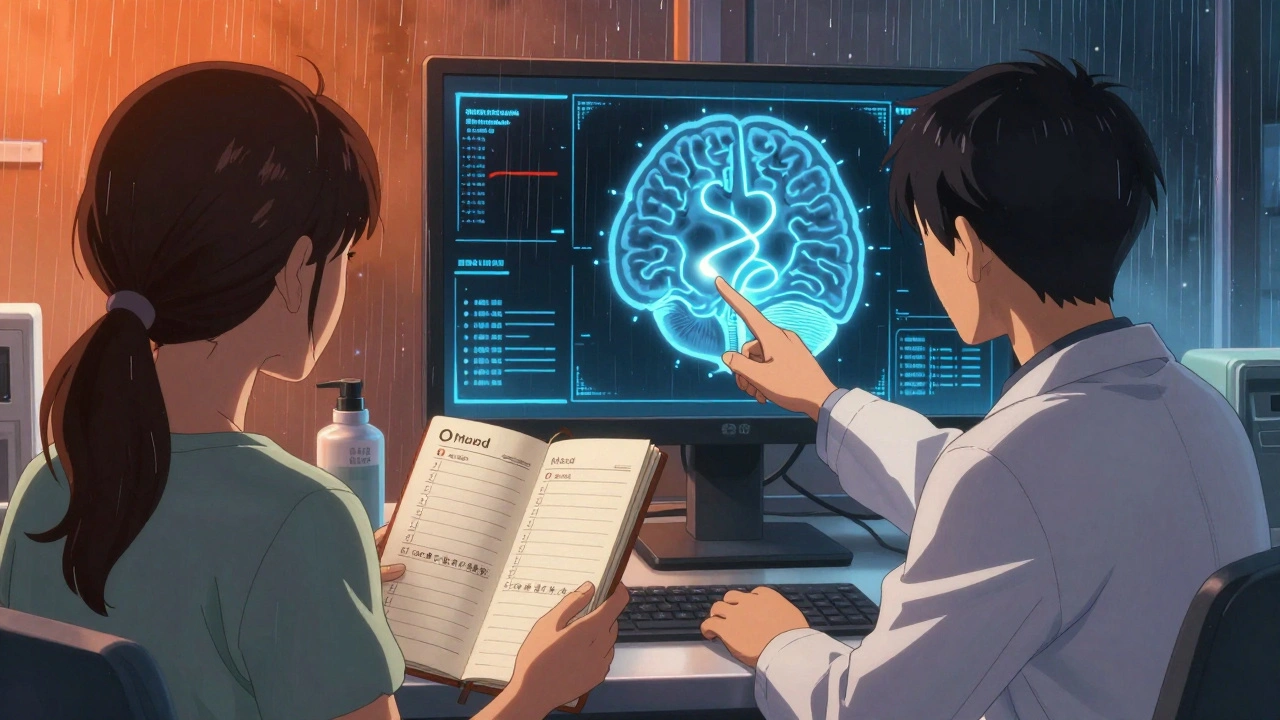
The American Pain Society and CDC both recommend regular depression screening for anyone on long-term opioids. But only about 40% of doctors do it consistently. You can’t wait for your doctor to bring it up. Ask for it. The most reliable tool is the PHQ-9 - a simple 9-question form that takes less than five minutes. It’s free, validated, and used in clinics worldwide. A score of 10 or higher suggests moderate to severe depression. You can take it at home and bring the results to your appointment. Other tools like the Beck Depression Inventory (BDI) are also effective. In one study, patients on buprenorphine for opioid use disorder saw their BDI scores drop from 24.7 (severe depression) to 13.4 (mild) in just three months. That’s not just a number - it’s a return to life. But tools alone aren’t enough. You need to track changes over time. Keep a simple journal: note your mood each morning on a scale of 1 to 10. Write down what you did, how much sleep you got, and whether you took your opioid dose. Patterns will emerge. Maybe your mood dips every time your dose is late. Maybe you feel worse on weekends when you’re off work. That data gives your doctor real clues.Can Buprenorphine Help - Or Make It Worse?
Here’s where things get confusing. Buprenorphine is an opioid, but it’s also being studied as an antidepressant. Low doses (1-2 mg/day) have shown rapid antidepressant effects in people who didn’t respond to standard medications. In one trial, nearly half of treatment-resistant depression patients felt better within a week. But here’s the catch: this is still experimental. The FDA hasn’t approved buprenorphine for depression. It’s only approved for opioid use disorder and pain. So if you’re on it for addiction, your mood might improve. But if you’re on it for pain, the same drug could be quietly worsening your depression over time. The key difference? Dose and context. In addiction treatment, buprenorphine stabilizes brain chemistry. In chronic pain, it’s often used at higher doses for longer periods - which can trigger the same neuroadaptations that lead to depression.
Breaking the Cycle: What Works When Pain and Depression Collide
You don’t have to choose between pain relief and mental health. But you do need a different approach. The COMBINE trial showed that when depression was treated with cognitive behavioral therapy (CBT) alongside pain management, patients reduced their opioid use by 32%. That’s not because CBT erased pain - it changed how they related to it. They learned to cope without reaching for the next pill. Other effective strategies:- Physical activity - even 20 minutes of walking daily improves both pain tolerance and mood
- Sleep hygiene - poor sleep worsens both depression and pain sensitivity
- Therapy - CBT, acceptance and commitment therapy (ACT), or mindfulness-based stress reduction
- Non-opioid pain treatments - physical therapy, nerve blocks, acupuncture, or certain antidepressants like duloxetine that treat both pain and depression
What You Can Do Right Now
If you’re on opioids and feel off - not just tired, but empty - don’t wait. Don’t assume it’s “just part of living with pain.” Here’s your action plan:- Take the PHQ-9 online (it’s free and anonymous). Write down your score.
- Start a daily mood log. Track your opioid dose, sleep, and mood on a scale of 1-10.
- Ask your doctor: “Could my opioids be making my mood worse?” Bring your log and PHQ-9 results.
- Request a referral to a pain psychologist or psychiatrist who understands opioid-related depression.
- Explore non-opioid pain options. You don’t have to quit opioids overnight - but you can start reducing your reliance.
What’s Next in Research
Scientists are now using brain scans to see exactly how opioids change the mood centers of the brain. One NIH-funded study at Columbia University is tracking 500 people with chronic pain and depression using fMRI and PET scans. They’re looking for patterns - like whether certain brain circuits shut down after months of opioid use. Another study, tracking 5,000 patients through 2026, is trying to predict who’s most at risk. Is it age? Genetics? Previous trauma? The goal is to create a simple risk score - so doctors can screen early and intervene before depression takes hold. The message is clear: opioids and depression are locked in a dance. One can mask the other. One can feed the other. But with awareness, monitoring, and the right support, you can step out of the cycle - and find relief that lasts.Can opioids cause depression even if I take them as prescribed?
Yes. Even when taken exactly as directed, long-term opioid use can lead to changes in brain chemistry that increase depression risk. Studies show that people on daily opioids for chronic pain have up to three times higher risk of developing depression compared to non-users. This isn’t about misuse - it’s about how the body adapts over time.
How long does it take for opioids to affect my mood?
Mood changes can start within weeks, but they often become noticeable after 2-6 months of regular use. Some people feel emotionally flat or lose interest in things they once enjoyed. Others notice increased irritability or fatigue. These signs often appear gradually, so they’re easy to miss - which is why regular screening is critical.
Is buprenorphine safe for depression if I’m not addicted?
Buprenorphine is not FDA-approved for treating depression outside of opioid use disorder. While low doses have shown promise in research for treatment-resistant depression, it’s still considered experimental. Using it for depression without medical supervision carries risks, including dependence and withdrawal. Always discuss alternatives with your doctor before considering off-label use.
Should I stop opioids if I’m depressed?
Never stop opioids suddenly. That can cause dangerous withdrawal and worsen pain and mood. Instead, work with your doctor to create a safe plan. Often, reducing the dose slowly - while adding non-opioid treatments like therapy or exercise - improves both pain and depression. The goal isn’t always to quit opioids completely, but to use them at the lowest effective dose while protecting your mental health.
What’s the best way to talk to my doctor about this?
Be specific. Say: “I’ve noticed I’ve lost interest in things I used to enjoy,” or “I’ve been feeling numb or hopeless lately, even when my pain is under control.” Bring your PHQ-9 score or mood log. Ask: “Could my opioids be contributing to this?” and “What non-opioid options do we have for managing my pain?” Most doctors want to help - they just need clear information to act on.
Andrea Petrov
December 9, 2025 AT 22:30Of course opioids cause depression-what did you expect? The pharmaceutical industry has been pushing these drugs for decades while burying the truth. They don’t want you to know that your ‘pain relief’ is actually rewiring your brain to need more pills just to feel normal. And don’t get me started on the FDA-they’re just puppets for Big Pharma. I’ve seen it happen to my cousin. She was on 80mg of oxycodone daily, and within a year, she couldn’t even cry. They told her it was ‘just depression.’ No, sweetheart. It was chemical sabotage.
They’re testing this on us. Always have been. The CDC? Complicit. Your doctor? Paid off. The only reason they’re ‘recommending’ PHQ-9 is because lawsuits are piling up. Don’t trust the system. Track your mood? Sure. But don’t expect them to help you when you do.
I’m not saying quit cold turkey-I’m saying run. Find a holistic clinic. Get off the grid. The system doesn’t want you well. It wants you dependent.
And yes, buprenorphine? That’s just a slower poison with a fancy label. They’re using it to rebrand addiction as ‘treatment.’ Wake up.
They’re watching your search history. They know you read this. They’re coming for you next.
Suzanne Johnston
December 10, 2025 AT 15:34There’s something profoundly tragic about how we’ve turned human suffering into a pharmacological equation. Pain isn’t just a signal-it’s a conversation. And opioids? They don’t listen. They mute it. And in that silence, we forget how to hear ourselves.
I’ve sat with people who’ve lost their joy to these drugs, and what’s heartbreaking isn’t just the chemistry-it’s the loneliness that follows. We’re not just treating pain anymore; we’re treating isolation with chemicals that make isolation worse.
The PHQ-9 is a start, yes. But we need more than screens and scores. We need communities that hold space for grief without rushing to fix it. We need doctors who sit quietly and ask, ‘What’s been missing?’ instead of ‘What’s your dose?’
And buprenorphine? It’s not a miracle. It’s a bridge. But bridges need people on both sides. If we’re only offering pills and no presence, we’re just building a bridge to nowhere.
Maybe the real treatment isn’t in the prescription pad-it’s in the willingness to sit with someone when they say, ‘I don’t care anymore.’ And to say back, ‘I’m here. Even if you don’t feel it yet.’
Graham Abbas
December 12, 2025 AT 08:25Oh my god. This. This is the most honest thing I’ve read in years. I’ve been on opioids for seven years after a car crash. I thought I was just ‘getting older.’ Turns out I was just getting hollow.
I used to play guitar. Now I stare at the strings for hours and can’t bring myself to touch them. I don’t cry-I just… stop. Like my soul hit pause.
I took the PHQ-9 last week. Scored 14. I cried for the first time in months when I saw it. Not because I was sad. Because I remembered what sadness felt like.
I started walking 20 minutes a day. Just walking. No headphones. No podcast. Just me and the sidewalk. My mood went from 2/10 to 5/10 in two weeks. Not because the pain disappeared. Because I remembered I was still here.
And yes-I’m tapering. Slowly. With a therapist who doesn’t flinch when I say, ‘I don’t know if I want to live without the pills.’
You’re not broken. You’re just medicated into a corner. And corners can be escaped.
Thank you for writing this. I didn’t know I needed to hear it until I did.
George Taylor
December 13, 2025 AT 23:07Okay, so let me get this straight: you’re telling me that if I take a drug that’s supposed to relieve pain, it might also make me emotionally numb? Shocking. Truly groundbreaking. Next you’ll tell me that smoking cigarettes causes lung cancer. Or that eating sugar leads to obesity. WHAT A REVELATION.
And you want me to track my mood? On a scale of 1 to 10? Wow. That’s so much more useful than, I don’t know, ACTUALLY TALKING TO A DOCTOR WHO’S BEEN TRAINED TO DIAGNOSE DEPRESSION.
Also, buprenorphine is ‘experimental’ for depression? Well, I guess that means it’s not FDA-approved… which means it’s not real medicine. Which means I should probably just keep taking 120mg of oxycodone and hope for the best. Because clearly, science is just a conspiracy cooked up by people who hate fun.
And why do you keep saying ‘we’? Who are you? My therapist? My mom? My pastor? I didn’t ask for a lecture. I asked for information. You gave me a TED Talk with footnotes.
Also, your formatting is atrocious. Too many line breaks. It looks like you copy-pasted from a Word doc and forgot to hit ‘Remove Formatting.’
Chris Marel
December 15, 2025 AT 13:39I’m from Nigeria, and here, opioids are rarely prescribed unless it’s end-of-life care. So when I read this, I was struck by how much we’ve normalized something that should be a last resort.
I’ve seen friends here who lost loved ones to chronic pain, and the first thing families do is rush to the pharmacy-not the therapist, not the physio, not the spiritual counselor. Just pills.
But I’ve also seen people who didn’t take opioids. Who used prayer, movement, community, herbal teas. And yes, their pain was still there. But their hearts? They stayed soft.
I’m not saying opioids are evil. I’m saying we’ve forgotten how to hold space for pain without trying to erase it.
Thank you for writing this. It made me think about how we treat suffering in different cultures. Maybe the answer isn’t just in the dose-but in the dignity we give to the person behind the dose.
William Umstattd
December 17, 2025 AT 03:55Let me be perfectly clear: this article is dangerously misleading. You say opioids cause depression? No. They exacerbate pre-existing conditions. The causation you’re implying is a textbook case of correlation ≠ causation.
People with depression are more likely to seek pain relief. That’s why the stats look skewed. It’s not the opioids causing the depression-it’s the depression causing the opioid use.
And your ‘PHQ-9’ recommendation? A garbage tool. It’s designed for screening, not diagnosis. You’re encouraging self-diagnosis among people who already have anxiety disorders. That’s not helpful. It’s irresponsible.
Buprenorphine? You call it ‘experimental’ for depression? It’s been used off-label in clinical settings for over a decade. The FDA doesn’t approve everything just because it works-because of liability, not science.
And ‘tapering’? That’s a euphemism for withdrawal hell. You’re not offering solutions-you’re offering fear.
This isn’t science. It’s fearmongering dressed up as empathy. And it’s doing more harm than good.
Elliot Barrett
December 17, 2025 AT 12:58So let me get this straight-take painkillers, get depressed. Great. So what’s the solution? Stop taking them? Who’s gonna fix my back? My job? My life?
You want me to walk 20 minutes? I work two jobs and sleep 4 hours. You want me to ‘track my mood’? I don’t have time to be a therapist for myself.
And now I’m supposed to go see a ‘pain psychologist’? Like that’s gonna pay my rent?
This article reads like a rich person’s fantasy. ‘Oh, just do yoga and journal!’
Real people don’t have access to this stuff. We have pills. And if those pills let us get up and go to work? Then they’re doing their job.
Stop pretending this is about ‘mental health.’ It’s about class. The rich get therapy. The rest of us get opioids.
And if you’re gonna lecture me? At least make it real.
Maria Elisha
December 17, 2025 AT 13:58Y’all are overthinking this. I’ve been on opioids for 5 years. I feel kinda blah sometimes? So what. I’m not crying in the shower or anything. I just don’t care as much about stuff. That’s not depression. That’s just… being tired.
My doctor says I’m fine. I’m not gonna go take some quiz online and freak out because I scored a 9. I’m not a robot. I don’t need to track my mood like it’s a Fitbit.
Also, buprenorphine? Sounds like a fancy word for ‘more pills.’ I’m good.
Just… let people take their meds. Not everyone’s gonna be a philosopher or a data nerd. Some of us just wanna feel okay enough to get through the day.
Stop making us feel guilty for surviving.
iswarya bala
December 17, 2025 AT 22:17so i read this and i was like… omg i thought i was just lazy 😭
i been on tramadol for 3 years for back pain and i just stopped caring about my art, my friends, even my cat… i thought it was me being ‘adulting’ wrong
took the phq-9 last night… 12. cried for 20 mins. then made tea.
i’m gonna start walking. just 10 mins. maybe i’ll draw again. maybe not.
but thank u for saying it’s not my fault. i needed that.
Stacy Tolbert
December 18, 2025 AT 22:33I’m the person you’re describing. I didn’t realize I was numb until my sister said, ‘You haven’t laughed since Christmas.’
I’ve been on 90mg of oxycodone for 18 months. I thought I was coping. Turns out I was just dissociating.
I started journaling. Not for my doctor. For me. I write one sentence a day. Sometimes it’s ‘I felt nothing.’ Sometimes it’s ‘I saw a bird today. It sang.’
My dose is down to 40mg now. I still hurt. But I’m starting to feel again. Not perfectly. Not fast. But slowly.
This isn’t about quitting. It’s about remembering who you were before the pills became your identity.
And if you’re reading this and you feel nothing? I see you. And you’re not alone.
Ryan Brady
December 20, 2025 AT 04:35USA: 300 million people, 100 million opioids prescribed. Coincidence? I think not.
They want us docile. They want us numb. They want us too tired to protest. Too drugged to organize.
It’s not just pain. It’s control.
And now they want you to ‘track your mood’? LOL. Like that’s gonna stop the machine.
Wake up, sheeple. This isn’t medicine. It’s a social engineering tool.
And buprenorphine? That’s just the new ‘smart drug’ they’re pushing to keep you compliant while they steal your freedom.
They don’t want you well. They want you quiet. 😡
Raja Herbal
December 20, 2025 AT 15:31So let me get this straight: you’re telling me that taking painkillers for pain might… make you feel bad? Who knew?
Next you’ll tell me that drinking saltwater dehydrates you.
Also, the fact that you think a 9-question quiz is the solution to opioid-induced depression… that’s like handing someone a Band-Aid after they lost a limb.
And you want people to ‘taper’? Sure. When they have health insurance. When they have time off work. When they’re not living paycheck to paycheck.
Meanwhile, in the real world, people are choosing between rent and refills.
Thanks for the article. It’s like a TED Talk written by someone who’s never had to choose between pain and rent.
Just… be honest. This isn’t about science. It’s about privilege.
Iris Carmen
December 22, 2025 AT 01:13i took the phq-9 and got a 10. didn’t even realize i was that low.
my doc said ‘it’s normal’ when i said i don’t like my favorite food anymore.
so i started walking with my dog. no phone. just us.
today he licked my hand and i cried. not sad. just… felt.
maybe that’s the first step.
not fixing. just feeling.
thanks for writing this. it didn’t fix anything. but it didn’t make me feel crazy either.
Graham Abbas
December 22, 2025 AT 10:18Just read @5747’s comment. That’s it. That’s the whole thing.
Not the scores. Not the tapering. Not the tools.
Just a dog licking your hand and you crying because you remember what it feels like to be touched by something that doesn’t need anything from you.
That’s the antidote.
Not more pills.
Not more tracking.
Just presence.
Thank you for that.