
Special Instructions on Prescription Medication Labels Explained
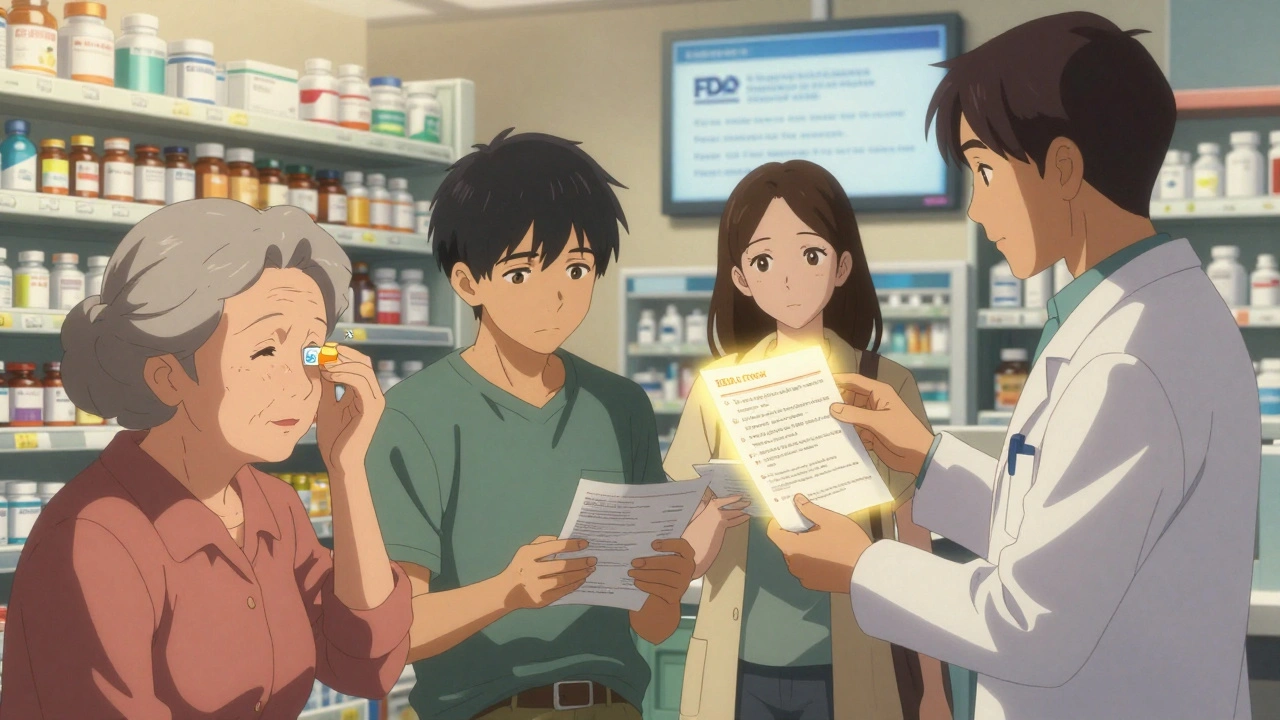
Have you ever looked at your prescription bottle and felt confused about what the small print actually means? You’re not alone. Millions of people in the U.S. take medications every day, but special instructions on prescription medication labels are often misunderstood - and that misunderstanding can lead to serious health risks.
These aren’t just reminders like "take twice daily." They’re critical, life-saving directions: "Take on an empty stomach," "Shake well before use," "Avoid sunlight," "Do not crush," "Discard after 14 days." If you misread or ignore them, the medicine might not work - or worse, it could harm you.
Why Special Instructions Matter More Than You Think
Prescription labels don’t just tell you how much to take. They tell you how to take it - and that makes all the difference. A 2008 study found that nearly half of all patients misinterpret these instructions. That’s not a small number. It’s almost 1 in 2 people.
Why does this happen? Because the wording is often unclear. For example, "take with food" sounds simple. But what does that really mean? A Harvard Health study showed that 41% of people think it means "with the first bite," 33% think "during the meal," and 26% believe it’s okay if they eat within 30 minutes after. That’s three completely different ways to take the same pill. And only one might be correct for your medicine.
When instructions are misread, it leads to errors. The U.S. healthcare system spends $42 billion a year dealing with medication mistakes. About 43% of those errors come from patients not understanding their labels. That’s why the FDA stepped in. In 2014, they updated labeling rules to make instructions clearer. They now require at least 10-point font and strong contrast so you can actually read them.
Where to Find These Instructions (And Why You Might Be Missing Them)
You might think the instructions are all on the bottle. But that’s not always true. In fact, the most important directions are often hidden.
- 32% appear directly on the main label
- 47% are on a small sticker stuck on the bottle
- 21% are in a separate paper insert you might throw away
That’s a problem. Many people never open the insert. Or they miss the sticker because it’s small, faded, or peeling. A 2022 Consumer Reports survey found that 54% of patients had trouble finding special instructions - and 31% admitted they missed critical ones entirely.
And it’s not just about location. Some labels use medical jargon like "q12h" instead of "every 12 hours." Others use vague terms like "as directed" - which means nothing if you don’t know what the doctor meant.
Common Special Instructions - And What They Really Mean
Let’s break down the most confusing ones you’ll see on your labels.
"Take with food"
This is the most misinterpreted instruction. It’s not just about eating something. It’s about how much and when. Some drugs need a full meal to be absorbed properly. Others just need a snack to avoid stomach upset. If you take it on an empty stomach when you’re supposed to eat with it, you could get nausea - or worse, the drug won’t work.
"Take on an empty stomach"
This means no food for at least one hour before and two hours after taking the pill. That’s stricter than most people think. Even a glass of milk or a piece of candy can interfere. This rule applies to antibiotics like tetracycline and thyroid meds like levothyroxine. If you skip this, your treatment could fail.
"Shake well before use"
This isn’t a suggestion - it’s a requirement. Many liquid medicines are suspensions. The active ingredient settles at the bottom. If you don’t shake it, you might get too little medicine in your first dose - or too much in your last. That’s dangerous with antibiotics or pain meds.
"Refrigerate"
Some medicines - like insulin, certain antibiotics, and eye drops - lose effectiveness if left at room temperature. But not all liquids need cold storage. If you’re unsure, ask your pharmacist. Storing them wrong can turn your treatment into a waste of money - and a health risk.
"Do not crush"
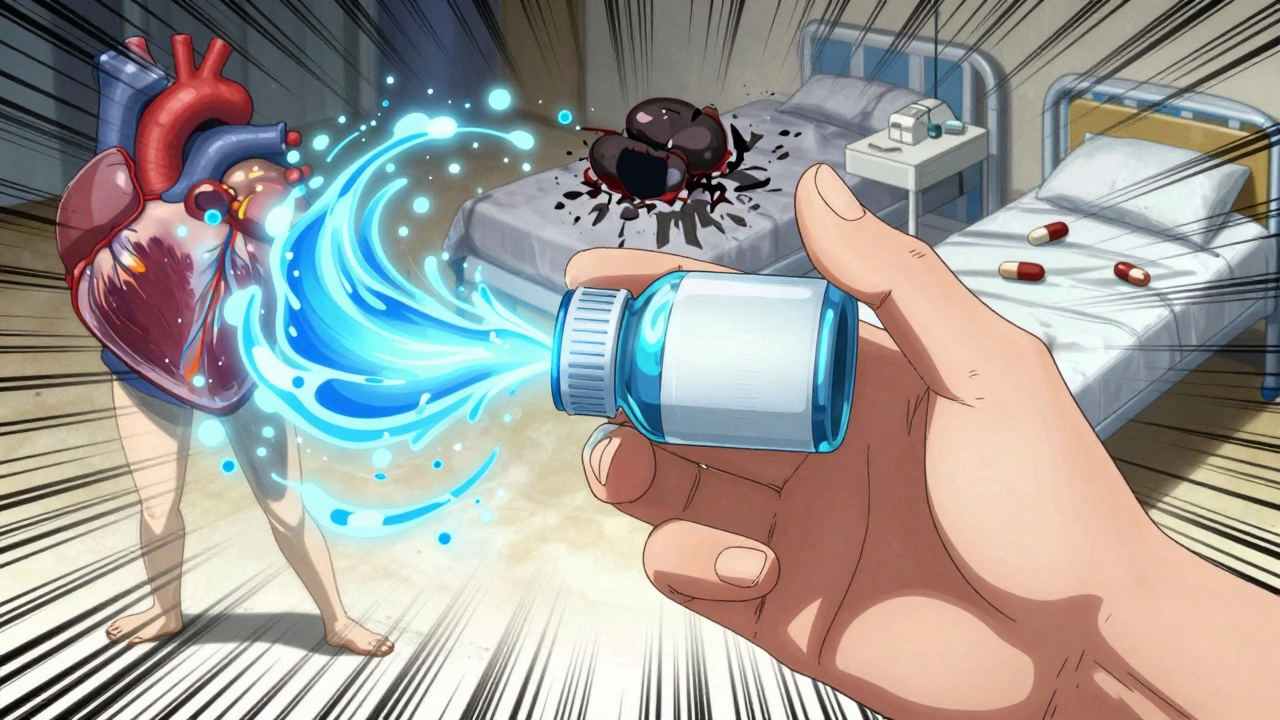
Crushing a pill can be deadly. Extended-release tablets, capsules with enteric coatings, and some pain meds are designed to release slowly. Crush them, and you get a full dose all at once. That’s how opioid overdoses happen - even when the patient thought they were being "helpful" by crushing it for a loved one who couldn’t swallow pills.
"Take every 12 hours"
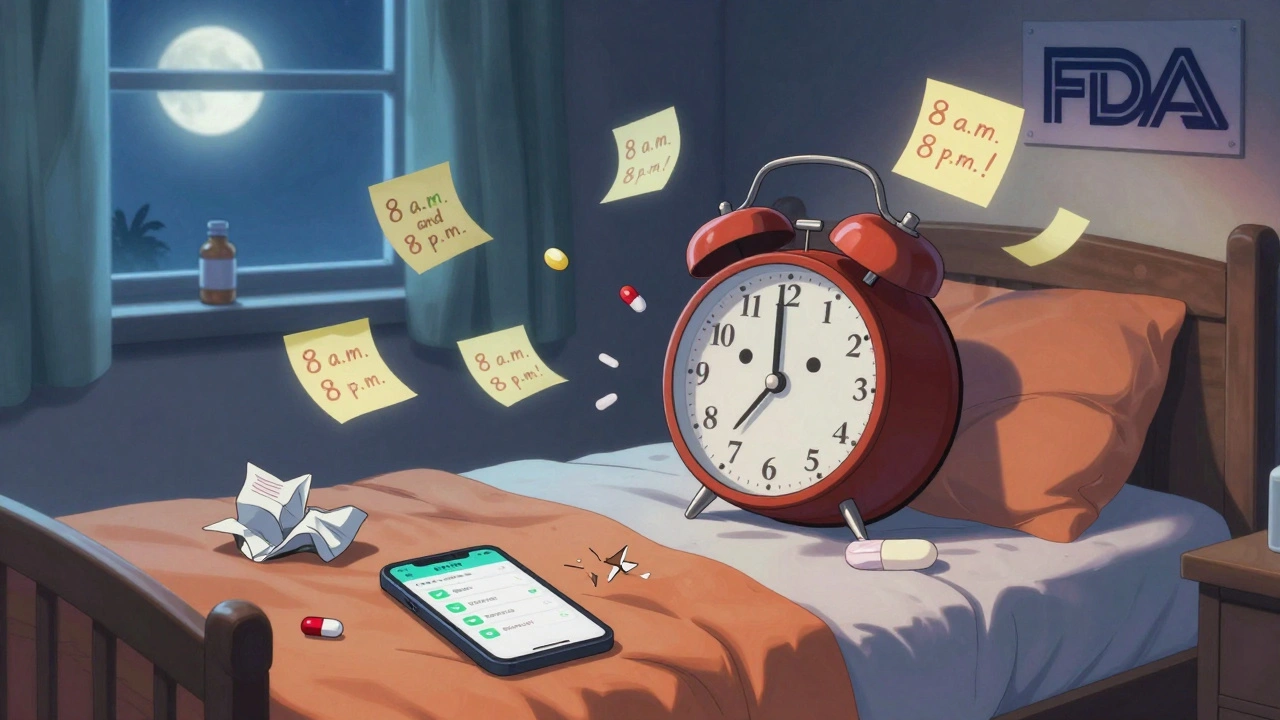
Most people think this means "morning and night." But if you take it at 8 a.m. and 10 p.m., you’re giving your body 14 hours between doses. That’s not every 12 hours. To get the right level in your blood, you need to space them evenly - like 8 a.m. and 8 p.m. A 2022 study found 53% of patients get this wrong, leading to under-dosing or side effects.
"Discard after 14 days"
Some medications, especially eye drops and liquid antibiotics, expire quickly once opened. Bacteria can grow in them. Using old medicine can cause infections. Don’t save it "just in case." Throw it out when the label says.
Who’s Most at Risk - And Why
Not everyone struggles with these instructions equally. People with low health literacy - about 36% of U.S. adults - are 2.3 times more likely to misunderstand them. That includes older adults, non-native English speakers, and those with limited education.
Spanish-speaking patients misinterpret "take with food" instructions 3.2 times more often than English speakers. That’s not a language issue - it’s a design issue. Labels aren’t tailored to different reading levels.
Seniors are especially vulnerable. They often take 5 or more medications. Mixing up instructions across bottles leads to dangerous interactions. A 2022 JAMA study showed that clear labeling reduces emergency room visits by 19% in elderly patients.
What You Can Do to Stay Safe
You don’t have to guess. Here’s how to protect yourself:
- Check all three places: Look at the bottle, the sticker, and the paper insert. Don’t assume the main label has everything.
- Ask your pharmacist: Don’t be shy. Say: "Can you explain what this means?" Pharmacists are trained to clarify this stuff. In fact, 89% of positive pharmacy reviews mention this exact help.
- Write it down: If the instruction is "take every 12 hours," write "8 a.m. and 8 p.m." on a sticky note. Or set phone alarms.
- Use tools: Pill organizers with time compartments reduce timing errors by 47%. Medication reminder apps help 62% of users stick to their schedule.
- Request large print: 94% of U.S. pharmacies offer this for free. If you’re struggling to read, ask for it.
And if you’re helping someone else - like a parent or elderly relative - don’t assume they understand. Walk them through the label. Watch them open the bottle. See if they shake it, read the sticker, or ignore the insert.
What’s Changing - And What’s Coming
The system is slowly improving. The FDA is pushing for standardization. By 2026, they plan to require the same wording for 12 key instructions across all prescriptions. No more "take with meals" vs. "take with food" vs. "take during meals." Just one clear phrase.
Some pharmacies are testing augmented reality labels. Scan the bottle with your phone, and a video plays showing how to take the medicine. Others are using AI to customize labels based on your reading level.
There’s even a new billing code (99444) that lets doctors get paid for spending 5 minutes explaining your prescriptions. That’s a big step - it means the system finally recognizes that understanding your label is part of care.
But here’s the hard truth: labels alone won’t fix everything. As Dr. David Bates of Harvard said, "Without addressing health literacy, label improvements only solve 40% of the problem." That’s why your role matters. You need to ask questions. You need to double-check. You need to speak up.
When in Doubt, Call Your Pharmacist
There’s no shame in asking. Pharmacists see hundreds of labels every day. They know what’s confusing, what’s dangerous, and what’s often misunderstood. They’re your best resource.
Next time you pick up a prescription, take 30 seconds to ask: "Is there anything special I need to know about how to take this?" You might save yourself a hospital visit - or worse.
What does "take with food" really mean on a prescription label?
"Take with food" means you should eat something - but how much and when matters. For most medications, it means eating a small snack or meal at the same time as taking the pill. Some drugs need a full meal to be absorbed properly, while others just need something in your stomach to avoid nausea. To be safe, assume it means "with your next bite of food." If you’re unsure, ask your pharmacist whether "a cracker" or "a full breakfast" is enough.
Why do some pills say "do not crush"?
Pills labeled "do not crush" are often designed to release medicine slowly over time. Crushing them releases the full dose all at once, which can be dangerous - even deadly. This applies to extended-release painkillers, blood pressure meds, and some psychiatric drugs. Never crush, chew, or open capsules unless your doctor or pharmacist says it’s safe.
What should I do if I miss a dose?
It depends on the medication. For some, you should take it as soon as you remember. For others, you should skip it and wait until your next scheduled dose. Never double up unless told to. Check the label or call your pharmacist. Taking too much can cause side effects or overdose.
Can I store my medicine in the bathroom?
No. Bathrooms are hot and humid, which can break down medicines. Store pills in a cool, dry place - like a bedroom drawer. Some liquids, like insulin or eye drops, need refrigeration. Always check the label for storage instructions.
Why do I get different instructions from different pharmacies?
There’s no national standard for how or where instructions are printed. Some pharmacies put them on the bottle, others use stickers or inserts. Walgreens includes them on the main label 87% of the time. CVS uses separate inserts 63% of the time. That inconsistency confuses patients. Always check all locations - and ask your pharmacist to confirm if you’re unsure.
Are there tools to help me remember how to take my medicine?
Yes. Pill organizers with time compartments reduce timing errors by 47%. Medication reminder apps (like Medisafe or MyTherapy) send alerts and track doses. Many pharmacies offer free large-print labels. If you have trouble reading small text, ask for them. These tools make a real difference in safety and adherence.
Understanding your prescription label isn’t just about following rules - it’s about protecting your health. These instructions exist for a reason: to make sure your medicine works the way it should. Don’t assume. Don’t guess. Ask. Double-check. And never ignore the small print.
Mindy Bilotta
December 3, 2025 AT 02:12Chris Jahmil Ignacio
December 4, 2025 AT 15:33Paul Corcoran
December 5, 2025 AT 21:37Colin Mitchell
December 7, 2025 AT 09:04Stacy Natanielle
December 8, 2025 AT 13:29kelly mckeown
December 8, 2025 AT 21:58Tom Costello
December 9, 2025 AT 20:11dylan dowsett
December 9, 2025 AT 21:32Susan Haboustak
December 11, 2025 AT 18:56Chad Kennedy
December 12, 2025 AT 21:45Cyndy Gregoria
December 14, 2025 AT 01:49Casey Lyn Keller
December 15, 2025 AT 18:33Jessica Ainscough
December 17, 2025 AT 13:24May .
December 18, 2025 AT 18:29