
Tinea Versicolor: How to Stop Yeast Overgrowth and Prevent Recurrence

Most people think tinea versicolor is just a cosmetic issue - pale or dark patches on the skin that look odd but don’t hurt. But for those who live with it, the emotional toll is real. Imagine avoiding the pool, skipping beach trips, or wearing long sleeves in 30°C weather just because your skin doesn’t tan evenly. That’s the daily reality for hundreds of thousands of people, especially in warm, humid climates. And here’s the kicker: tinea versicolor isn’t caused by poor hygiene, dirt, or bad luck. It’s caused by a yeast that’s already living on your skin - Malassezia - and something in your body or environment tipped it into overdrive.
What Exactly Is Tinea Versicolor?
Tinea versicolor, also called pityriasis versicolor, is a fungal infection caused by an overgrowth of Malassezia yeast. These yeasts are part of your natural skin flora. You’ve had them since birth. In fact, they’re on almost everyone’s skin. But for reasons we’re still figuring out, sometimes they multiply too fast, and that’s when trouble starts.
The patches appear on your chest, back, shoulders, neck, and upper arms. They can be lighter than your skin (hypopigmented), darker (hyperpigmented), or even slightly pink or red. The color depends on your skin tone and how the yeast affects melanin. One key thing: the yeast produces azelaic acid, which blocks your skin’s ability to make pigment. That’s why those patches stay pale even when the rest of your skin tans. And that’s why sun exposure makes it worse - your healthy skin darkens, but the infected areas don’t.
It’s not contagious. You can’t catch it from someone else. It’s not an allergy. It’s not caused by sweat alone. But heat, humidity, and oily skin? Those are the perfect storm. That’s why teens and young adults - who often have oilier skin - are most affected. And why it’s way more common in tropical areas. In places like Southeast Asia or the Caribbean, up to 50% of people get it. In Ireland or Canada? More like 2-3%.
How Is It Diagnosed?
Many people wait months before seeing a doctor. Reddit threads are full of stories like: “I thought it was eczema,” or “My dermatologist said it was vitiligo.” The delay is common because the patches are slow to change and don’t itch much. But if you see uneven patches that don’t tan, it’s worth checking.
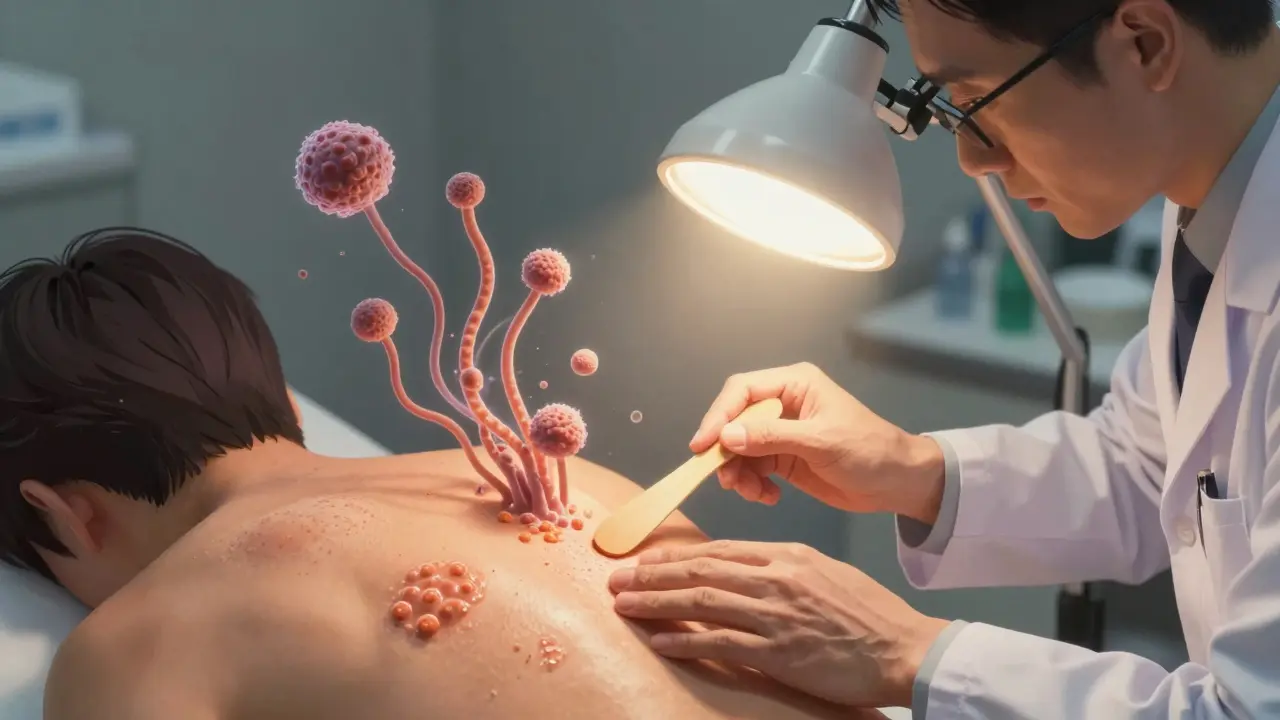
The gold standard test is a KOH prep. A doctor scrapes a tiny bit of skin, puts it under a microscope with potassium hydroxide, and looks for the classic “spaghetti and meatballs” pattern - tangled fungal threads (hyphae) and round yeast cells (the meatballs). It’s 95% accurate. No blood tests. No biopsies. Just a quick, painless scrape.
Some doctors use a Wood’s lamp - a special UV light. Under it, the patches glow a yellowish or coppery color. It’s not perfect, but it’s fast. If you’ve got tinea versicolor, it’ll light up.
Treatment: What Actually Works
Good news: tinea versicolor responds well to treatment. Bad news: it often comes back. That’s why treatment isn’t just about clearing the patches - it’s about preventing recurrence.
Topical treatments are first-line. The most common is selenium sulfide 2.5% shampoo (Selsun Blue). You apply it like a body wash, leave it on for 10 minutes daily for two weeks, then rinse. Studies show it clears the infection in 78% of cases. It’s cheap, accessible, and works by disrupting the yeast’s cell membrane.
Another option is ketoconazole 2% shampoo. Same method. Same results. Some people prefer it because it’s less greasy. Both are available over the counter in many countries.
Oral treatment is faster. Fluconazole - a single 300mg pill once a week for two to four weeks - clears the infection in 92% of cases. But it’s not for everyone. Your liver needs to be checked first. If you’re on other meds, have liver issues, or are pregnant, this isn’t safe. It also requires a prescription in most places.
Don’t waste time on home remedies. Coconut oil? Apple cider vinegar? Tea tree oil? No solid evidence supports them. Some people swear by them, but they don’t kill the yeast like antifungals do. And if you delay real treatment, the patches can linger for months.
Why It Comes Back - And How to Stop It
This is the part most people miss. Even after the patches vanish, the yeast is still there. And if conditions are right, it’ll grow again. Studies show 60-80% of people get it back within a year. That’s not failure - it’s biology.
So prevention isn’t optional. It’s essential.
The most effective strategy? Monthly maintenance. Use ketoconazole 2% shampoo or selenium sulfide 2.5% shampoo once a month, especially during warmer months. UCLA Health tracked 200 patients over two years. Those who stuck to monthly treatments cut their recurrence rate to 25%. Those who skipped? 80% came back.
Here’s what else helps:
- Avoid oily skincare products. Lotions, creams, or oils that clog pores feed the yeast. Switch to water-based moisturizers or skip them entirely if your skin isn’t dry.
- Wear breathable fabrics. Cotton, linen, or moisture-wicking synthetics reduce sweat buildup. Tight, sweaty clothes? A major trigger.
- Don’t over-clean. Harsh soaps strip your skin’s natural barrier. That makes it easier for yeast to invade. Use gentle, fragrance-free cleansers.
- Keep skin dry. Shower right after sweating. Dry off thoroughly, especially underarms, chest, and back.
- Be mindful of triggers. Pregnancy, diabetes, steroids, or a weakened immune system can make recurrence worse. If you’re on long-term prednisone or have uncontrolled diabetes, talk to your doctor about extra precautions.
And here’s a surprising fact: sun exposure doesn’t cure it. It makes the contrast worse. So even after treatment, avoid intentional tanning. Let your skin heal naturally.
What Doesn’t Work
Let’s clear up some myths:
- It’s not caused by poor hygiene. You can be spotless and still get it. Overwashing can actually make it worse.
- It’s not contagious. You can’t catch it from a towel, gym equipment, or a locker room.
- It’s not a sign of poor health. Healthy people get it. Fit athletes. Clean eaters. People with perfect diets.
- It won’t go away on its own. Patches can linger for 6-12 months without treatment. And yes, the uneven tan can last even longer.
One patient on Healthgrades said: “I thought it would fade after summer. It didn’t. I waited 8 months before seeing a doctor. That was a mistake.”

Long-Term Outlook
Most people clear the infection quickly. The hard part is staying clear. If you’ve had two or more recurrences in a year, experts now recommend year-round monthly maintenance - not just in summer.
Research is moving forward. Scientists at UC San Diego found certain skin bacteria can suppress Malassezia by 68% in lab tests. Probiotic creams might be the next frontier. But for now, the best tool is still simple: monthly antifungal shampoo.
And if you’re struggling emotionally - feeling self-conscious, avoiding social situations - you’re not alone. The American Academy of Dermatology launched a support network in 2022. Thousands have shared their stories. You don’t have to hide.
When to See a Doctor
See a dermatologist if:
- Patches don’t improve after 4 weeks of OTC treatment
- Patches spread to your face or other areas
- You have diabetes, are on steroids, or have a weakened immune system
- You’re unsure if it’s tinea versicolor or something else (like eczema, psoriasis, or vitiligo)
Don’t guess. A quick KOH test confirms it in minutes. And once you know, you can take control.
Is tinea versicolor contagious?
No, tinea versicolor is not contagious. It’s caused by an overgrowth of yeast that already lives on your skin. You can’t catch it from others, and you can’t give it to them - even through close contact, shared towels, or gym equipment.
How long does it take for the patches to fade after treatment?
The yeast is usually cleared within 2-4 weeks of treatment. But the discoloration - whether lighter or darker patches - can take 6 to 12 months to fully fade. That’s because your skin needs time to rebuild its natural pigment. Sun exposure during this time can make the contrast worse. Patience is key.
Can I use Selsun Blue every day to prevent recurrence?
No. Daily use isn’t necessary and can dry out or irritate your skin. For prevention, once a month is enough. Overuse can strip your skin’s natural oils, which may trigger more yeast growth. Stick to the maintenance schedule: one application per month during warm months, or year-round if you’ve had multiple recurrences.
Does stress cause tinea versicolor?
Stress doesn’t directly cause tinea versicolor, but it can weaken your immune system, making it harder for your body to keep the yeast in check. If you’re under chronic stress, sleep-deprived, or ill, you’re more likely to experience a recurrence. Managing stress won’t cure it, but it can help reduce how often it comes back.
Are there any natural remedies that work?
There’s no strong scientific evidence that natural remedies like tea tree oil, coconut oil, or apple cider vinegar effectively treat tinea versicolor. Some people report anecdotal success, but these don’t reliably kill the yeast. Antifungal shampoos and oral medications are proven. Delaying proper treatment can lead to longer-lasting patches and increased frustration.
Will tinea versicolor come back if I stop treatment?
Yes - and very likely. If you stop preventive care after one treatment, recurrence rates jump to 80% within a year. That’s why maintenance is critical. Monthly use of antifungal shampoo for at least 6-12 months after clearing the infection reduces recurrence to about 25%. Skipping this step is the most common reason people get it again.
Agbogla Bischof
March 23, 2026 AT 16:45Just wanted to add that in Nigeria, tinea versicolor is way more common than people realize-especially in coastal cities like Lagos and Port Harcourt. The humidity here is brutal, and most folks don’t even know it’s fungal. I’ve seen it misdiagnosed as vitiligo or eczema so many times. The monthly ketoconazole shampoo routine? Game-changer. I’ve been doing it for three years now-zero recurrences. Just apply it like a body wash, leave it on for 10 minutes, rinse. No need to overthink it.
Pat Fur
March 24, 2026 AT 09:58It’s wild how something so common is so stigmatized. I used to wear turtlenecks in July. Now I wear tank tops. The shame was worse than the patches.
Elaine Parra
March 25, 2026 AT 13:21Stop promoting OTC shampoos like they’re miracle cures. In the U.S., we have access to real medicine-fluconazole. Why are people wasting months on Selsun Blue? It’s not 1995 anymore. If you’re not seeing results in 2 weeks, see a dermatologist. This isn’t a DIY skincare trend-it’s a medical condition. And stop blaming sweat. It’s not about hygiene. It’s about biology. Stop making it a moral issue.
Natasha Rodríguez Lara
March 26, 2026 AT 06:03I love how this post normalizes the emotional side. I had it for 18 months before I told anyone. I thought I was the only one. Then I found a Reddit thread from someone in Brazil who said the same thing-avoiding swimwear, skipping family photos. It’s not just skin. It’s identity. And honestly? The monthly shampoo thing saved my social life. I started doing it after my second recurrence. Now I don’t even think about it anymore. It’s just part of my routine, like brushing my teeth.
Caroline Bonner
March 26, 2026 AT 22:12Oh my gosh, YES-this is so important! I’ve been dealing with this since I was 16, and I’m 32 now. I’ve tried everything: coconut oil (made it worse), apple cider vinegar (burned my skin), tea tree oil (smelled like a forest fire). Nothing worked until I started using the selenium sulfide shampoo once a month. I even started doing it in winter because I live in Canada and we have indoor heating that dries everything out-and guess what? My skin stayed even-toned! I can’t believe how simple it is. Why isn’t this taught in schools? Why isn’t this on every dermatology website? I’ve told three friends, and now they’re all on the monthly schedule. It’s life-changing. And no, you don’t need to be perfect-just consistent. One time a month. That’s it. Seriously.
Katie Putbrese
March 27, 2026 AT 04:03This is why America’s healthcare system is broken. You’re telling people to use shampoo from the drugstore like it’s a solution? Fluconazole is FDA-approved, cheap, and effective. Why aren’t doctors prescribing it first? I’ve had this for years because my dermatologist said ‘try the shampoo first.’ Meanwhile, in Germany, they start with oral meds. We’re stuck in the 1980s. Stop treating this like a cosmetic issue. It’s a medical condition that needs real treatment-not a TikTok hack.
Jacob Hessler
March 28, 2026 AT 09:44bro i had this for like 2 years and i thought it was just sunburn or somethin. then i tried selsun blue cause my cousin said it worked. did it for 2 weeks and boom. gone. now i do it once a month like u said. no more weird patches. also i dont wear long sleeves in summer anymore. life is better
Amber Gray
March 29, 2026 AT 04:41OMG YES 😍 I’ve been doing the monthly ketoconazole thing for 2 years now. My skin is finally even. I used to avoid mirrors. Now I take selfies. Thank u for this post. 🙏
Danielle Arnold
March 30, 2026 AT 23:12So let me get this straight… you’re telling people to use dandruff shampoo as a cure? And call it ‘medical advice’? I’ve seen more legit science in a 2008 YouTube video about how to fix a leaky faucet.
Korn Deno
March 31, 2026 AT 13:24The real tragedy isn’t the yeast-it’s the silence around it. We talk about acne, psoriasis, even rosacea-but tinea versicolor? Whispered about in locker rooms. Hidden under shirts. This post doesn’t just explain the biology-it gives people back their dignity. That’s more valuable than any antifungal.
Anil Arekar
April 1, 2026 AT 18:11As someone from India, I can confirm that tinea versicolor is extremely common in monsoon seasons. However, many patients delay treatment due to cultural stigma-fearing it is contagious or a sign of poor hygiene. This article is a vital correction. The monthly maintenance regimen is scientifically sound and culturally accessible. I have recommended this approach to over 50 patients in my clinic. The recurrence rate dropped significantly. Education, not embarrassment, must be the priority.