
When to Call Poison Control vs. Emergency Services for Overdose

If someone has taken too much of a medication, swallowed a cleaning product, or used drugs illegally, you need to act fast-but not all situations need an ambulance. Knowing whether to call poison control or emergency services can save time, money, and even lives. Confusing the two can delay critical care or waste emergency resources. Here’s how to decide-based on real medical guidelines, not guesswork.
Call 911 Immediately If the Person Is Unresponsive or Struggling to Breathe
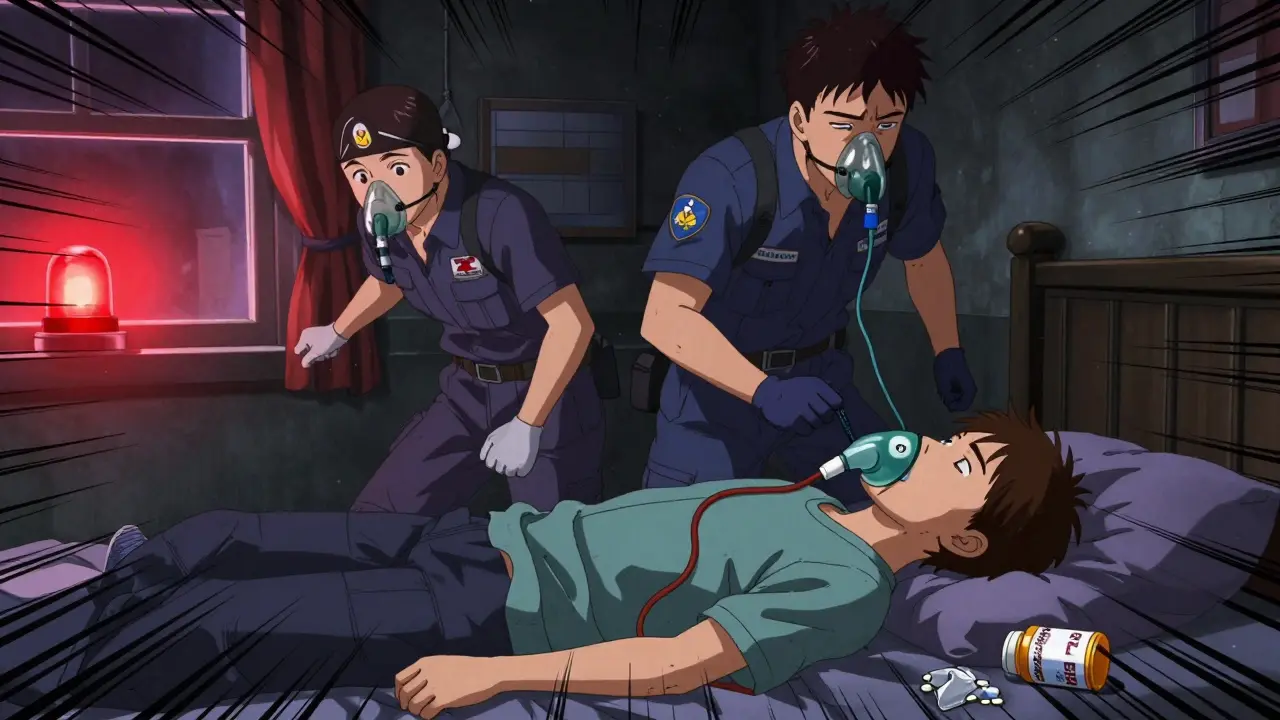
If someone is passed out, not waking up when you shake them, or can’t breathe properly, call 911 right away. These aren’t signs you can wait on. Poison control won’t send help-they’ll give advice. But if someone’s airway is closing or their heart is skipping beats, you need paramedics on the scene now.The CDC tracks fatal poisonings and finds that over 28% involve respiratory failure. That means the person stops breathing-or their breathing is so weak they won’t survive without oxygen support. This happens fast with opioids like fentanyl, benzodiazepines, or even too much alcohol. If their lips are blue, their chest isn’t rising, or they’re making gasping sounds, don’t call poison control. Dial 911.
Same goes for seizures. If someone is having a full-body convulsion that lasts longer than five minutes, that’s a medical emergency. Seizures from overdoses can damage the brain or stop breathing. Even if they stop shaking, they’re not safe yet. Call 911.
And don’t wait for symptoms to get worse. If the person has low blood pressure (below 90 mmHg), their heart is racing or skipping, or they’re cold and clammy, they’re in cardiovascular collapse. That’s not something you manage at home. Emergency teams carry drugs like naloxone, epinephrine, and IV fluids that can reverse this in minutes.
Call Poison Control When the Person Is Awake, Alert, and Has a Known Single Exposure
Poison control isn’t for emergencies. It’s for expert advice when things are serious but not life-threatening yet. You should call them when someone took too much of something-but they’re still talking, walking, breathing normally, and aware of what’s going on.For example: A 7-year-old grabs a bottle of children’s ibuprofen and swallows three tablets. They’re crying but alert. No vomiting. No drowsiness. That’s poison control territory. Or an older adult accidentally takes two doses of their blood pressure pill instead of one. They feel a little lightheaded but can stand and answer questions. Call poison control before driving to the ER.
According to the National Poison Data System, over 32% of pediatric poisonings are accidental double-dosing of medications. Most of these cases are handled safely with poison control guidance. Hospitals report that when families call poison control first, they avoid unnecessary ER visits in 68% of cases. That’s not just convenient-it reduces strain on emergency systems and cuts costs.
Call 1-800-222-1222. It’s free, confidential, and available 24/7. The average wait time is under 30 seconds. You’ll talk to a nurse or pharmacist trained in toxicology. They know exactly what to ask.
What Information to Have Ready Before You Call
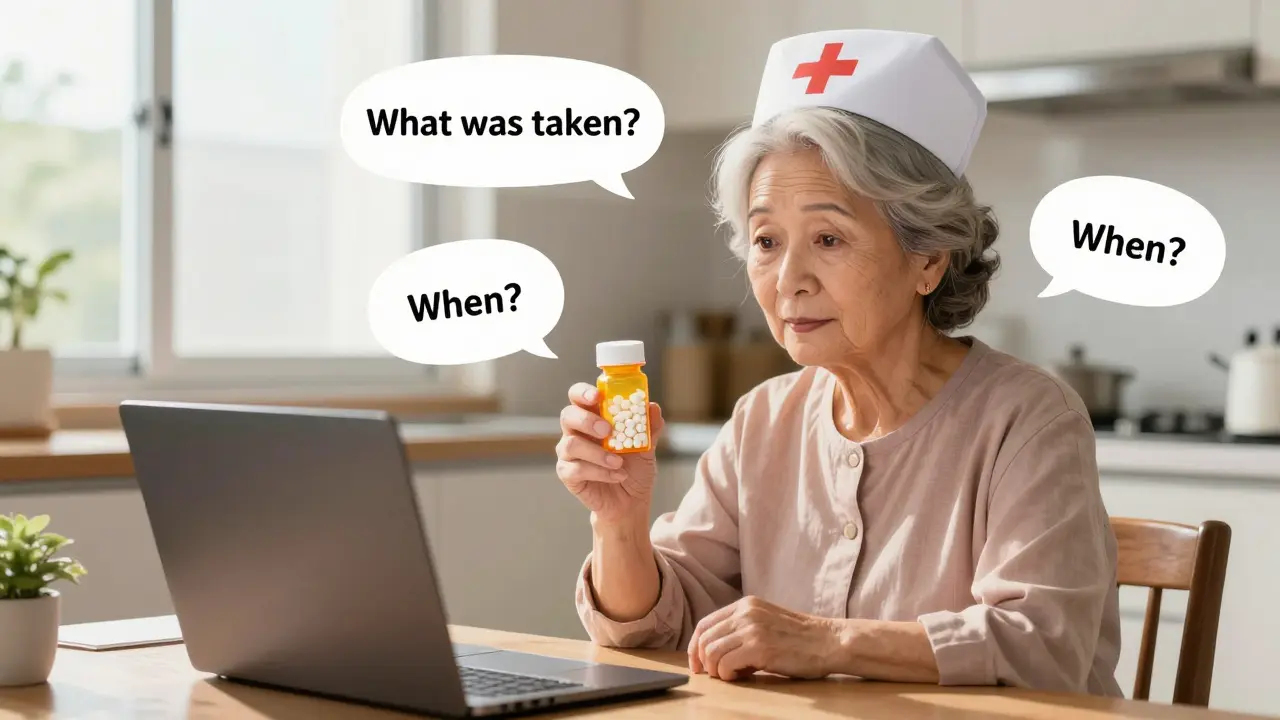
Whether you’re calling poison control or 911, having the right details speeds up help. Don’t waste time searching for bottles or guessing weights. Get this info ready before you pick up the phone:- What was taken? Exact name and strength. “Pain pills” isn’t enough. “Ibuprofen 200 mg” or “Oxycodone ER 10 mg” is.
- How much? Number of pills, milliliters of liquid, or teaspoons. Don’t guess. Look at the bottle.
- When? Time of ingestion. Even within 15 minutes helps.
- Who? Age, weight (in kilograms if possible), and medical conditions.
- Any symptoms? Nausea? Dizziness? Sleepiness? When did they start?
- What have you done? Did you give them milk? Make them throw up? Give naloxone?
Keep the container nearby. Poison control will ask about the formulation-immediate-release vs. extended-release. That changes everything. One pill of extended-release oxycodone can last 12 hours. Two could be deadly. One immediate-release pill? Less risky. The bottle tells you which one it is.
Special Cases: Kids, Seniors, and Opioids
Not all overdoses are the same. Some groups need extra caution.Children under 6: Most accidental ingestions happen here. If they swallowed one pill of a common medication-like acetaminophen or amoxicillin-and they’re acting fine, poison control can guide you on whether to watch at home. But if it’s clonidine, sulfonylureas, or any heart medication, call 911 immediately. These can drop blood pressure or blood sugar dangerously fast.
Adults over 75: They’re on multiple medications. Even a small overdose can trigger dangerous interactions. A single extra dose of a blood thinner or beta-blocker can cause internal bleeding or heart failure. For anyone over 75, any suspected overdose = call 911. Don’t wait. Studies show they’re 37% more likely to die from the same exposure than a healthy adult.
Opioids (heroin, fentanyl, oxycodone): If you suspect an opioid overdose, give naloxone if you have it. Then call 911. Naloxone wears off in 30-90 minutes. Fentanyl and its analogs can last much longer. The person can stop breathing again after naloxone wears off. That’s why you need EMS even if they wake up. In 2022, New Mexico’s naloxone program reversed over 12,000 overdoses-but 61% of those cases required a second 911 call because symptoms returned.
When Poison Control Isn’t Enough-And Why
Some people try poison control when they shouldn’t. That’s dangerous.For example: Someone takes multiple drugs at once-alcohol, Xanax, and a painkiller. That’s a high-risk combo. Poison control might say “monitor,” but the risk of sudden collapse is real. Emergency teams know to expect delayed respiratory failure. They’ll monitor for hours. Poison control won’t.
Same with calcium channel blockers or beta-blockers. These drugs can cause heart failure hours after ingestion. A person might feel fine for two hours-then crash. Emergency rooms have continuous heart monitors. Poison control doesn’t. In a 2023 survey of emergency doctors, 68% said they saw patients who’d been told by poison control to “wait and see” for these drugs-and ended up in critical condition.
Carbon monoxide poisoning is another trap. If someone feels dizzy or nauseous after using a heater or grill indoors, don’t call poison control. Call 911. Carbon monoxide is invisible. Symptoms can seem mild at first, but brain damage can develop hours later. Every case requires immediate oxygen and hospital care.
Online Tools and Apps-Use Them Wisely
There’s a website called webPOISONCONTROL and a mobile app. They let you input details and get automated advice. They’re useful-but only if used correctly.These tools work best for stable, single-substance exposures in healthy adults. For example: a teen takes one extra ADHD pill and feels jittery. The tool can confirm it’s low risk. But if the person is under 12, over 75, has symptoms, or took multiple substances, the tool will tell you to call 911. It’s designed to escalate risk, not avoid it.
Don’t rely on the app for real-time help. It doesn’t connect you to a person. It gives general advice. And if you’re unsure? Call 1-800-222-1222. The humans are faster, smarter, and can adjust based on your answers.
What Happens After You Call?
If you call 911, paramedics will come. They’ll check vitals, give oxygen, administer naloxone if needed, and transport to the nearest ER. You don’t need to decide if they should go to the hospital-they will.If you call poison control, they’ll ask questions, then give you a plan. It might be:
- Watch for symptoms for the next 4-6 hours
- Give activated charcoal (if advised and safe)
- Call back if vomiting starts
- Go to the ER if they get sleepy or confused
They’ll also document everything. That’s important. If symptoms develop later, the ER team will see what poison control recommended. That helps them make better decisions.
Bottom Line: When in Doubt, Call 911
The biggest mistake people make is waiting. Hoping it’s not that bad. Thinking poison control will fix it.If someone is unconscious, not breathing, seizing, or has low blood pressure-call 911. No hesitation.
If they’re awake, alert, you know what they took, and they’re not showing symptoms-call poison control. They’ll tell you whether to stay home or go to the hospital.
And if you’re even a little unsure? Call 911. It’s better to be safe than sorry. Emergency services are trained for this. Poison control is there to prevent unnecessary trips. But they can’t replace an ambulance.
Keep the number 1-800-222-1222 saved in your phone. And if you have opioids in the house, keep naloxone nearby. It’s available over the counter in most states. It doesn’t cure overdoses-but it buys time. And time is everything.
Can I call poison control for a child who swallowed a battery?
No. If a child swallows a button battery, call 911 immediately. These batteries can cause severe internal burns in as little as two hours. Poison control can’t provide the urgent medical intervention needed. Emergency teams will coordinate with specialists to remove the battery quickly.
What if I’m not sure what was taken?
Call 911 if the person is having symptoms. If they’re awake and stable, call poison control anyway. Even vague details like “they took a blue pill” or “something from the bathroom” help. Poison control specialists can often identify substances based on packaging, symptoms, or context. Don’t wait to gather perfect info-act fast.
Is poison control only for kids?
No. While children account for nearly half of all poison control calls, adults make up the other half. Most adult calls involve medication errors, alcohol misuse, or accidental exposure to household chemicals. Poison control serves all ages.
Can I use poison control if I’m not in the U.S.?
The 1-800-222-1222 number only works in the United States. If you’re outside the U.S., contact your local emergency services or national poison center. Many countries have their own hotlines-check your government health website. Ireland’s National Poisons Information Centre can be reached at +353 1 809 2166.
Will calling poison control get me in trouble if someone used drugs?
No. Poison control services are confidential and non-judgmental. Their only goal is to save lives. They don’t report to police, schools, or employers. Whether it’s prescription misuse, recreational drugs, or accidental ingestion, they treat every call the same: with medical expertise and compassion.
What if I call 911 and it turns out it wasn’t serious?
That’s okay. Emergency services expect that not every call will be life-threatening. It’s better to be cautious. Paramedics are trained to assess quickly. If they determine it’s not urgent, they’ll still provide guidance and may recommend follow-up care. Your call helps them track trends and prepare for future emergencies.
Saylor Frye
January 6, 2026 AT 18:19Look, if you’re calling poison control because your kid ate a single ibuprofen, you’re doing parenting wrong. We’re not raising toddlers in a bubble. Let ‘em learn from consequences. Also, why are we still using 1990s hotline numbers in 2025? Just text the bottle to an AI. Done.
Wesley Pereira
January 6, 2026 AT 18:23Bro, poison control is the unsung MVP of the healthcare system. They’ve got toxicology PhDs on standby 24/7 and you’re out here Googling ‘is this pill gonna kill me?’ like it’s a TikTok trend. Also, if you’re using the webPOISONCONTROL app for anything other than a single Tylenol, you’re already 30 minutes behind. The humans are faster. Trust me, I work in ER. We see the fallout when people ‘wait and see.’
Lily Lilyy
January 8, 2026 AT 16:00Thank you for this clear, kind, and life-saving guide. Every parent, grandparent, and caregiver should save this number: 1-800-222-1222. You never know when a moment of panic could become a moment of rescue. Stay calm. Be prepared. You’re doing better than you think.
Susan Arlene
January 10, 2026 AT 07:49so like if someone’s breathing but kinda weirdly and their eyes are rolling and you’re not sure if it’s drugs or just a bad night… just call 911 right
no need to overthink it
they’ll come
they’ll judge
they’ll save them
that’s the job
Joann Absi
January 11, 2026 AT 18:39THIS IS WHY AMERICA IS FALLING APART 😭
People are too lazy to read labels, too scared to call 911, and now we have apps that tell you whether your kid’s gonna die from a gummy vitamin??
My grandma would’ve slapped the bottle outta their hand and made ‘em drink milk. No app. No hotline. Just common sense.
Also if you’re using opioids and not keeping naloxone in your pocket like a damn adult, you deserve what you get. 🤡💉
Mukesh Pareek
January 11, 2026 AT 18:51Western medicine’s dependency on reactive protocols is a systemic failure. In India, we teach household toxicology from childhood. A child knows that paracetamol overdose causes hepatic necrosis by age 8. No hotline required. No ambulance needed. Just knowledge. Your reliance on centralized services reflects cultural infantilization.
Ashley S
January 12, 2026 AT 06:29So let me get this straight… if your kid swallows a pill and is still awake, you call a hotline instead of the hospital? What kind of nonsense is this? We used to just take them to the ER and be done with it. Now we’ve got a whole industry built around not taking responsibility. This is why people think they can just ‘wait and see’ when their uncle ODs on fentanyl. Wake up.
Jeane Hendrix
January 13, 2026 AT 21:11Wait-so if someone takes multiple meds and is ‘awake and alert’ but it’s a combo of benzos, alcohol, and an opioid… poison control says ‘monitor’ but ER docs say ‘this person could crash in 45 mins’? That’s a huge gap. Has anyone tracked how many people died because they followed poison control’s ‘watch and wait’ for polypharmacy cases? I feel like that’s the real loophole here. The system assumes single-agent exposure, but real life is messy.
Gabrielle Panchev
January 14, 2026 AT 09:23Okay, but what about the fact that poison control, despite being a national resource, is still underfunded, understaffed, and under-promoted? People don’t know it exists until they’re in full panic mode, and even then, half the time they’re dialing 911 out of habit, not because they understand the distinction-so we’re doubling up on emergency calls, which clogs the system, which makes 911 slower for real emergencies, which makes people more scared to call poison control, which makes them wait longer, which makes outcomes worse, which makes the whole cycle perpetuate, which means we’re not solving the root problem-which is public education, not just hotlines or apps or even naloxone distribution, because if people don’t know what to do before the crisis, they’ll never be prepared for it, and that’s a cultural failure that no app, no hotline, no ambulance can fix.