
Zoonotic Diseases: How Animal-to-Human Transmission Happens and How to Stop It

Imagine a virus jumping from a bat in a forest to a human in a city. That isn’t science fiction; it is the reality of zoonotic diseases, also known as zoonoses. These are infections that pass between vertebrate animals and humans. The term comes from the Greek word 'zoon,' meaning animal. According to the World Health Organization, about 60% of all known infectious diseases in humans are zoonotic. Even more striking, 75% of all new or emerging infectious diseases originate from animals. This means that when we talk about preventing future pandemics, we cannot look at human health in isolation. We have to look at our neighbors in the wild and on farms.
You might think these diseases are rare, but they happen every day. From the common ringworm you might get from a stray cat to deadly viruses like Ebola, the spectrum is wide. Understanding how these pathogens move from animals to us is the first step in stopping them. This article breaks down exactly how transmission happens, which diseases are most common, and what practical steps you can take to protect yourself and your community.
How Do Zoonotic Diseases Spread?
The path from an animal host to a human is rarely direct and simple. Pathogens-viruses, bacteria, parasites, and fungi-use several routes to make the jump. Knowing these routes helps you spot risks in your daily life.
- Direct Contact: This is the most obvious route. Touching, handling, or being bitten by an infected animal transfers pathogens. Think of a dog bite transmitting rabies or touching raw chicken skin spreading salmonella.
- Indirect Contact: You don't always need to touch the animal. Contact with their habitats, waste, or contaminated surfaces can do the job. Walking through soil contaminated with anthrax spores or cleaning a birdcage without gloves are examples.
- Vector-Borne Transmission: Insects act as middlemen. Ticks, mosquitoes, and fleas bite an infected animal, pick up the pathogen, and then bite a human. Lyme disease and malaria work this way.
- Foodborne Transmission: Consuming contaminated food or water is a major driver. Eating undercooked meat, unpasteurized milk, or produce washed in contaminated water introduces pathogens directly into your system. The CDC notes that foodborne illnesses affect 1 in 6 Americans annually.
- Waterborne Transmission: Similar to foodborne, but specifically through drinking or swimming in water contaminated by animal waste.
Each route has different risk factors. Direct contact is high-risk for veterinarians and farmers. Vector-borne risks increase during warm, wet seasons. Foodborne risks are present in every kitchen if hygiene standards slip.
Common Types of Zoonotic Pathogens
Zoonoses are classified by the type of germ causing them. Each class behaves differently, requiring specific prevention strategies.
| Pathogen Type | Examples | Primary Animal Source | Key Symptoms |
|---|---|---|---|
| Bacterial | Anthrax, Salmonellosis, Lyme Disease, Plague | Cattle, poultry, ticks, rodents | Fever, skin ulcers, joint pain, buboes (swollen lymph nodes) |
| Viral | Rabies, HIV, Ebola, Avian Influenza (H5N1) | Bats, primates, birds, livestock | Neurological issues, hemorrhagic fever, respiratory distress |
| Parasitic | Toxoplasmosis, Malaria, Trichinosis | Cats, pigs, mosquitoes, wild game | Muscle pain, flu-like symptoms, anemia, vision problems |
| Fungal | Ringworm (Dermatophytes), Histoplasmosis | Dogs, cats, soil/bird droppings | Skin rashes, respiratory issues |
Notice that bacterial and parasitic infections are often treatable with antibiotics or antiparasitics. Viral infections, however, are trickier. Rabies, for instance, has a near 100% fatality rate once symptoms appear, making prevention via vaccination critical before exposure. This difference in severity drives public health priorities.
The One Health Approach: Why Silos Fail
You might wonder why we don't just treat sick humans and vaccinate sick animals separately. The problem is that these systems are deeply connected. The One Health initiative, championed by the CDC, WHO, FAO, and WOAH, recognizes this interconnection. It integrates human health, animal health, and environmental health into a single strategy.
Why does this matter? Because fragmented responsibility leads to blind spots. A study by the Tripartite Collaboration found that only 38% of countries have functional multisectoral coordination mechanisms for zoonotic disease prevention. When sectors don't talk, outbreaks grow. During the 2014-2016 Ebola outbreak in West Africa, early animal surveillance could have detected the virus in bats or primates before it spread widely to humans. Instead, the lack of integrated data contributed to over 11,000 deaths.
In contrast, Uganda’s coordinated dog vaccination campaigns achieved a 92% reduction in human rabies cases by reaching 70% of the canine population. This success story proves that treating animal health as part of human health security works. It saves lives and money. The World Bank estimates that investing $10 billion annually in One Health approaches could prevent 70% of future pandemic risks, offering a benefit-cost ratio of 1:100.
Risk Factors: What Drives New Outbreaks?
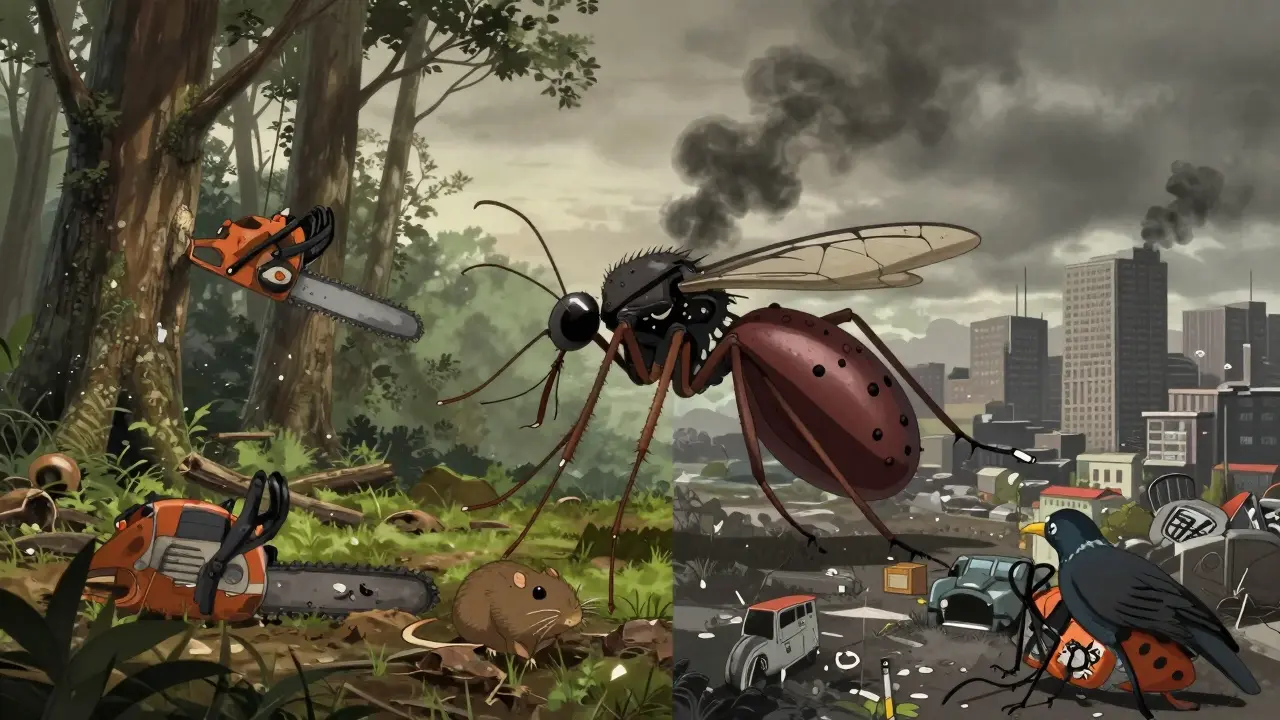
Zoonotic diseases aren't random. They thrive where human activity disrupts natural balances. Dr. Peter Daszak of EcoHealth Alliance identifies land-use changes as responsible for 31% of emerging zoonotic events. Here are the main drivers:
- Agricultural Expansion: Clearing forests for farms brings humans and livestock into closer contact with wildlife reservoirs. This accounts for 25% of emerging events.
- Wildlife Trade: Moving animals across borders spreads pathogens. Wildlife trade contributes 13% of emerging zoonotic events.
- Climate Change: Warmer temperatures expand the habitats of vectors like ticks and mosquitoes. The Lancet Countdown forecasts a 45% increase in areas suitable for Lyme disease transmission in North America by 2050.
- Urbanization: Dense cities create environments where pests like rats and pigeons thrive, increasing indirect contact risks.
Dr. Jane Goodall warns that "our disrespect for wild animals and their habitats has created the perfect conditions for diseases to jump." It’s not just about germs; it’s about ecology. When we squeeze wildlife out of their homes, they bring their microbes with them.
Practical Prevention: What You Can Do Today
You don't need to be a veterinarian to protect yourself. Simple, evidence-based behaviors drastically reduce your risk. The CDC’s 2023 guidelines highlight several key actions.
Hygiene is your first line of defense. Washing hands for 20 seconds with soap reduces pathogen transmission by 90%. Do this after handling pets, petting farm animals, or gardening. Wear gloves when cleaning animal waste; a 2021 JAMA Internal Medicine study showed this reduces risk by 85%.
Cook food thoroughly. Salmonella and other bacteria die at high heat. Cook poultry to an internal temperature of 165°F (74°C). Avoid raw or undercooked meat, eggs, and unpasteurized dairy. This alone prevents millions of cases of foodborne zoonoses each year.
Manage vectors. If you live in an area with ticks or mosquitoes, use repellent containing DEET. Check your body and clothes for ticks after spending time outdoors. Remove standing water around your home to discourage mosquito breeding.
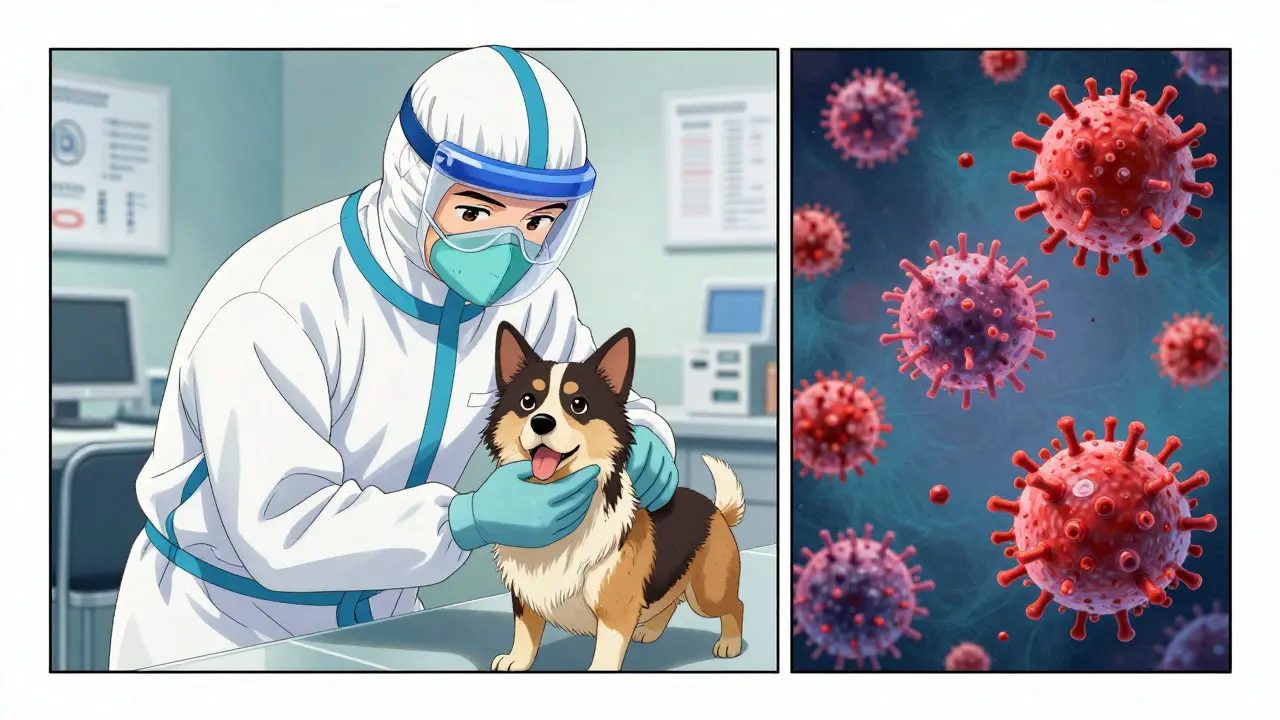
Vaccinate your pets. Rabies vaccines for dogs and cats are mandatory in many places because they break the chain of transmission to humans. Keep your pets indoors when possible to reduce contact with wild animals.
Avoid wild animals. Never feed or touch wildlife. If you find a sick or dead animal, report it to local authorities rather than handling it yourself. Remember, healthy-looking animals can carry pathogens.
Occupational Risks: Who Is Most Vulnerable?
Some people face higher risks due to their jobs. Veterinarians have an 8 times higher risk of zoonotic disease exposure compared to the general population, according to NIOSH. Agricultural workers experience 5.2 cases per 1,000 workers annually. Hunters, slaughterhouse workers, and laboratory staff are also at elevated risk.
Yet, there is a gap in training. An AVMA report indicates that 68% of physicians lack adequate training in recognizing zoonotic diseases. This means patients might not get diagnosed quickly. For example, tularemia from handling infected rabbits causes high fever and skin ulcers. Without knowing to ask about animal contact, doctors might miss the diagnosis, delaying treatment.
If you work in these fields, ensure you have access to personal protective equipment (PPE) and regular health screenings. Report any unusual symptoms immediately, especially if you have had recent animal contact.
The Economic and Global Impact
Zoonotic diseases cost more than just health. The global livestock sector loses approximately $3.5 billion annually to brucellosis alone, due to lost productivity and control measures. Major pandemics cost over $100 billion per event. Beyond money, these diseases destabilize communities, disrupt supply chains, and strain healthcare systems.
The market for zoonotic diagnostics is growing fast, projected to reach $3.24 billion by 2028. This reflects a shift toward better detection. However, antimicrobial resistance remains a threat. The CDC reports 2.8 million antibiotic-resistant infections annually in the US, 20% of which come from zoonotic pathogens. Overusing antibiotics in agriculture fuels this resistance, making treatments less effective for both animals and humans.
Regulatory frameworks vary. The EU has comprehensive monitoring under Directive 2003/99/EC. In the US, reporting requirements differ by state, with only 28 states mandating reports for all reportable zoonoses. This patchwork approach hinders national-level tracking and response.
Future Outlook: Strengthening Global Security
The good news is that awareness is rising. The Tripartite+ (WHO, FAO, WOAH, UNEP) launched a One Health Joint Plan of Action in 2022, with $150 million in initial funding to strengthen surveillance in 100 countries by 2026. The CDC announced a $25 million initiative for regional One Health University Centers to train the next generation of cross-disciplinary experts.
Long-term viability depends on sustained political commitment. Countries with established One Health coordination mechanisms have reduced zoonotic outbreaks by 37% compared to those without. As climate change continues to alter ecosystems, our ability to predict and prevent jumps will become even more critical. Investing in early warning systems, protecting habitats, and improving veterinary infrastructure are not just animal welfare issues-they are human survival strategies.
What is the most common zoonotic disease?
Salmonellosis is one of the most common bacterial zoonoses, affecting millions globally each year. It typically spreads through contaminated food, especially undercooked poultry and eggs. Ringworm, a fungal infection, is also very common among pet owners.
Can I get a zoonotic disease from my house cat or dog?
Yes, but the risk is manageable. Common issues include ringworm, toxoplasmosis (from cat litter), and cat scratch disease. Keeping pets vaccinated, dewormed, and indoors reduces risk significantly. Always wash hands after handling pets or their waste.
How does climate change affect zoonotic diseases?
Warmer temperatures allow vectors like ticks and mosquitoes to survive in new areas and for longer periods. This expands the geographic range of diseases like Lyme disease and malaria. Changes in rainfall patterns can also concentrate wildlife around water sources, increasing contact with humans.
What should I do if I suspect I have a zoonotic infection?
Seek medical attention immediately. Tell your doctor about any recent animal contacts, travel history, or outdoor activities. Early diagnosis is crucial, especially for diseases like rabies or tularemia, where delayed treatment can be fatal or lead to severe complications.
Is eating wild game safe?
It carries higher risks than farmed meat. Wild animals may carry parasites like trichinella or bacteria like anthrax. Ensure meat is cooked thoroughly to internal temperatures recommended for game. Avoid handling viscera (internal organs) without gloves, as these often harbor the highest concentration of pathogens.
What is the One Health approach?
One Health is a collaborative strategy that integrates human, animal, and environmental health sectors. It recognizes that the health of people is closely connected to the health of animals and our shared environment. By sharing data and resources across these sectors, we can better prevent, detect, and respond to zoonotic outbreaks.