
Chronic Eczema: How to Repair the Skin Barrier, Stop Triggers, and Control Itch

Your skin is supposed to be a shield. For people with chronic eczema, also known as atopic dermatitis, that shield has cracks. Water escapes, irritants enter, and nerves scream "itch." You might feel like you’re fighting a losing battle against redness, scaling, and sleepless nights. But here is the truth: the inflammation isn’t just a symptom; it’s often the result of a broken foundation. The core issue in chronic eczema is skin barrier dysfunction. When you fix the barrier, you stop the cycle.
This isn’t about slathering on any old lotion and hoping for the best. Modern dermatology has shifted focus from simply suppressing symptoms to actively repairing the physical structure of your skin. If you have been dealing with flare-ups for months or years, understanding how to rebuild that lipid matrix is your most powerful tool. Let’s look at exactly how this works, what triggers are actually doing to your skin, and how to take control of the itch without relying solely on steroids.
The Broken Brick Wall: Why Your Skin Leaks
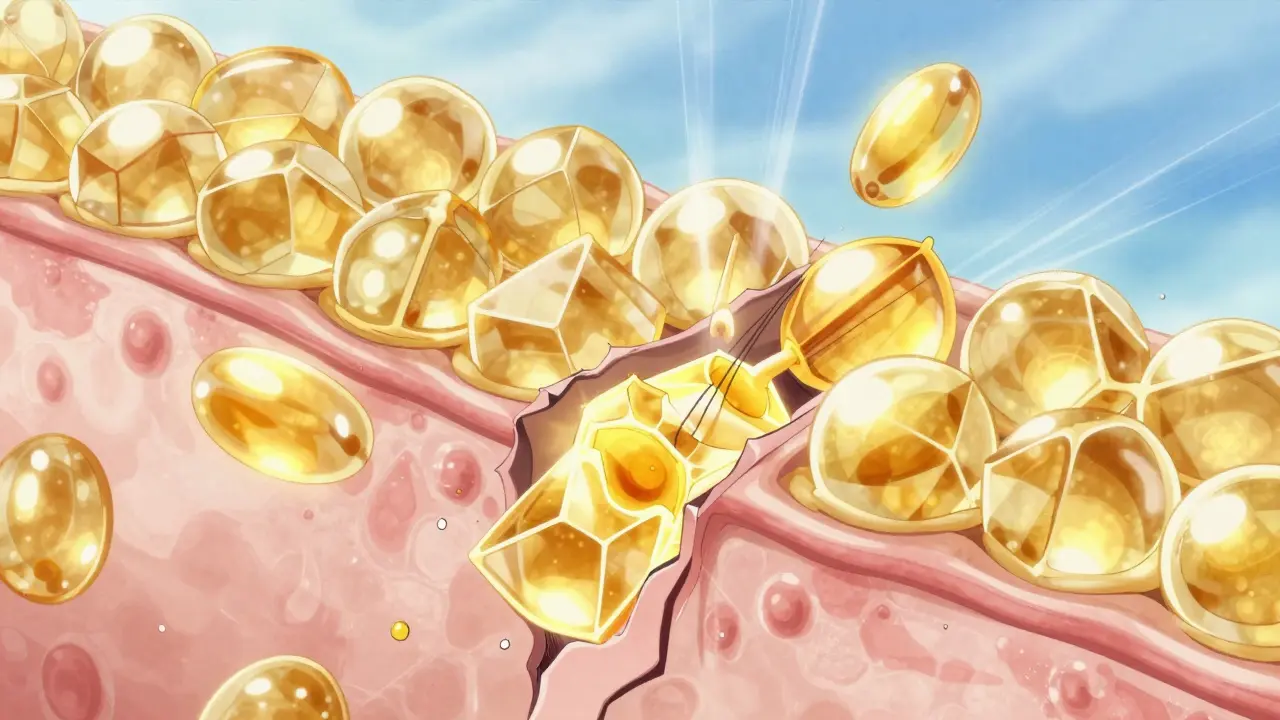
To understand why eczema hurts and itches, you need to picture your outermost skin layer, the stratum corneum, like a brick wall. The "bricks" are dead skin cells called corneocytes. The "mortar" holding them together is a mix of lipids-specifically ceramides, cholesterol, and free fatty acids. In healthy skin, this mortar is tight and waterproof. In chronic eczema, the mortar is missing or malformed.
Research published in Frontiers in Immunology (2025) confirms that this barrier defect happens before you even see a rash. In high-risk infants, barrier impairment precedes clinical eczema by three to six months. This means the damage starts early. A key player here is a protein called filaggrin. Filaggrin helps bind skin cells together and creates natural moisturizing factors. About 50% of people with moderate-to-severe atopic dermatitis have mutations in the gene that produces filaggrin (FLG gene). Without enough filaggrin, the bricks don’t stick, and water vapor escapes through the gaps. This loss is measured as Transepidermal Water Loss (TEWL). While healthy skin loses only 8-12 grams of water per square meter per hour, eczema-prone skin can lose 25-40 grams. That dryness signals your immune system to panic, launching an inflammatory response that causes redness and itching.
Repairing the Barrier: More Than Just Moisture
Most people reach for petroleum jelly when their skin feels dry. Petrolatum is an occlusive-it sits on top of the skin like plastic wrap to trap water. It helps, but it doesn’t fix the mortar. To truly repair the barrier, you need physiologic lipid replacement therapy. This means using products that contain the specific ingredients your skin is missing: ceramides, cholesterol, and free fatty acids.
Studies show that formulations with these three components in equimolar ratios (roughly 1:1:1) are significantly more effective than standard emollients. A double-blind clinical trial cited by the NIH found that physiologic lipid creams restored barrier function in 87% of cases, compared to just 52% for standard moisturizers. Specifically, you want to look for products containing 3-5% ceramides, 2-4% cholesterol, and 1-3% free fatty acids. Ceramide 1 (acylceramide) is particularly crucial because it acts as a glue between the other lipids. Many eczema sufferers have a 30-50% reduction in natural ceramide levels. Replenishing this directly reduces TEWL by 30-50% within two weeks of consistent use, which in turn cuts flare frequency by up to 60%.
| Strategy | Key Ingredients | Mechanism | Efficacy (Barrier Restoration) |
|---|---|---|---|
| Physiologic Lipid Creams | Ceramides, Cholesterol, Free Fatty Acids | Rebuilds lipid matrix (mortar) | High (87% efficacy in trials) |
| Petrolatum-Based Emollients | Petroleum Jelly | Occlusive (traps existing moisture) | Moderate (28-52% efficacy) |
| Topical Corticosteroids | Betamethasone, Hydrocortisone | Suppresses inflammation | Fast relief, but no structural repair |
Identifying and Managing Triggers
Even with perfect skincare, triggers can knock your barrier down again. Triggers fall into two categories: external irritants and internal stressors. External triggers include harsh soaps, wool fabrics, low humidity, and allergens like dust mites or pet dander. Internal triggers involve stress, sweat, and certain foods (though food allergies are less common in adults than children).
One often-overlooked trigger is pH imbalance. Healthy skin has an acidic mantle with a pH of 4.5-5.5. This acidity activates enzymes like β-glucocerebrosidase, which processes lipids to form the protective barrier. These enzymes work at 90% efficiency at pH 5.0 but drop to just 40% at neutral pH 7.0. Many conventional soaps are alkaline (pH 9+), which strips this acid mantle and disables your skin’s self-repair mechanisms. Switching to a pH-balanced cleanser (pH 5.0-5.5) is a simple change that yields significant results. Additionally, keeping indoor humidity above 40% during winter months prevents the air from pulling moisture out of your compromised barrier.
Taming the Itch: Breaking the Scratch Cycle
The itch in eczema is not just annoying; it’s dangerous. Scratching damages the already weak barrier, letting bacteria like Staphylococcus aureus enter. This bacteria colonizes eczema lesions far more frequently than healthy skin, worsening inflammation and creating a vicious cycle: itch leads to scratch, scratch leads to damage, damage leads to more itch.
Barrier repair actually helps control the itch by reducing bacterial colonization. Studies show that proper barrier therapy can reduce S. aureus presence by 65-75%. However, you need immediate relief strategies too. Cool compresses are effective because they numb nerve endings without causing the rebound flushing that heat does. Wet wrap therapy-applying medication and moisturizer, then wrapping damp cotton bandages over dry ones-is a gold-standard technique for severe flares. It hydrates the skin deeply and physically prevents scratching.
For nighttime itching, which ruins sleep, antihistamines may help if the itch is histamine-driven, though many experts note that eczema itch is largely non-histaminergic. Instead, focusing on sedative effects (like older-generation antihistamines) can help you sleep through the urge to scratch. Always keep nails short and consider wearing cotton gloves to bed to minimize damage if you do scratch in your sleep.

Practical Implementation: The Routine That Works
Knowing what works is one thing; sticking to it is another. Here is a practical routine based on guidelines from the American Academy of Dermatology Association:
- Bathe Smart: Use lukewarm water (not hot) for 5-10 minutes. Hot water strips lipids. Use a gentle, fragrance-free, pH-balanced cleanser only on dirty areas (armpits, groin, feet). Leave soap off the rest of your body.
- The 3-Minute Rule: Pat your skin dry gently, leaving it slightly damp. Apply your barrier repair cream within three minutes of stepping out of the shower. This traps the water on your skin surface. Clinical trials show this method is 35% more effective than applying cream later.
- Dose Correctly: Don’t skimp. For an adult arm, use about 5 grams (two fingertip units) per application. Apply twice daily. Consistency is key; studies indicate you need 92% compliance to see significant TEWL reduction.
- Layer Medications Wisely: If you use topical steroids or calcineurin inhibitors (like pimecrolimus), apply them first to affected areas. Wait 15-20 minutes before applying your barrier cream. Applying them simultaneously can reduce the efficacy of the medication by up to 15%.
It takes time. Expect to wait 28-42 days of consistent use to see major improvements in texture and flare frequency. Many users quit after a week because the product feels "greasy" or because they don’t see instant results. Push through. The lipid matrix needs time to reorganize.
When Barriers Aren’t Enough: Advanced Options
If you have severe filaggrin null mutations or widespread disease, barrier repair alone might not be sufficient. About 30-40% of severe cases require adjunctive immunomodulators. Newer treatments like JAK inhibitors (e.g., upadacitinib) target the internal inflammatory signaling pathways directly. These are prescription-only and typically reserved for patients who haven’t responded to topical therapies.
Emerging therapies also show promise. Platelet-rich plasma (PRP) injections are being studied for their ability to release growth factors that stimulate filaggrin expression. Additionally, microbiome-targeted therapies aim to restore healthy bacteria to outcompete Staph aureus. While these are still evolving, they represent the future of personalized eczema care. For now, mastering the basics of barrier repair remains the cornerstone of management.
How long does it take to repair the skin barrier in eczema?
Significant improvement in barrier function, measured by reduced Transepidermal Water Loss (TEWL), can occur within 2 weeks of consistent use of physiologic lipid creams. However, full restoration of the lipid matrix and noticeable reduction in flare frequency typically takes 28 to 42 days. Consistency is critical; missing applications slows down the healing process considerably.
What is the best ingredient for eczema barrier repair?
The most effective approach uses a combination of ceramides, cholesterol, and free fatty acids in specific ratios (approximately 1:1:1). Ceramides, particularly ceramide 1, act as the primary structural component. Products containing 3-5% ceramides alongside cholesterol and fatty acids mimic the skin's natural lipid composition better than petrolatum or simple moisturizers.
Can I use soap if I have chronic eczema?
Traditional soaps are often too alkaline (high pH) and strip the skin's natural acid mantle, worsening eczema. Instead, use a gentle, fragrance-free, pH-balanced cleanser (pH 5.0-5.5). Limit washing to necessary areas like the face, underarms, and feet, and avoid scrubbing. Lukewarm water is preferred over hot water to prevent further lipid stripping.
Does barrier repair reduce the need for steroids?
Yes. By strengthening the skin's physical defense, barrier repair reduces the frequency and severity of flares. Case studies have shown that consistent use of barrier repair creams can reduce topical steroid usage by up to 80% in some patients. Steroids should still be used for acute flares, but a strong barrier minimizes how often you need them.
Why does my eczema itch worse at night?
Nighttime itching is common due to circadian rhythms that increase cortisol drops and histamine activity while you sleep. Body temperature also rises slightly under covers, which can intensify the itch sensation. Using cool compresses, wearing cotton gloves, and maintaining a cool bedroom environment can help mitigate this. Sedating antihistamines may also assist with sleep, though they do not directly treat the underlying inflammation.