
How to Check for Allergens and Inactive Ingredients on Prescription Labels
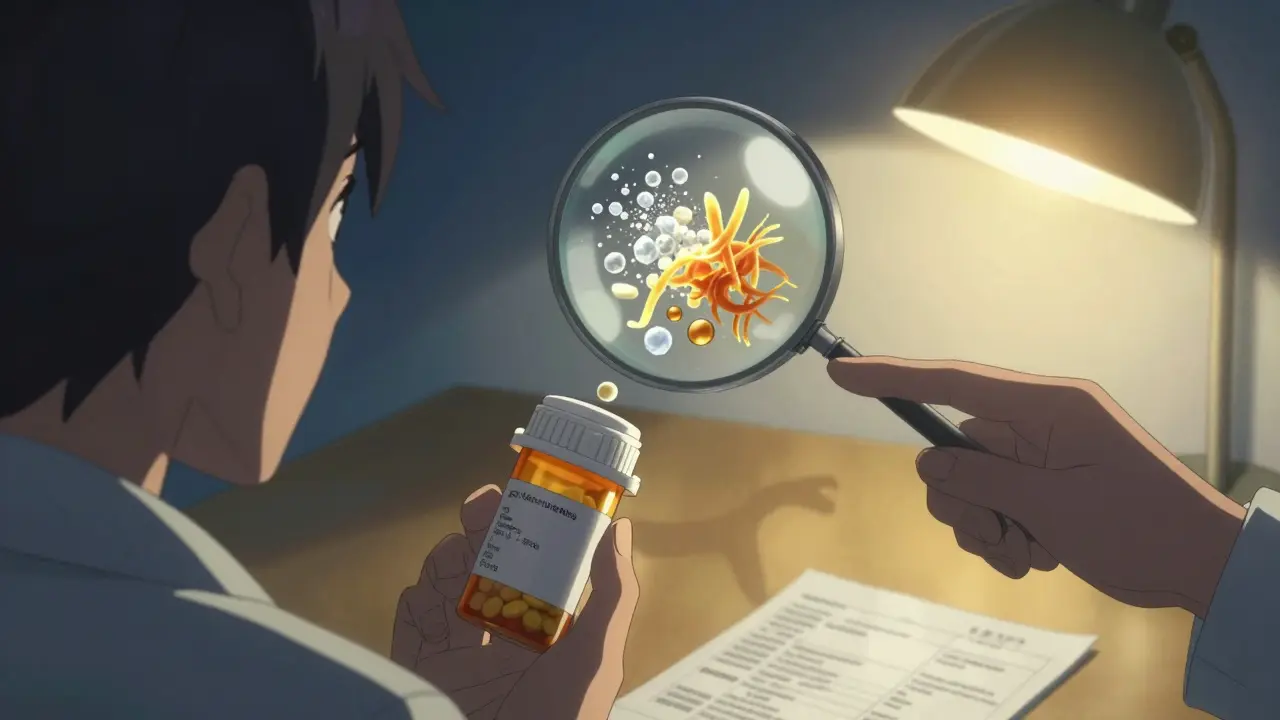
When you pick up a prescription, you expect it to help you feel better-not make you sick. But for millions of people with allergies, even a tiny amount of an inactive ingredient in a pill can trigger a reaction. Unlike food, where allergens are clearly labeled by law, medicines don’t follow the same rules. That means you can’t assume your medication is safe just because it looks familiar. If you’ve ever had a rash, swelling, or breathing trouble after taking a new pill-even one you’ve used before-you’re not alone. The truth is, inactive ingredients in medications are one of the most overlooked dangers in modern healthcare.
Why Medication Labels Don’t Tell You Everything
Food manufacturers in the U.S. must follow strict rules under the Food Allergen Labeling and Consumer Protection Act (FALCPA) and the FASTER Act. These laws require them to list the nine major allergens: milk, eggs, fish, shellfish, tree nuts, peanuts, wheat, soy, and sesame. If a product contains any of these, the label must say so-either right in the ingredient list (like "lecithin (soy)") or in a "Contains" statement at the end.But none of that applies to pills, capsules, or liquid medicines. The FDA doesn’t require drugmakers to declare allergens in inactive ingredients. That’s because these ingredients-like fillers, binders, and coatings-aren’t meant to have a medical effect. But they can still cause reactions. Lactose (from milk), peanut oil, soy lecithin, and gelatin (from animal products) are common in medications. And if you’re allergic, they’re just as dangerous as the active drug.
According to the Journal of Allergy and Clinical Immunology (2023), about 4% of American adults have a documented allergy to a medication ingredient. Many of those reactions come from something as simple as a tablet coated with dairy-based lactose. One study found that 1 in 5 generic versions of the same drug contain different inactive ingredients than the brand-name version. That means switching pharmacies or manufacturers can suddenly put you at risk-even if the pill looks identical.
What to Look for in Your Prescription
The label on your medicine bottle won’t tell you about allergens. The information you need is buried in the package insert or the prescribing information that comes with the drug. Most people never read it. But here’s what you should do instead:- Ask your pharmacist for a full list of inactive ingredients. Don’t settle for "it’s safe." Ask specifically: "Does this contain lactose, soy, or peanut derivatives?"
- Check the manufacturer. Generic drugs from different companies may use different fillers. If you’ve had a reaction to one brand, don’t assume the next one is safe.
- Keep a list of ingredients you’re allergic to. Include not just the common names but also their technical terms: "casein" (milk), "arachis oil" (peanut), "soy lecithin."
- Use the same pharmacy. Pharmacists who know your history can flag changes before you even get the prescription.
Some pharmacies now offer digital tools that scan your prescription and cross-check it against known allergens. Ask if your pharmacy offers this service. If not, you can use free apps like Medscape’s Drug Interaction Checker or Drugs.com’s inactive ingredient database to look up your medication by name.
Food Allergens in Medicine: The Hidden Triggers
Here are the most common allergens hiding in medications:- Lactose - Found in over 20% of oral medications. Even small amounts can trigger reactions in people with milk allergies.
- Soy lecithin - Used as a stabilizer in many liquid drugs and capsules. Often listed as "lecithin" without specifying the source.
- Peanut oil - Rare, but still used in some injectable medications. The FDA has documented cases of anaphylaxis from this source.
- Gelatin - Used in capsules and gummy vitamins. Comes from animal collagen (cow, pig, or fish).
- Food dyes - Yellow 5 (tartrazine) and Red 40 are common in children’s medications and can trigger reactions in sensitive individuals.
One woman in Ohio had three hospital visits over two years because of hives and swelling after taking her blood pressure pill. Each time, her doctor assumed it was a reaction to the active ingredient. Only after she brought in the full ingredient list did they find it contained lactose. She switched to a lactose-free version-and never had another reaction.
What About Food Labels? Don’t Get Complacent
Even if you’re careful with food, you can still get caught off guard. The FDA reports that 40% of food recalls in the U.S. are due to mislabeled allergens. Smaller manufacturers have a 24% higher chance of missing allergen declarations than big brands. And formulations change without warning.A 2023 FARE survey found that 37% of allergy sufferers had a reaction from a product they’d eaten before-because the recipe changed. One person ate a granola bar labeled "peanut-free" for years, then had a severe reaction after the manufacturer switched to a peanut-based flavoring and didn’t update the label.
Always check labels-even for products you’ve used for years. Look for:
- "Contains:" statements at the end of the ingredient list
- Allergens listed in parentheses after ingredients (like "whey (milk)")
- "May contain" or "Processed in a facility that also handles..." statements
Don’t ignore "natural flavors" or "spices." These can contain hidden allergens. A 2022 FDA study found that 32% of food allergy reactions came from people misunderstanding these vague terms.
How to Stay Safe: A Simple Routine
Here’s a step-by-step habit that cuts your risk in half:- Before eating or taking medicine, pause for 15 seconds. Read the label like you’re checking for a scam.
- For food: Look at the "Contains" statement first. Then scan the ingredient list for allergens in parentheses.
- For medicine: Don’t rely on the bottle. Ask your pharmacist: "What’s in this besides the active drug?"
- Update your list every time you get a new prescription or buy a new food product. Write down the brand, batch, and ingredients.
- Carry a printed allergen card with your top 3-5 triggers. Show it to pharmacists and waitstaff.
Dr. Michael Daines, an allergist at Banner Health, says, "Always check the label before you eat, even if you have eaten the product many times before." He’s seen 28% of accidental exposures come from people assuming nothing changed.
What’s Changing in 2026?
The FDA is working on new rules that could change how allergens are handled in medicine. A proposed rule published in May 2024 suggests requiring manufacturers to list all allergens in inactive ingredients on the drug label-not just in the package insert. If approved, this would be the biggest shift since FALCPA.Meanwhile, technology is catching up. Apps like AllergyEats’ Scan feature (launched in early 2024) use your phone’s camera to read ingredient lists and flag allergens in real time. Beta testing showed 92% accuracy. While these tools are still emerging, they’re a promising step toward making labels truly useful.
But until then, you’re your own best protector. No system is perfect. Regulations have gaps. Labels can be misleading. The only reliable way to stay safe is to ask questions, check sources, and never assume.
Are all generic drugs the same as brand-name drugs when it comes to allergens?
No. Generic drugs must contain the same active ingredient as the brand-name version, but they can use different inactive ingredients. A generic version of a pill might use lactose as a filler, while the brand-name version uses cornstarch. Always check the inactive ingredients list when switching generics.
Can I trust "allergen-free" labels on medications?
Not unless the manufacturer specifically states they tested for cross-contamination. Unlike food, there’s no legal definition for "allergen-free" on medicine labels. Some companies market products as "lactose-free," but that doesn’t mean they’re free of other allergens like soy or gelatin. Always verify with the pharmacist.
Why don’t drug companies have to list allergens like food companies do?
The FDA considers inactive ingredients as "excipients," not active components, so they aren’t subject to the same labeling rules as food. This creates a regulatory blind spot. While food manufacturers must declare the nine major allergens, drugmakers are only required to list ingredients by chemical name-not whether they come from allergenic sources. This gap puts millions of people at risk.
What should I do if I have a reaction to a medication?
Stop taking the medication immediately. Contact your doctor and pharmacist. Ask them to identify the active and inactive ingredients. If you can, save the packaging and the pill bottle. Report the reaction to the FDA’s MedWatch program. This helps track patterns and may lead to better labeling in the future.
Is there a way to find out if my medication contains sesame?
Sesame is now required on food labels since 2023, but it’s still not required on drug labels. Sesame oil or sesame-derived emulsifiers can appear in pills as "vegetable oil" or "emulsifier." If you’re allergic to sesame, ask your pharmacist to check the manufacturer’s full ingredient list. Some pharmacies now use databases that track sesame in medications-ask if yours does.
Next Steps for Safer Medication Use
If you manage allergies, here’s what to do right now:- Call your pharmacy and ask for a printed list of inactive ingredients for every prescription you take.
- Create a personal allergen card with your top 3-5 triggers and their alternate names (e.g., "casein = milk").
- Set a monthly reminder to review your medications and food labels.
- Join a support group like Food Allergy Research & Education (FARE) to stay updated on labeling changes.
- Advocate: Ask your doctor and pharmacist to push for better allergen disclosure in medications.
The system isn’t perfect. But you don’t have to wait for change to happen. Every time you ask a question, check a label, or speak up-you’re making the system safer-for yourself and for others.
Joshua Smith
February 9, 2026 AT 09:30Just wanted to say thanks for laying this out so clearly. I’ve had a couple of weird reactions over the years and always assumed it was the drug itself. Never thought to check the filler. Now I ask my pharmacist every time - simple, but game-changing.
Chima Ifeanyi
February 11, 2026 AT 00:37Let’s be real - this is a regulatory failure born of pharmaceutical capitalism’s obsession with marginal cost optimization. Excipients are classified as ‘non-functional’ not because they’re inert, but because the FDA’s bureaucratic inertia prioritizes profit-driven efficiency over patient safety. The structural violence here is systemic.
Ritteka Goyal
February 11, 2026 AT 19:46OMG I JUST REALIZED MY BP MED HAS LACTOSE AND I’M FROM INDIA WHERE MOST PEOPLE ARE LACTOSE INTOLERANT BUT NO ONE TALKS ABOUT THIS IN MEDICINE 😭 I’VE BEEN HAVING BLOATING FOR 3 YEARS AND THOUGHT IT WAS JUST DIGESTION 😭 I’M TELLING EVERYONE I KNOW. ALSO WHY DOES THE FDA NOT CARE ABOUT US? WE PAY TAXES TOO 😤
Frank Baumann
February 13, 2026 AT 05:26I’ve had anaphylaxis from a generic version of a pill I’d taken for 12 years. Same active ingredient. Different filler. Same bottle. Same color. Same logo. I almost died because I trusted the system. Now I keep a laminated card in my wallet with every allergen I react to - lactose, soy, gelatin, and tartrazine. I show it to every pharmacist. No one ever asks. But I make sure they read it. You’re not paranoid. You’re prepared.
Ken Cooper
February 13, 2026 AT 10:42soooo… like… i just started using drugs.com to check my meds and holy cow it’s wild how many have soy lecithin?? i had no idea. also, i found out my kids’ allergy meds had red 40. we switched. no more rashes. also, ask your pharmacist for the ‘inactive ingredients sheet’ - they have it, they just don’t hand it out unless you ask. seriously, just ask. it’s not weird. it’s smart.
Andrew Jackson
February 15, 2026 AT 06:01It is a moral imperative that the pharmaceutical industry, a pillar of American innovation, be held to the same standard of transparency as the food industry. To permit the concealment of allergens under the guise of ‘excipients’ is not merely negligence - it is a betrayal of the social contract between patient and provider. The FDA’s inaction is not bureaucratic oversight; it is ethical dereliction.
Joseph Charles Colin
February 16, 2026 AT 22:38From a pharmacokinetic standpoint, the issue isn't just allergenicity - it's bioavailability modulation. Lactose, for instance, can alter dissolution rates in patients with mucosal inflammation. Soy lecithin may interfere with CYP450 metabolism in polymorphic subpopulations. The real risk isn't just IgE-mediated reactions - it's unintended drug-drug interactions triggered by excipients. Most clinicians aren't trained to consider this. Pharmacists should be the frontline arbiters - and they need better tools.
Patrick Jarillon
February 17, 2026 AT 10:27They’re hiding this on purpose. The FDA, Big Pharma, and the AMA are all in cahoots. Why? Because if they told people the truth - that 80% of pills contain hidden allergens - no one would take meds. And then who profits? The insurance companies, of course. They want you sick but not too sick. They want you dependent. This isn’t a mistake. It’s a business model.
Kathryn Lenn
February 18, 2026 AT 03:15Oh wow, so the solution is… ask nicely? How revolutionary. I’m sure the guy who got hospitalized after eating a ‘peanut-free’ granola bar just didn’t ask his grocery store clerk nicely enough. Meanwhile, the FDA has 17,000 pages of regulations about yogurt labels but can’t be bothered to add two words: ‘Contains: milk.’
Elan Ricarte
February 18, 2026 AT 10:47Look, this whole system is a dumpster fire wrapped in a PowerPoint presentation. You think your doctor’s gonna read the 47-page package insert? Nah. You think the pharmacist’s got time? Ha. They’re running on caffeine and regret. So you’re left with a 22-year-old kid behind the counter who googles ‘is this pill gluten-free?’ while you’re holding your breath. Meanwhile, Big Pharma’s lawyers are laughing all the way to the bank. They don’t care if you swell up - as long as you refill next month.
Angie Datuin
February 19, 2026 AT 09:27This made me cry. I had a reaction last year and felt so alone. I didn’t know anyone else had this problem. Thank you for saying it out loud. I’m printing out the allergen list and giving it to my pharmacist tomorrow. I’m not ashamed to ask anymore.
Camille Hall
February 20, 2026 AT 01:09One thing I’ve learned: consistency matters. I use the same pharmacy for everything - even my vitamins. They’ve memorized my allergies. Last month, they flagged a change in my thyroid med before I even walked in. That’s the kind of care we need more of. And if your pharmacy doesn’t do this? Switch. Seriously. It’s worth it.