
Metoclopramide and Antipsychotics: The Hidden Risk of Neuroleptic Malignant Syndrome

Antipsychotic-Metoclopramide Interaction Checker
This tool helps you understand the risks of taking metoclopramide with antipsychotics. The FDA strongly warns against this combination due to the risk of Neuroleptic Malignant Syndrome (NMS), which has a 10-20% fatality rate.
Drug Combination Risk Assessment
Critical Warning
This combination is extremely dangerous and can cause Neuroleptic Malignant Syndrome (NMS), a life-threatening condition with a 10-20% fatality rate. The FDA strongly advises against this combination.
Emergency Symptoms
- High fever (over 104°F/40°C)
- Severe muscle rigidity
- Confusion or mental changes
- Uncontrolled sweating
- Irregular heartbeat
Act immediately if these symptoms occur - NMS requires emergency medical treatment.
What You Should Do
Do not stop either medication abruptly. Contact your doctor immediately and say:
"I am taking metoclopramide and [antipsychotic name]. I've been warned about the risk of NMS and need a safer alternative."
Ask about safe alternatives like ondansetron (Zofran).
Safer Alternative Options
If you need anti-nausea medication with antipsychotics, consider these safer alternatives that don't block dopamine:
Ondansetron (Zofran)
Blocks serotonin receptors only - no dopamine interference. First-line choice for patients on antipsychotics.
Dexamethasone
Steroid option often used for nausea in cancer patients. Safe with antipsychotics.
Promethazine (Phenergan)
Blocks histamine, not dopamine. Safer than metoclopramide but can cause sedation and low blood pressure.
No Dangerous Combination Detected
This combination is not dangerous. However, always consult your healthcare provider before starting any new medication.
Combining metoclopramide with antipsychotic medications isn't just a minor caution-it’s a potentially deadly mix. If you or someone you know is taking both, you need to understand what’s really happening inside the body. This isn’t theoretical. People have died from this interaction. The FDA doesn’t issue warnings like this lightly. When they say avoid metoclopramide in patients on antipsychotics, they mean it.
Why This Combination Is So Dangerous
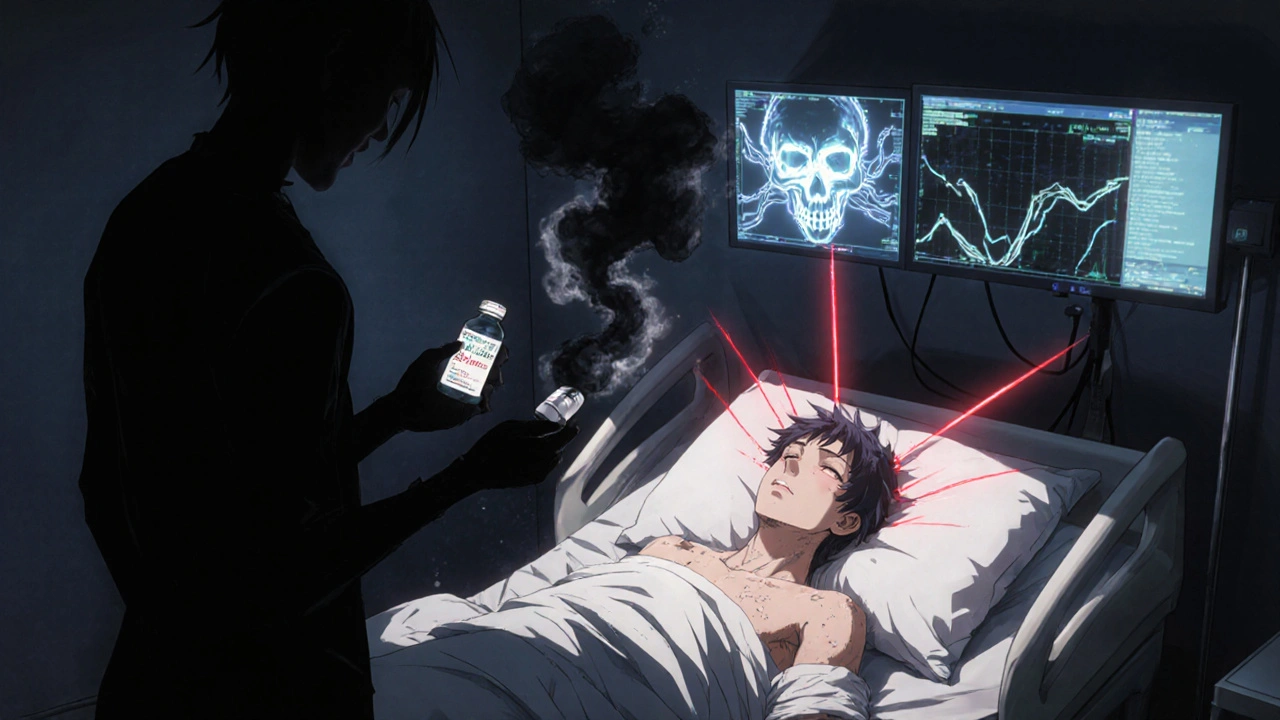
Both metoclopramide and antipsychotics work by blocking dopamine receptors in the brain. Metoclopramide, sold under brands like Reglan and Gimoti, was designed to help with nausea and slow stomach emptying. It does this by blocking dopamine in the gut and in a part of the brain called the chemoreceptor trigger zone. Antipsychotics like haloperidol, risperidone, and olanzapine block dopamine too-but in different brain areas to reduce psychosis. When you take both, you’re doubling down on dopamine blockade. The brain doesn’t know which drug is which. It just feels like dopamine has vanished. That’s when things start to go wrong. The nervous system gets confused. Muscles stiffen. Body temperature spikes. Mental clarity fades. This isn’t just side effects-it’s Neuroleptic Malignant Syndrome (NMS), a medical emergency with a 10-20% fatality rate if not treated immediately.What Neuroleptic Malignant Syndrome Looks Like
NMS doesn’t sneak up. It hits fast and hard. The classic signs are the four horsemen: high fever, rigid muscles, confused or changing mental state, and wild swings in blood pressure, heart rate, and sweating. These symptoms usually show up within days of starting or increasing either drug. Sometimes, it’s triggered by stopping an antipsychotic and then starting metoclopramide. The timing is unpredictable, but the outcome is never mild. Early signs can be mistaken for something else-maybe a flu, or a panic attack. But if someone on both drugs suddenly can’t move their arms, starts sweating uncontrollably, or becomes unresponsive, this isn’t anxiety. It’s NMS. Creatine kinase (CK) levels in the blood rise as muscles break down. Kidneys can fail. ICU admission is common. Recovery takes weeks. Some people never fully regain their motor control.Who’s at Highest Risk?
Not everyone who takes both drugs gets NMS. But certain people are sitting on a ticking clock:- People with kidney problems-metoclopramide builds up in the body if kidneys aren’t clearing it.
- Those with a genetic variation in the CYP2D6 enzyme-this is the main enzyme that breaks down metoclopramide. If it’s slow, the drug lingers longer and stronger.
- Patients already on high-dose antipsychotics or multiple CNS-acting drugs.
- Anyone who’s had movement disorders before-like tardive dyskinesia or parkinsonism from prior antipsychotic use.
- People with depression or Parkinson’s disease-metoclopramide is contraindicated in both, and many psychiatric patients have one or both.
Why Other Anti-Nausea Drugs Are Safer
If you need to control nausea or vomiting in someone on an antipsychotic, metoclopramide is not the answer. There are safer alternatives that don’t touch dopamine:- Ondansetron (Zofran)-blocks serotonin receptors. No dopamine interference. First-line choice.
- Dexamethasone-a steroid sometimes used for nausea in cancer patients. Safe with antipsychotics.
- Prochlorperazine-yes, it’s an antipsychotic too, but it’s used in low doses for nausea. Still risky. Avoid unless no other option.
- Promethazine (Phenergan)-blocks histamine, not dopamine. Safer than metoclopramide, but can cause sedation and low blood pressure.
The Hidden Trap: Drug Interactions You Can’t See
Metoclopramide doesn’t just interact with antipsychotics. It’s also broken down by the CYP2D6 enzyme. Many antipsychotics-like risperidone, haloperidol, and aripiprazole-are strong inhibitors of this enzyme. That means they don’t just add to the dopamine blockade. They make metoclopramide stick around longer, increasing its concentration in the brain by 30-50%. And it gets worse. Antidepressants like fluoxetine (Prozac) and paroxetine (Paxil) also block CYP2D6. So if someone is on an antipsychotic, an antidepressant, and metoclopramide? That’s a triple threat. The risk isn’t doubled. It’s multiplied. Even more concerning: some people don’t even know they’re taking metoclopramide. It’s often prescribed for "indigestion" or "bloating." Patients assume it’s harmless because it’s available as a generic. But the FDA added a Boxed Warning to metoclopramide in 2009-its strongest warning-for tardive dyskinesia. That warning exists because the drug causes irreversible brain damage in some people after just a few months. Add antipsychotics? The risk skyrockets.What Doctors Should Do-And What Patients Must Ask
If you’re a doctor prescribing an antipsychotic, never reach for metoclopramide. Check the patient’s full medication list. Ask: "Have they ever had a movement disorder?" "Are they on any other dopamine blockers?" "Do they have kidney disease?" If the answer is yes to any, choose ondansetron. Period. If you’re a patient taking an antipsychotic and your doctor prescribes metoclopramide, ask: "Is there a safer option?" "Could this cause movement problems or NMS?" "What happens if I take this with my other meds?" Don’t accept "It’s just for nausea." Push for alternatives. The FDA’s 2017 labeling update made this clear: metoclopramide should not be used for longer than 12 weeks. But many patients stay on it for months or years because no one checks in. That’s when tardive dyskinesia develops-uncontrollable lip-smacking, tongue thrusting, grimacing. And once it’s there, it rarely goes away.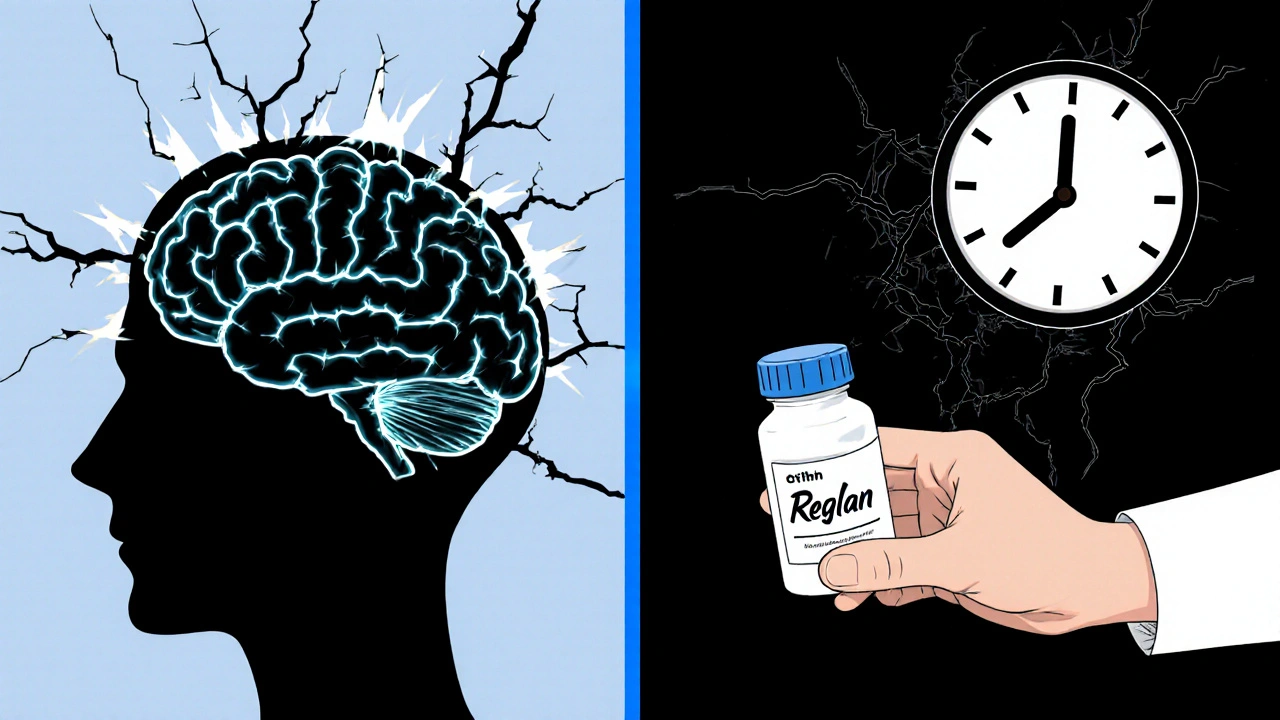
Real Cases, Real Consequences
A 68-year-old woman with schizophrenia on risperidone was given metoclopramide for nausea after chemotherapy. Within 48 hours, she developed a fever of 104°F, rigid limbs, and confusion. Her CK level was 12,000 (normal is under 200). She spent 11 days in the ICU. She survived-but never regained full motor control. Her family later found out metoclopramide was contraindicated with her antipsychotic. A 42-year-old man with bipolar disorder on olanzapine took metoclopramide for stomach pain. He developed muscle rigidity and collapsed at home. His wife called 911. He was pronounced dead on arrival. Autopsy confirmed NMS. His pharmacy had flagged the interaction-but the prescriber overruled it. These aren’t rare. They’re preventable.What to Do If You’re Already Taking Both
If you’re currently on metoclopramide and an antipsychotic:- Do not stop either drug suddenly. That can trigger withdrawal or rebound psychosis.
- Call your doctor or pharmacist immediately. Say: "I’m on metoclopramide and [name of antipsychotic]. I’ve heard this can cause NMS. What should I do?"
- Ask for a switch to ondansetron or another non-dopamine antiemetic.
- Monitor for symptoms: fever, stiff muscles, confusion, rapid heartbeat, sweating. If any appear, go to the ER. Say: "I think I have Neuroleptic Malignant Syndrome. I’m on metoclopramide and [antipsychotic]."
The Bottom Line
Metoclopramide and antipsychotics should never be prescribed together. The risk of NMS is real, sudden, and deadly. The science is clear. The warnings are loud. The alternatives exist. There is no safe dose, no safe duration, no safe patient when these two are combined. If you’re a patient, speak up. If you’re a provider, choose differently. Lives depend on it.Can metoclopramide cause Neuroleptic Malignant Syndrome on its own?
Yes, but it’s rare. Metoclopramide alone can cause NMS, especially at high doses or in people with kidney problems. But the risk jumps dramatically when combined with antipsychotics or other dopamine-blocking drugs. The FDA specifically warns against using it with those drugs because the combination is far more dangerous.
Is there a safe way to use metoclopramide with antipsychotics?
No. The FDA, clinical guidelines, and expert pharmacologists agree: there is no safe combination. Even low doses or short-term use carry unacceptable risk. The mechanism of action-dopamine blockade-is too similar. The potential for NMS is too high. Alternatives like ondansetron exist and should always be used instead.
What are the signs of tardive dyskinesia from metoclopramide?
Tardive dyskinesia shows up as uncontrollable, repetitive movements-often in the face and mouth. This includes lip-smacking, tongue protrusion, chewing motions, grimacing, or rapid eye blinking. It can also affect the arms, legs, or torso. These movements persist even when the person is at rest. Once it develops, it’s often permanent, even after stopping the drug. The FDA warns that risk increases with longer use and higher cumulative doses.
How long does it take for NMS to develop after taking both drugs?
NMS can develop within hours to days after starting or increasing the dose of either drug. In some cases, it appears after just one dose. It’s unpredictable. That’s why it’s so dangerous. Waiting for symptoms to appear before stopping the drugs is too late. Prevention is the only reliable strategy.
Are there any blood tests to confirm NMS?
Yes. The most common test is measuring creatine kinase (CK) levels, which rise sharply when muscles break down. Other tests include checking for high body temperature, abnormal liver enzymes, elevated white blood cell count, and abnormal electrolytes. But diagnosis is clinical-you don’t wait for lab results. If the symptoms match and the patient is on dopamine-blocking drugs, treat for NMS immediately.
Can I use metoclopramide if I’ve had NMS before?
Absolutely not. If you’ve ever had NMS from any drug-including metoclopramide, antipsychotics, or others-you should never take metoclopramide again. The risk of recurrence is extremely high, and the second episode is often more severe. Your medical record should clearly note this as a permanent contraindication.
amit kuamr
December 2, 2025 AT 23:10People still take Reglan for bloating like it's candy
Guess who gets the bill when the brain starts shutting down
Doctors don't even check med lists anymore
Just write the script and move on
Its not rocket science
Scotia Corley
December 3, 2025 AT 14:11The pharmacological rationale for avoiding concurrent administration of metoclopramide and dopaminergic antagonists is unequivocally supported by clinical evidence and regulatory guidance. The synergistic blockade of central dopamine D2 receptors precipitates a life-threatening neurotoxic cascade characterized by hyperthermia, muscular rigidity, and autonomic instability. This is not a theoretical concern-it is a documented cause of mortality in both inpatient and outpatient settings.
elizabeth muzichuk
December 4, 2025 AT 15:40My cousin died from this. They gave him Reglan after his antipsychotic dose was increased. He was fine one day, then his body turned to stone. They said it was "just a bad reaction." But I know. They didn't even check his meds. The pharmacy flagged it. The doctor ignored it. Now he's gone. And they still prescribe it. I'm not over it. I never will be.
Debbie Naquin
December 5, 2025 AT 08:04The dopaminergic antagonism cascade induced by concomitant metoclopramide and antipsychotic exposure represents a pharmacodynamic synergy that overwhelms homeostatic buffering mechanisms in the basal ganglia and hypothalamus. The resultant neuroleptic malignant syndrome is not merely an adverse event-it is a failure of neuromodulatory equilibrium. The CYP2D6 polymorphism exacerbates this by reducing first-pass metabolism, increasing plasma half-life and CNS penetration. This is not a drug interaction-it's a systemic collapse waiting for a trigger.
Karandeep Singh
December 6, 2025 AT 12:37Mary Ngo
December 7, 2025 AT 09:29Have you ever wondered if this is all part of a bigger pharmaceutical cover-up? Metoclopramide has been on the market for decades. The FDA didn’t issue the warning until patients started dying in droves. Why? Because drug companies fund research, influence guidelines, and silence whistleblowers. They don’t care about you-they care about profit. And now they’re pushing ondansetron like it’s the holy grail. But what if that’s just the next trap? Who’s really behind these "safe" alternatives?
James Allen
December 9, 2025 AT 00:28Look I get it, the science is solid
But let’s be real-most people in this country don’t even know what dopamine is
They just want their stomach to stop hurting
And if a $5 generic fixes it, they’re gonna take it
Doctors are overworked, pharmacies are automated, and patients aren’t educated
So yeah, people are gonna die
And it’s not because they’re dumb
It’s because the system is broken
Kenny Leow
December 10, 2025 AT 02:07Been a nurse for 18 years. Seen NMS twice. Both times, metoclopramide was given without checking med lists.
One patient was a 72-year-old veteran on haloperidol for PTSD. He got Reglan for chemo nausea. Got fever, rigidity, CK over 20k.
He lived. But he never walked right again.
We need better alerts. We need mandatory med reviews. We need to stop treating patients like numbers.
❤️
Kelly Essenpreis
December 10, 2025 AT 12:55