
QT Prolongation: Medications That Raise Arrhythmia Risk
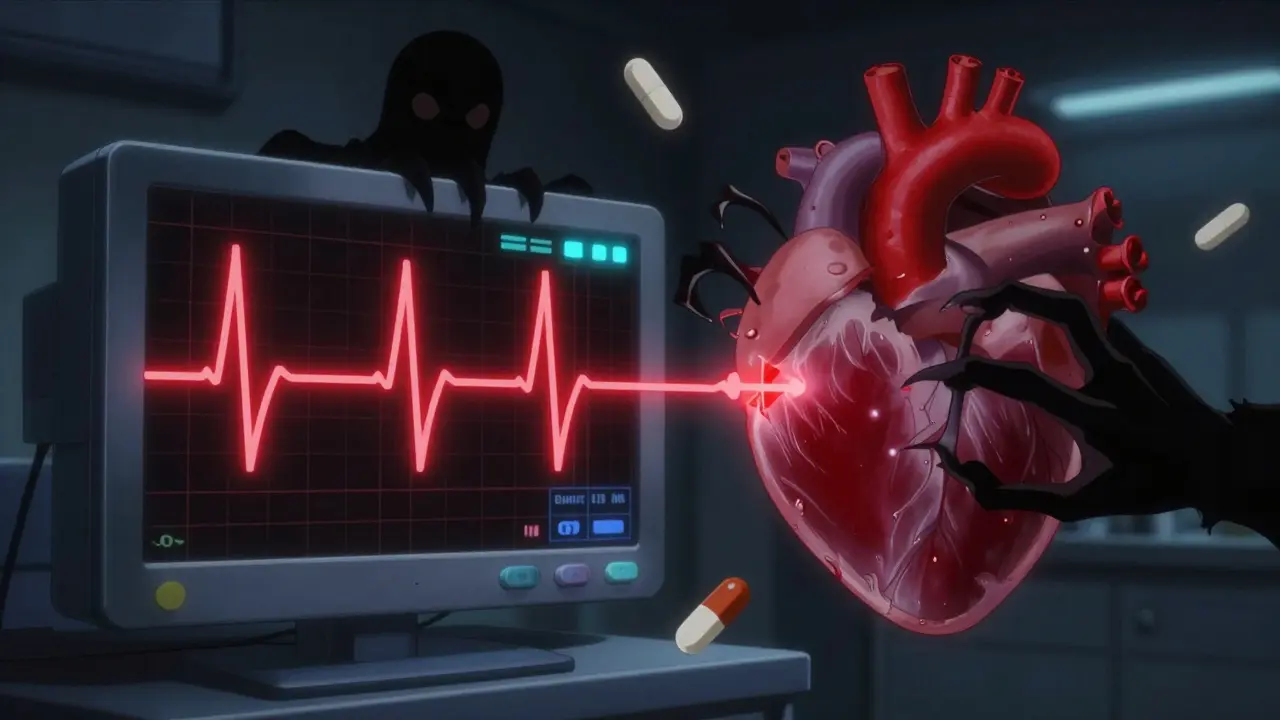
When your heart beats, it follows a precise electrical rhythm. That rhythm shows up on an ECG as a series of waves - P, Q, R, S, T - and the time between the start of the Q wave and the end of the T wave is called the QT interval. If that interval stretches too long, it’s called QT prolongation. It doesn’t always cause symptoms, but when it does, the consequences can be deadly. The heart can slip into a chaotic rhythm called torsades de pointes (TdP), which can turn into ventricular fibrillation and kill you within minutes. This isn’t rare. It’s one of the most preventable causes of sudden cardiac death linked to medications.
What Actually Causes QT Prolongation?
Most of the time, QT prolongation isn’t genetic. It’s caused by drugs. These medications interfere with a specific ion channel in heart cells called the hERG channel. This channel lets potassium flow out of the cell after each heartbeat, helping the heart reset. When a drug blocks this channel, the heart takes longer to recharge. That’s the QT prolongation. The longer the delay, the higher the chance of a dangerous arrhythmia.
Not all drugs are equal in this risk. Some are designed to prolong repolarization - like sotalol and dofetilide - to treat existing arrhythmias. But even these can backfire. Sotalol, for example, causes torsades in 2-5% of patients. Others, like amiodarone, also prolong QT but carry less risk because they block multiple channels, not just hERG. The real danger comes from drugs you wouldn’t expect: antibiotics, antidepressants, antipsychotics, and even anti-nausea pills.
Drugs with Known QT Risks
There are over 200 medications linked to QT prolongation, according to crediblemeds.org. They’re grouped by risk level: Known Risk, Possible Risk, and Conditional Risk. Here are the most common ones you’ll actually see in practice:
- Antibiotics: Clarithromycin, erythromycin, and azithromycin. Erythromycin can stretch QT by 15-25 ms - especially when taken with other drugs that slow its metabolism.
- Antifungals: Fluconazole. Even at standard doses, it’s a known culprit, especially in older adults.
- Antipsychotics: Haloperidol, ziprasidone, thioridazine. Ziprasidone carries a black box warning for ventricular arrhythmias. Haloperidol is still widely used in emergency departments - and still dangerous if given with ondansetron.
- Antiemetics: Ondansetron (Zofran). One of the top drugs linked to TdP in hospital settings. A single IV dose can trigger it in vulnerable patients.
- Antidepressants: Citalopram and escitalopram. The FDA capped citalopram at 40 mg daily (20 mg for those over 60) after clear evidence of dose-dependent QT prolongation.
- Opioid replacement: Methadone. Risk spikes above 100 mg/day. Many addiction clinics now require baseline ECGs and monthly monitoring.
- Antiarrhythmics: Quinidine, procainamide, dofetilide, ibutilide. These are the highest-risk category. Quinidine causes TdP in about 6% of patients.
- Oncology drugs: Vandetanib, nilotinib, sunitinib. Newer cancer drugs are increasingly flagged for QT risk - 44% of tyrosine kinase inhibitors now carry warnings.
What’s alarming is how often these are combined. A 2020 analysis of FDA reports found 68% of TdP cases involved two or more QT-prolonging drugs. A 65-year-old woman gets azithromycin for a chest infection and ondansetron for nausea. Her QTc jumps from 440 ms to 530 ms in 24 hours. That’s not a fluke - it’s a textbook case.
Who’s Most at Risk?
It’s not just about the drug. It’s about the person taking it. Women are at higher risk - about 70% of documented TdP cases occur in women. Why? Estrogen slows potassium channel function. Postmenopausal women and those in the postpartum period are especially vulnerable.
Age matters too. People over 65 have slower drug metabolism and often take multiple meds. Electrolyte imbalances - low potassium, low magnesium, low calcium - make the heart even more sensitive. Heart disease, especially heart failure or prior heart attack, adds another layer of risk. Genetics play a role too. About 30% of drug-induced TdP cases happen in people with subtle hERG gene variants they didn’t know about.
And here’s the kicker: QT prolongation doesn’t always mean danger. Many people take a drug that slightly prolongs QT and never have a problem. The real red flag is when the corrected QT interval (QTc) hits 500 ms or more - or increases by more than 60 ms from baseline. At that point, the risk of torsades triples to fivefold.
How Doctors Spot It - and Miss It
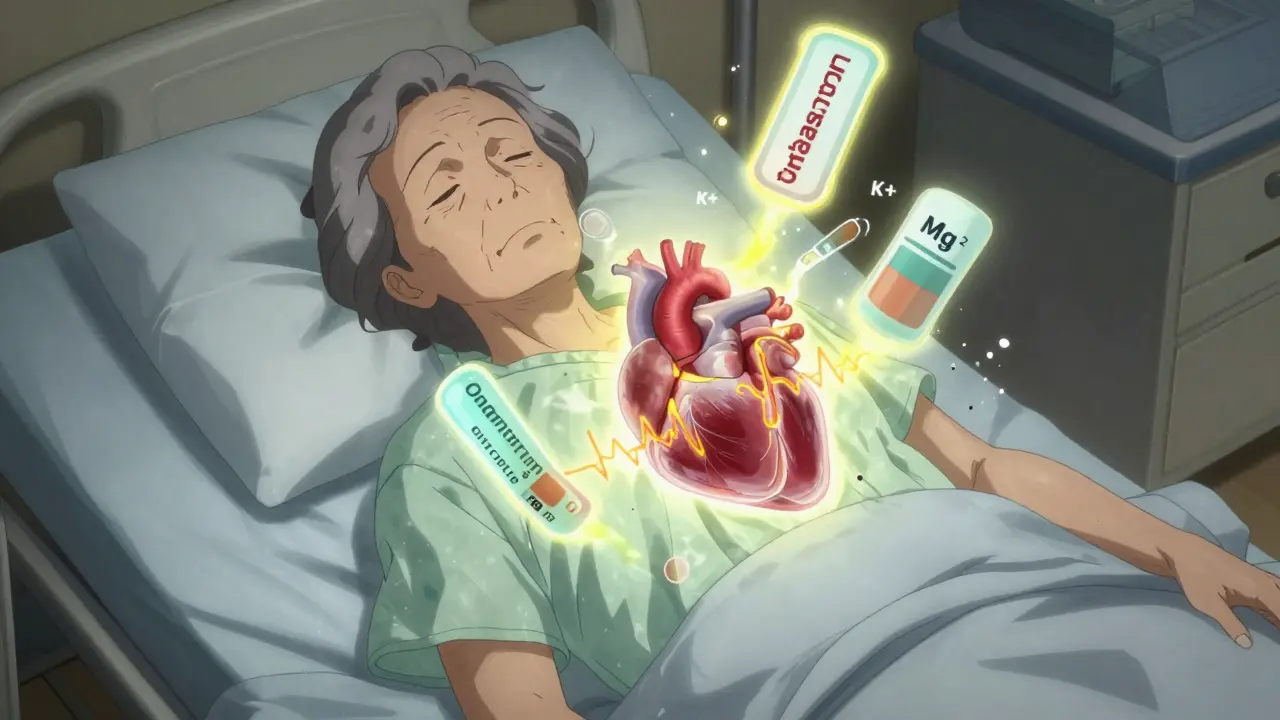
ECGs are the tool. But measuring QT isn’t simple. The most common method, Bazett’s formula, corrects for heart rate by dividing QT by the square root of the RR interval. But it’s flawed. At slow heart rates (under 50 bpm), it overcorrects. At fast rates (over 90 bpm), it undercorrects. Many clinicians still use it anyway - and get it wrong.
Some hospitals use automated ECG machines that flag QT prolongation. But those algorithms aren’t perfect. They miss subtle changes. A 2019 study found that hospital staff needed 4-6 hours of training just to read QT intervals correctly. Common mistakes? Ignoring drug half-lives - if you check the ECG too soon after giving a drug, you might miss the peak effect. Or failing to recheck after a dose increase.
And here’s the biggest gap: routine screening. The European Society of Cardiology says baseline ECGs are essential before starting high-risk drugs. But many doctors don’t do it. Why? They think the risk is too low. And yes - for a healthy 30-year-old on a single low-risk drug, the chance of TdP is less than 1 in 10,000 per year. But in a 70-year-old woman on methadone, citalopram, and fluconazole? That risk jumps dramatically. The problem isn’t the drug. It’s the combination, and the lack of screening.
What Should You Do?
If you’re prescribed a new medication, ask: Could this affect my heart rhythm? If you’re on multiple drugs, especially for mental health, pain, or infection, ask for a baseline ECG. If you’re over 65, female, have heart disease, or take electrolyte-lowering diuretics - you’re higher risk. Don’t wait for symptoms. TdP often hits without warning.
For doctors: Always check crediblemeds.org before prescribing. Use the site’s risk categories. Avoid combining drugs from the same risk group. Check electrolytes before and after starting high-risk meds. Recheck ECG within 3-7 days of starting or increasing the dose. If QTc exceeds 500 ms or rises more than 60 ms from baseline - stop the drug unless the benefit clearly outweighs the risk.
Hospitals are starting to use electronic alerts that flag dangerous combinations. One study showed these systems cut inappropriate prescribing by 58%. That’s huge. But not every clinic has them. You have to be your own advocate.

The Bigger Picture
The pharmaceutical industry is changing. The FDA, EMA, and Japan’s PMDA launched the CiPA initiative in 2013 to move beyond just measuring QT intervals. Now, new drugs are tested on human stem cell-derived heart cells and modeled in computer simulations to predict arrhythmia risk before they even reach patients. This has already caused 22 drugs to be dropped in development since 2016 - each failure costing over $2 billion. It’s expensive, but it saves lives.
Genetics is the next frontier. The 2023 QTGEN study identified 23 gene variants that explain 18% of why some people are more sensitive to QT-prolonging drugs. In the future, a simple DNA test might tell you if you’re at higher risk before you even take your first pill.
Meanwhile, AI is stepping in. A 2024 study showed an algorithm could predict TdP risk with 89% accuracy by analyzing tiny changes in ECG waveforms - things the human eye can’t see. That’s not science fiction. It’s coming to clinics soon.
For now, the best defense is awareness. Know the drugs. Know your risk. Ask for an ECG. Don’t assume it’s fine because you feel okay. QT prolongation doesn’t cause dizziness or chest pain. It just waits - until your heart skips a beat… and doesn’t recover.
When to Seek Help
If you’re on a QT-prolonging drug and suddenly feel:
- Heart racing or fluttering
- Dizziness or lightheadedness
- Fainting or near-fainting
- Unexplained fatigue or confusion
Get an ECG immediately. Don’t wait. Torsades de pointes can come and go in seconds. If you collapse, call emergency services. Time is everything.
Can a normal ECG rule out QT prolongation risk?
No. A normal ECG doesn’t mean you’re safe. QT prolongation can develop after starting a drug, especially if you have risk factors like low potassium, older age, or take multiple medications. That’s why doctors recommend a baseline ECG before starting high-risk drugs and a follow-up within 3-7 days. Even if your first ECG is normal, the drug’s effect may build up over time.
Is QT prolongation always dangerous?
Not always. Many people have mildly prolonged QT intervals without any symptoms or events. The risk spikes when QTc exceeds 500 milliseconds or increases by more than 60 ms from baseline. That’s when the chance of torsades de pointes jumps significantly. Risk also increases with age, female sex, heart disease, and taking more than one QT-prolonging drug.
Can I take ondansetron if I’m on an antidepressant?
Be very cautious. Ondansetron and many antidepressants - especially citalopram, escitalopram, and some tricyclics - both prolong QT. Combining them can push your QTc over 500 ms, especially if you’re older, female, or have low electrolytes. This combination is one of the most common triggers of drug-induced torsades. Always check with your doctor or pharmacist before mixing these drugs.
Does caffeine or alcohol affect QT prolongation?
Caffeine doesn’t directly prolong QT, but it can trigger arrhythmias in people already at risk. Alcohol, especially in large amounts or during withdrawal, can lower potassium and magnesium - two electrolytes critical for heart rhythm. Low levels make QT prolongation more dangerous. If you’re on a high-risk medication, avoid binge drinking and limit caffeine.
Are there any safe alternatives to QT-prolonging drugs?
Yes, often. For nausea, metoclopramide is a common alternative to ondansetron - though it also carries some QT risk, it’s lower. For depression, sertraline and fluoxetine have minimal QT effects compared to citalopram. For infections, amoxicillin or doxycycline are safer than azithromycin or clarithromycin. Always ask your doctor: "Is there a drug with similar benefits but less heart risk?"
Michael Burgess
January 3, 2026 AT 03:17erica yabut
January 4, 2026 AT 10:02Vincent Sunio
January 5, 2026 AT 03:13Shruti Badhwar
January 6, 2026 AT 18:39Tiffany Channell
January 8, 2026 AT 16:31Neela Sharma
January 9, 2026 AT 05:47Liam Tanner
January 10, 2026 AT 02:17Hank Pannell
January 10, 2026 AT 21:02Wren Hamley
January 11, 2026 AT 23:20Angela Goree
January 13, 2026 AT 19:05innocent massawe
January 15, 2026 AT 06:42Angela Fisher
January 16, 2026 AT 01:23Sarah Little
January 16, 2026 AT 14:09