
SSRIs and NSAIDs: Elevated GI Bleeding Risk and How to Prevent It

SSRI and NSAID Risk Calculator
Risk Assessment Tool
This tool helps you understand your personal risk of gastrointestinal bleeding when taking both an SSRI and an NSAID. It's based on clinical evidence and is not a substitute for medical advice.
When you’re taking an SSRI for depression or anxiety and also need pain relief from an NSAID like ibuprofen or naproxen, you might not realize you’re putting yourself at serious risk. The combination doesn’t just add side effects-it multiplies them. SSRIs and NSAIDs together can sharply raise your chance of a dangerous gastrointestinal (GI) bleed, even if you’ve never had a stomach ulcer before. This isn’t a rare outlier. It’s a well-documented, clinically significant interaction that affects millions of people worldwide.
How SSRIs and NSAIDs Work Together to Cause Bleeding
SSRIs-drugs like sertraline, fluoxetine, and citalopram-help balance brain chemicals by blocking serotonin reuptake. But serotonin isn’t just in your brain. Platelets in your blood rely on it to clump together and stop bleeding when you get a cut or scrape. When SSRIs reduce serotonin levels in platelets, your blood can’t clot as quickly or effectively. That’s why even minor injuries can lead to prolonged bleeding.
NSAIDs like ibuprofen, naproxen, and diclofenac work by blocking enzymes called COX-1 and COX-2. COX-1 is especially important for protecting your stomach lining. It helps produce mucus and bicarbonate that shield your stomach from acid, and it keeps blood flowing to the stomach wall so it can repair itself. When NSAIDs shut down COX-1, your stomach becomes vulnerable. The acid eats away at the lining, creating tiny sores that can turn into ulcers-and ulcers bleed.
Put them together, and you get a one-two punch. SSRIs slow your blood’s ability to clot. NSAIDs create the opening for bleeding. The result? A dramatic spike in upper GI bleeding risk. Studies show that using both drugs at the same time increases your risk by 75% compared to using either one alone. That’s not a small increase. It’s the kind of risk that lands people in the ER with black, tarry stools or vomiting blood.
Who’s at the Highest Risk?
This isn’t a risk that affects everyone equally. Certain people face much higher danger:
- People over 65-aging reduces stomach lining resilience and kidney function, making it harder to clear drugs and repair damage.
- Those with a history of ulcers or GI bleeding-once you’ve had one bleed, your chances of another jump significantly.
- Patients on blood thinners-like warfarin, apixaban, or low-dose aspirin-because these add yet another layer of clotting disruption.
- People taking high-dose or long-term NSAIDs-daily use for arthritis or chronic pain is especially dangerous when paired with an SSRI.
- Those with H. pylori infection-this common stomach bacteria weakens the gut lining further, making bleeding far more likely.
Even if you’re young and healthy, if you’re on both medications for months or years, the risk builds up silently. Many people don’t realize they’re at risk until they start passing dark stools or feel dizzy from blood loss.
Which SSRIs and NSAIDs Are Riskiest?
Not all SSRIs are created equal when it comes to bleeding risk. Most share the same mechanism, so the difference is small-but measurable. Studies suggest that fluoxetine and paroxetine may carry slightly higher bleeding risk than escitalopram or sertraline, though the data isn’t definitive enough to recommend one over another solely for safety.
NSAIDs vary much more. Here’s how they stack up:
| NSAID | Risk Level | Relative Risk (OR) |
|---|---|---|
| Diclofenac | High | 3.5 |
| Naproxen | High | 3.2 |
| Piroxicam | Very High | 4.1 |
| Ketorolac | Very High | 4.8 |
| Ibuprofen | Lower | 2.1 |
| Celecoxib (COX-2 inhibitor) | Lowest | 1.16 |
Celecoxib is the safest NSAID option for GI bleeding risk. It avoids COX-1 almost entirely, so it doesn’t strip away your stomach’s natural defenses. But it’s not risk-free-especially if you’re also on an SSRI. Even celecoxib + SSRI carries some added risk, though much less than other NSAIDs.

What You Can Do: Prevention Strategies
If you’re on both an SSRI and an NSAID, you don’t have to accept this risk as inevitable. There are clear, evidence-backed ways to protect yourself.
1. Ask: Do You Even Need the NSAID?
For many people, especially those with chronic pain, there are safer alternatives. Acetaminophen (paracetamol) doesn’t affect platelets or stomach lining. It’s not as strong for inflammation, but for general pain-headaches, muscle aches, arthritis flare-ups-it often works just fine. Talk to your doctor about whether switching from ibuprofen or naproxen to acetaminophen is possible.
2. Use a Proton Pump Inhibitor (PPI)
If you absolutely need both medications, the single most effective step is adding a PPI. Drugs like omeprazole, esomeprazole, or pantoprazole dramatically reduce stomach acid and help your lining heal. Studies show that taking a daily PPI cuts the excess bleeding risk from SSRI-NSAID use by about 70%. That means your risk drops to nearly the same level as someone taking an NSAID alone.
Standard dose: omeprazole 20 mg once daily. Take it before breakfast. Don’t skip doses. Many patients stop taking PPIs after a few weeks because they feel fine-but the protection needs to be continuous.
3. Get Tested for H. pylori
This bacteria infects nearly half the world’s population and is a leading cause of ulcers. If you’re planning to stay on both an SSRI and NSAID long-term, ask for a breath test, stool test, or blood test for H. pylori. If it’s positive, a simple 10-day antibiotic course can eliminate it-and cut your bleeding risk in half.
4. Consider Alternative Antidepressants
Not all antidepressants affect platelets. Bupropion (Wellbutrin) doesn’t interfere with serotonin reuptake in platelets, so it doesn’t raise bleeding risk. Mirtazapine and vortioxetine also have minimal platelet effects. If your depression is stable and you’re on a high-risk NSAID, switching antidepressants might be a smarter move than adding lifelong PPIs.
Why Doctors Often Miss This
Here’s the frustrating part: most doctors don’t routinely screen for this interaction. A 2021 survey of 1,200 primary care providers found that fewer than 40% asked patients about NSAID use when prescribing SSRIs. Only 22% prescribed PPIs to patients on both drugs. Patients rarely hear about the risk-68% said they weren’t warned at all.
It’s not that doctors are careless. It’s that this interaction isn’t flashy. It doesn’t cause immediate side effects like dizziness or nausea. It builds slowly. A patient takes ibuprofen for back pain for months, then starts sertraline for anxiety. Six months later, they pass black stool and end up in the hospital. By then, it’s too late.
Health systems are starting to catch on. Mayo Clinic and Cleveland Clinic now have automated alerts in their electronic records that pop up when a doctor tries to prescribe an SSRI and NSAID together. Since 2020, Cleveland Clinic saw a 42% drop in GI bleeding hospitalizations among patients on both drugs. That’s proof that awareness saves lives.
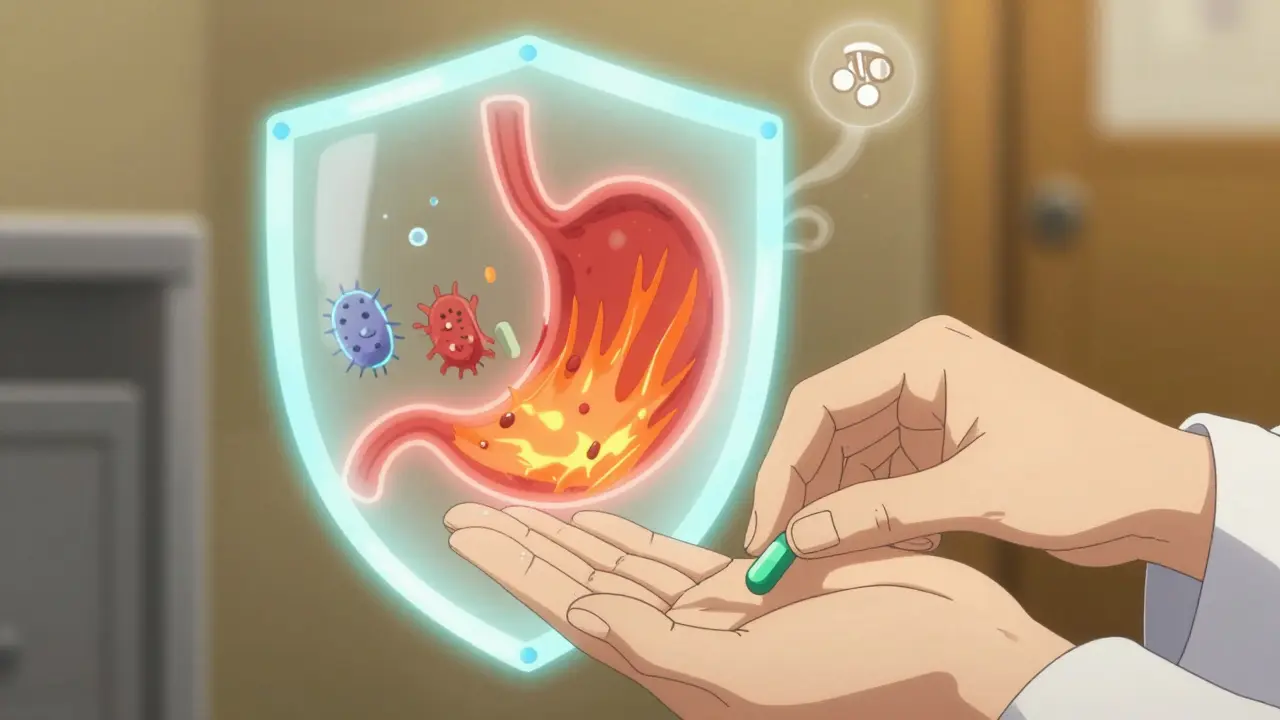
What to Watch For: Early Signs of Bleeding
You don’t need to wait until you’re vomiting blood. Watch for these warning signs:
- Black, tarry stools (melena)-this is digested blood
- Bloody or coffee-ground-looking vomit
- Unexplained fatigue, dizziness, or shortness of breath (signs of anemia from slow blood loss)
- Upper abdominal pain that doesn’t go away
If you notice any of these, don’t wait. Go to urgent care or the ER. GI bleeding can become life-threatening fast.
The Bottom Line
SSRIs and NSAIDs are both essential medicines. But when used together without protection, they create a dangerous combo that’s more common than you think. Millions of people are on both right now, and many don’t know they’re at risk.
You have power here. If you’re taking one or both:
- Ask your doctor: "Do I really need both?"
- Ask: "Should I be on a PPI?"
- Ask: "Have I been tested for H. pylori?"
- Ask: "Is there a safer antidepressant or pain reliever for me?"
This isn’t about avoiding treatment. It’s about making it safer. With the right steps, you can manage your mental health and your pain without putting your stomach at risk.
Can I take ibuprofen with sertraline?
You can, but it increases your risk of upper GI bleeding by about 75%. If you need pain relief while on sertraline, talk to your doctor about switching to acetaminophen or adding a proton pump inhibitor like omeprazole. Never take ibuprofen daily without discussing this risk.
Do all SSRIs increase bleeding risk equally?
Most SSRIs have similar effects on platelets because they all block serotonin reuptake. However, some studies suggest escitalopram and sertraline may carry slightly lower bleeding risk than fluoxetine or paroxetine. The difference is small, so switching SSRIs solely for bleeding risk isn’t usually recommended unless you’re also on a high-risk NSAID.
Is celecoxib safer than ibuprofen with an SSRI?
Yes. Celecoxib is a COX-2 inhibitor and doesn’t damage the stomach lining like traditional NSAIDs. Studies show it has the lowest GI bleeding risk among NSAIDs-even when combined with SSRIs. However, it’s not zero risk, and it may not be suitable for everyone due to heart safety concerns. Always discuss alternatives with your doctor.
How long should I take a PPI with SSRIs and NSAIDs?
If you’re taking both medications long-term, you should take a PPI daily as long as you’re on the combination. Stopping the PPI-even if you feel fine-can bring your bleeding risk back up. For short-term NSAID use (e.g., a week for a sprain), a PPI isn’t usually needed. But for chronic use, ongoing protection is essential.
Can I switch from an SSRI to another antidepressant to avoid this risk?
Yes. Bupropion (Wellbutrin) and mirtazapine don’t affect platelet serotonin and carry little to no GI bleeding risk. If you’re on a high-risk NSAID long-term and have struggled with depression or anxiety, switching antidepressants might be a better option than lifelong PPI use. Always make this change under medical supervision.
Next Steps for Patients
If you’re on an SSRI and NSAID together:
- Review your medications with your doctor or pharmacist. Bring a full list.
- Ask whether you need the NSAID at all. Could acetaminophen work?
- If you must keep both, ask about a PPI. Start with omeprazole 20 mg daily.
- Request an H. pylori test if you haven’t had one in the last 2 years.
- Watch for black stools, vomiting blood, or unexplained fatigue. If you see any, seek care immediately.
Medications save lives-but they can also harm if used carelessly. You deserve to manage your mental health and pain without risking your digestive system. Don’t wait for a crisis to speak up. Ask the questions now. Your gut will thank you.
Allison Priole
March 23, 2026 AT 05:26Casey Tenney
March 24, 2026 AT 02:20Sandy Wells
March 24, 2026 AT 12:50Bryan Woody
March 26, 2026 AT 02:38Chris Dwyer
March 27, 2026 AT 06:28Timothy Olcott
March 27, 2026 AT 18:46Jackie Tucker
March 28, 2026 AT 17:18Thomas Jensen
March 29, 2026 AT 16:43matthew runcie
March 30, 2026 AT 09:30trudale hampton
March 31, 2026 AT 16:47Shaun Wakashige
April 2, 2026 AT 15:17Paul Cuccurullo
April 4, 2026 AT 04:51Solomon Kindie
April 5, 2026 AT 21:52