
Hirsutism in PCOS: How Antiandrogens Help Reduce Unwanted Hair
When you have PCOS, unwanted facial or body hair isn’t just a cosmetic concern-it’s a constant reminder of hormonal imbalance. About 70-80% of women with PCOS experience hirsutism: thick, dark hair growing where it shouldn’t-on the chin, upper lip, chest, or back. It’s not just about appearance. For many, it brings shame, anxiety, and hours spent shaving, waxing, or threading. The good news? There are proven medical options to slow it down. But they’re not quick fixes. And they’re not for everyone.
Why Antiandrogens Are Used for PCOS Hair Growth
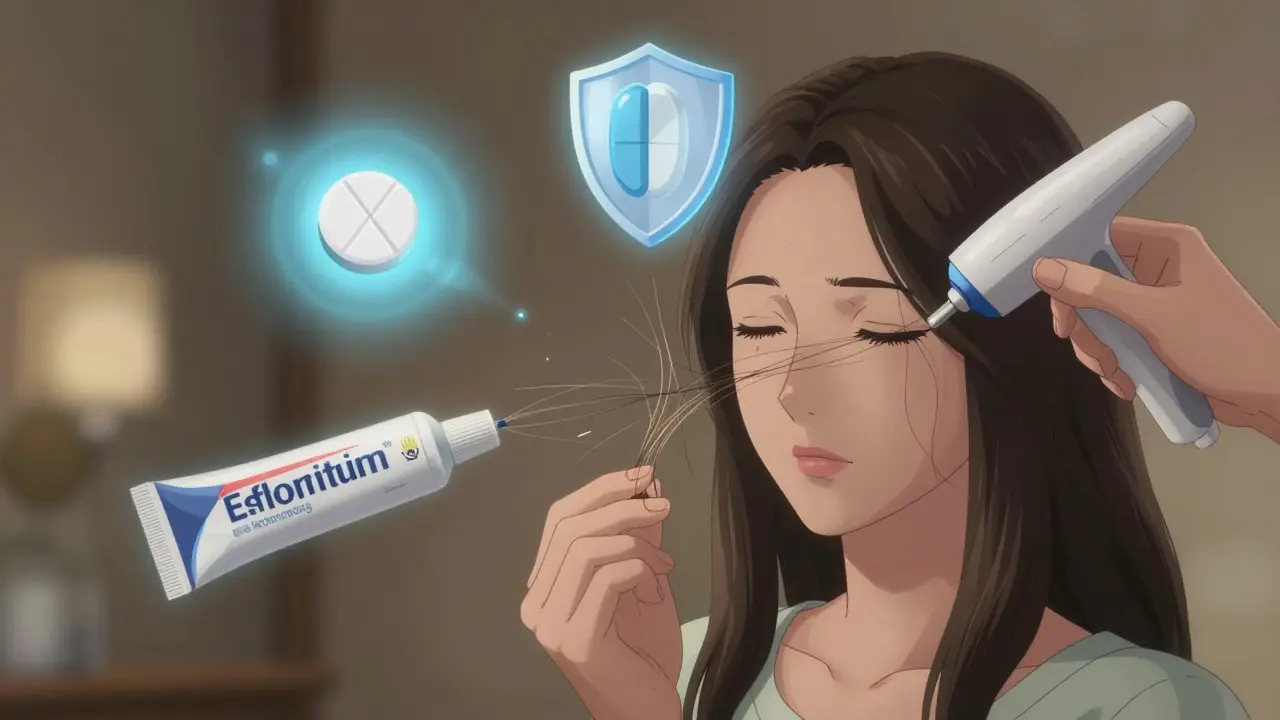
Hirsutism in PCOS happens because your body makes too many androgens-male hormones like testosterone. Even if your levels are only slightly high, your hair follicles might be extra sensitive. These hormones turn fine, light vellus hairs into thick, dark terminal hairs. Antiandrogens don’t stop hair growth completely. They block the signal that tells follicles to grow coarse hair. The most common antiandrogens used are spironolactone, finasteride, and eflornithine cream. Each works differently. Spironolactone blocks androgen receptors and reduces how much testosterone turns into its stronger form, DHT. Finasteride stops that conversion too, but only in certain tissues like skin and scalp. Eflornithine cream works on the hair follicle itself, slowing down the enzyme that helps hair grow.They’re Not First-Line Treatment-Here’s Why
Before you think about antiandrogens, your doctor will likely suggest a combined oral contraceptive pill (COCP). Why? Because COCPs lower overall androgen production and are safer for long-term use. Studies show they reduce hirsutism by about 30-50% over 6-12 months. Antiandrogens don’t beat them-they work alongside them when COCPs aren’t enough. The 2023 International Evidence-based Guideline for PCOS made this clear: antiandrogens should only be considered after six months of consistent COCP use with little improvement. They’re not a replacement. They’re a backup plan. And even then, they’re only used if you can’t take COCPs due to blood clots, migraines, or high blood pressure.Spironolactone: The Most Common Choice
Spironolactone is the go-to oral antiandrogen for hirsutism. It’s cheap, generic, and effective. Most women start at 25-50 mg per day, then slowly increase to 100-200 mg if needed. It takes 6-12 months to see real changes. Some notice less chin hair after 4 months, but full results take up to two years. Side effects are common. About 30-40% of users report dizziness, fatigue, or irregular periods. It can also raise potassium levels, so if you have kidney issues, your doctor will monitor you closely. And because it can harm a developing fetus, you must use two forms of birth control while taking it. That’s not optional-it’s a safety rule backed by the FDA. A Reddit user named PCOSWarrior2020 shared: “After 8 months on Yaz with no change, I added 100mg spironolactone. At 6 months, my mFG score dropped from 18 to 11. It’s noticeable-but not gone.” That’s typical. It’s not magic. It’s slow, steady progress.Finasteride: A More Targeted Option
Finasteride is often used for male pattern baldness, but it’s also effective for hirsutism. It blocks only one type of enzyme (5-alpha-reductase type II), which means fewer systemic side effects than spironolactone. Doses are low: 2.5-5 mg daily. It’s especially helpful for women who can’t tolerate spironolactone’s dizziness or menstrual changes. One user, HirsuteHannah, switched from 200mg spironolactone to finasteride: “It worked better and didn’t mess with my cycle-but it cost $85 a month out of pocket.” That’s a real barrier. Finasteride isn’t always covered by insurance for hirsutism, even though it’s FDA-approved for other uses. There’s a catch: finasteride has a black box warning from the FDA for possible long-term sexual side effects. While rare in women, it’s still something to discuss with your doctor before starting.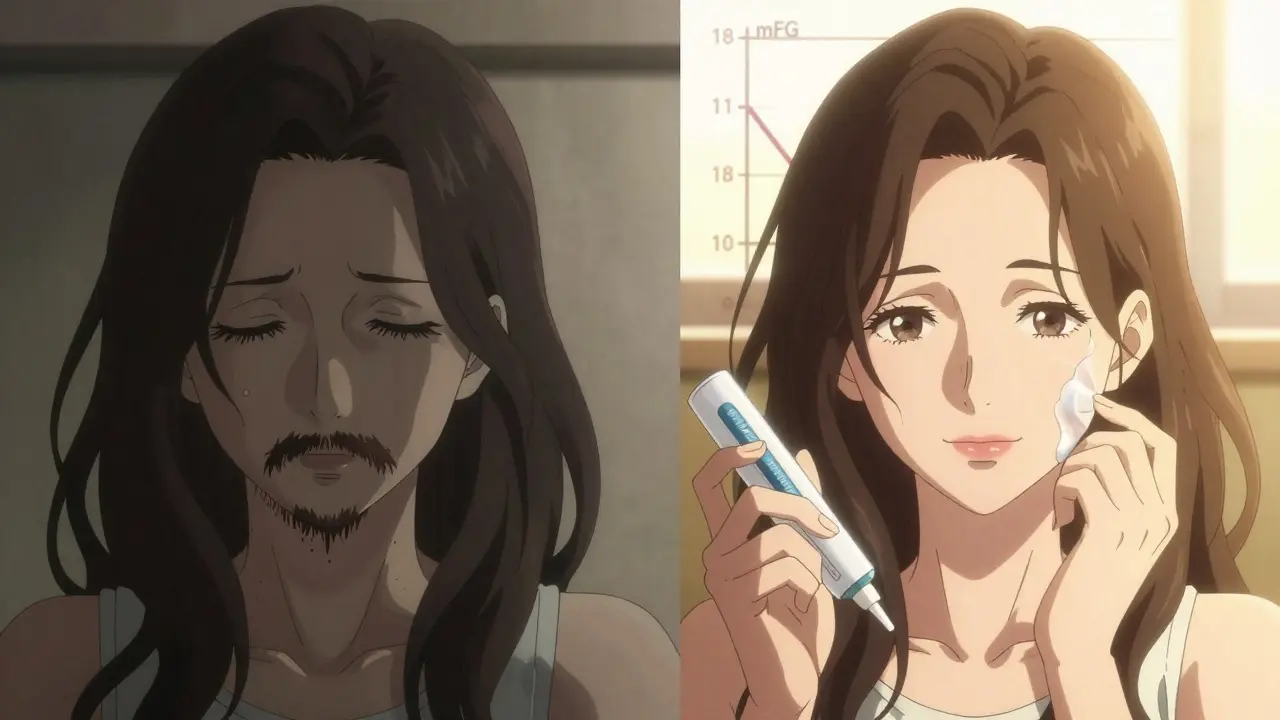
Eflornithine Cream: A Topical Alternative
If you don’t want pills or can’t take them, eflornithine cream (brand name Vaniqa) is an option. It’s applied twice daily to affected areas. It doesn’t remove hair-it slows new growth. In clinical studies, 60% of users saw less hair after six months. It’s not a miracle. You still need to shave or use laser. But when paired with laser treatment, eflornithine boosts results by 35% compared to laser alone. That’s huge for someone tired of constant hair removal. The downside? Cost. A 30-tube pack runs around $245 in the U.S. Insurance often won’t cover it for hirsutism. And it doesn’t work for everyone. Reviews on RealSelf show only 49% of users felt it was “worth it.”What Doesn’t Work (Anymore)
Flutamide was once used for hirsutism-but it was pulled from use because of serious liver damage. Cyproterone acetate is banned in many countries due to meningioma risk. These aren’t safe options anymore. Metformin, often prescribed for insulin resistance in PCOS, doesn’t help much with hair growth. One 2023 meta-analysis found it had no significant edge over lifestyle changes alone for reducing hirsutism. So if your doctor pushes metformin for hair, ask for evidence.Combination Therapy: The Real Game-Changer
The most effective approach isn’t one drug-it’s a mix. For moderate to severe hirsutism, the future is combination therapy:- COCP to lower overall androgens
- Spironolactone or finasteride to block remaining androgen effects
- Eflornithine cream to slow hair growth locally
- Laser or IPL to remove existing coarse hairs
Anu radha
December 17, 2025 AT 18:55I just started spironolactone last month and my chin hair feels softer already. Not gone, but not as angry-looking. Took me 3 years to stop feeling ashamed of it. You’re not alone.
Sachin Bhorde
December 19, 2025 AT 08:17Yo, so spironolactone is basically an aldosterone antagonist that also moonlights as a competitive androgen receptor blocker-super useful for downregulating 5-alpha-reductase activity in dermal papillae. But yeah, it’s a grind. 6-12 mos minimum. Pro tip: get your K+ checked monthly. And don’t skip the birth control-FDA ain’t playin’.
Evelyn Vélez Mejía
December 20, 2025 AT 22:07There is a quiet dignity in the slow unraveling of shame. We are taught to see hirsutism as a flaw-a deviation from some unspoken feminine ideal. But what if it is not a flaw, but a signature? A biological poem written in keratin and androgen? The drugs do not erase us-they merely soften the edges of a world that refuses to accommodate our biology. To take spironolactone is not to surrender to medicine, but to reclaim agency over the narrative written on our skin.
Nishant Desae
December 22, 2025 AT 16:02Hey everyone, just wanted to say I’ve been on finasteride for 10 months now and honestly? It’s been a game-changer for me. I used to get so self-conscious about the hair on my upper lip-like, I’d avoid smiling in photos. Now, it’s just… lighter. Not gone, but manageable. And no crazy mood swings like with spiro. Yeah, it’s pricey, but I found a Canadian pharmacy that ships and it cut my cost in half. Also, if you’re on COCPs already, stick with them-they’re the backbone. Don’t rush into antiandrogens unless you’ve given the pill a real shot. And please, if you’re thinking about switching meds, talk to your doc first. No one wants liver issues or weird side effects. You got this.
Anna Giakoumakatou
December 24, 2025 AT 06:50Oh, so now we’re medicating our natural biology into submission because society finds body hair ‘unfeminine’? How revolutionary. Next up: pills to make our voices higher and our hips narrower. At least the old-school ‘just wax it’ approach was honest about the performative cruelty.
Sam Clark
December 25, 2025 AT 19:03Thank you for this comprehensive, evidence-based overview. The emphasis on combination therapy and patient-centered timelines is precisely what is too often missing in clinical practice. For those navigating this journey, consistency is indeed the cornerstone-not perfection. I encourage anyone reading this to document progress through monthly photos and mFG scoring. Small metrics build resilience. And if insurance denies coverage, request a letter of medical necessity citing the psychological burden of hirsutism as a validated clinical concern. You are not asking for vanity-you are asking for dignity.
Jessica Salgado
December 26, 2025 AT 15:11Wait-so Vaniqa doesn’t remove hair? It just… slows it? Like, I still have to shave? 😭 I thought it was magic cream. Also, why is it $250? Is it made of unicorn tears? I’m so tired of spending hours on hair removal. I’m just trying to feel like I can wear a tank top without panic. 🥲
Virginia Seitz
December 27, 2025 AT 14:21Spironolactone + laser = my new BFFs. 🙌 No more hiding my chin. Also, PS: if your doc says "just wax"-find a new doc. 💅